

The right to ask questions about geoengineering
Experts destroyed trust during COVID by ridiculing dissent. Now they risk doing it again with geoengineering.

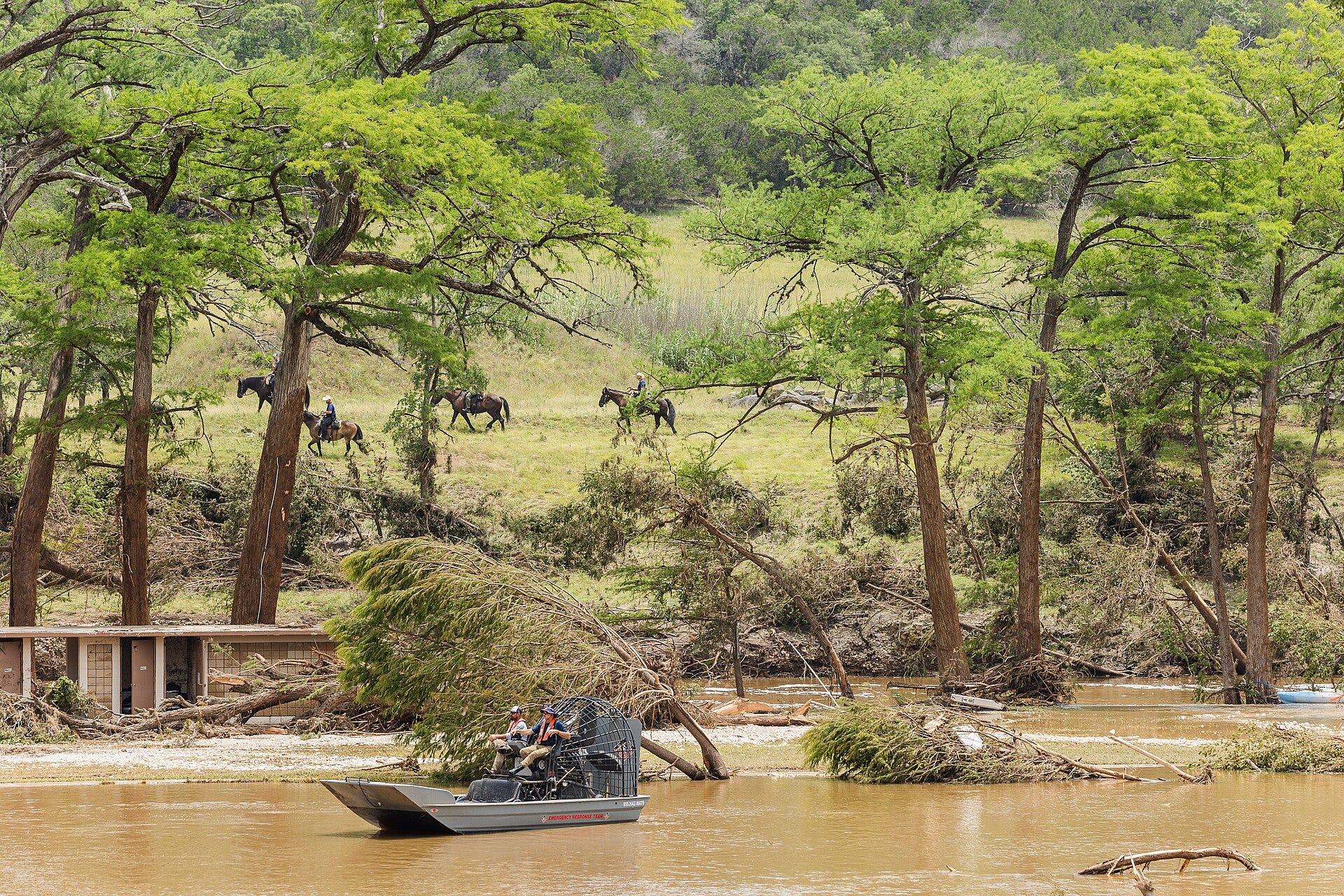
One year ago, historic flash floods devastated Texas Hill Country, killing at least 139 people and causing over $1 billion in damages.
Meteorologists explained that the flooding was caused by a “mesoscale convective vortex with enhanced tropical moisture.”
Most people don’t know what that means.
But when they heard that a tech startup founded with the support of a Thiel Fellowship had launched cloud-seeding operations nearby just 48 hours before the storm hit, some wondered whether or not there could have been a connection.
The official fact-checking machine was quick to debunk the claim and anyone who asked the question was swiftly dumped in the dreaded ‘conspiracy theorist’ camp.
Much of the debunking had to do with the fact that Rainmaker, the cloud seeding startup, operated 130 miles away from the flood zone. Therefore, the conclusion was that the operation could not have had anything to do with the floods, and the mere suggestion was a far-right fabrication.
But the public also understands something fact-checkers often fail to communicate well: weather systems move, atmospheric interventions do not occur inside controlled laboratory conditions, and people are entitled to ask how far the effects of a seeded cloud may travel. In July in that part of Texas, wind currents flow from south to north — meaning the clouds being sprayed could have moved directly into the disaster zone. Correlation does not equal causation, to be sure, but branding skeptics as ‘conspiracy theorists’ simply for being concerned is an example of institutional gaslighting.
It’s completely understandable that people get overwhelmed by the nuances of a term as broad as ‘geoengineering.’ It is a massive topic with high stakes, and the debate often gets confusing because it lumps totally different technologies into the same bucket.
Geoengineering includes approaches that aim to remove carbon dioxide from the atmosphere or reflect the sun back into space, including planting massive forests, building direct air capture machines, or spraying reflective aerosol particles (like sulfur dioxide) into the upper atmosphere to mimic the cooling effect of a large volcanic eruption. These efforts are technically distinct from weather modification techniques like cloud seeding, because geoengineering aims to alter the entire planet’s climate to counter global warming, whereas cloud seeding is a localized method used to increase rain or snow from existing clouds.
“The geoengineering term is a bit of a catch-all, so we need to be a bit precise,” Jem Bendell said during a recent Book Chat, a fair point that is hard to argue.
Bendell noted that local weather modification has been used for decades, citing Bali as an example. “A few years ago there was going to be a big summit and they used cloud seeding to try and get the rain to fall before the summit started so they’d have more sun for their pictures of world leaders.” He even acknowledged that a friend in Bali believed the intervention had damaged his farm, and conceded that weather modification technologies need governance.
Bendell went on to explain that because weather modification exists and has been used locally, many people think it is already being used globally at scale. He argued that if clouds were being seeded globally, it would not explain the warming trend we are experiencing because cloud seeding would tend to cool, not heat, the planet. He also said there would likely be far more evidence of such a program and that it would require a “conspiracy of silence amongst the world’s governments.”
He then shifted the frame to say that the real geoengineering humans are doing includes: wiping out large forests; polluting oceans (which disrupts natural cloud formation by killing off marine organisms that release cloud-condensing sulfur compounds); and pumping carbon and methane into the air.
This is a classic semantic tactic. Bendell is implying that some people are wasting time looking for a secret, coordinated conspiracy in the clouds, but the actual, destructive ‘geoengineering’ is happening in plain sight through corporate greed, industrial pollution, and deforestation.

But this logic belies a massive blind spot: the persistent white streaks you see blanketing the sky above you are not a fiction. Microscopic soot from aircraft engine exhaust does, in fact, create artificial cirrus clouds that trap heat rising from the Earth. Peer-reviewed atmospheric research shows that aviation-induced contrail cirrus is a warming factor. The public is not imagining a changing sky; they are observing a visible transformation of the atmosphere that can actively heat the planet.
The issue is not even whether every white streak in the sky is part of a single coordinated program. It most likely is not. The real question is whether humans are increasingly intervening in atmospheric systems without public consent, clear liability, or trustworthy governance. The answer to that is most likely, yes.
Later in the book chat conversation, while reflecting on the COVID-19 pandemic, Bendell lamented the “demonization and suppression of dissenting opinions on how best to manage a public health crisis,” and said that directly led to loss of public trust. He argued it was tragic that valid questions regarding “the effects of masking, school closures, social distancing, the safety or effectiveness of novel vaccines, the importance of alternative methods including vitamin D and nutrition,” were aggressively buried.
“It should have been a really interesting conversation,” he said. “And it totally didn’t become an interesting conversation. It just became a nasty one.”
But the moment the public applies critical thinking to the manipulation of our environment, it seemed to us as though Bendell deployed the kind of dismissive tactics he lamented in the context of public health. It’s the kind of behavior that typifies what David A. Hughes would describe in his ‘three camps of awareness’ framework as classic Camp Two narrative gatekeeping.
While it felt hypocritical to us here at Collapse Life, some viewers agreed with Bendell on this. One commenter, ‘Paul’, praised Bendell for pushing back on the “geoengineering stuff,” which he explicitly labels as “conspiracy porn.”
Paul implies that because he and Bendell have “sat with it all long enough,” they have moved past the primal desire to blame groups or individuals for collapse, achieving a higher, more enlightened perspective on “governing systems.”
This is another classic gatekeeping tactic designed to make everyday citizens feel too emotionally or intellectually immature to participate in the conversation. It implies that if you are angry about your skies being altered, you simply haven’t “sat with collapse” long enough to accept it.
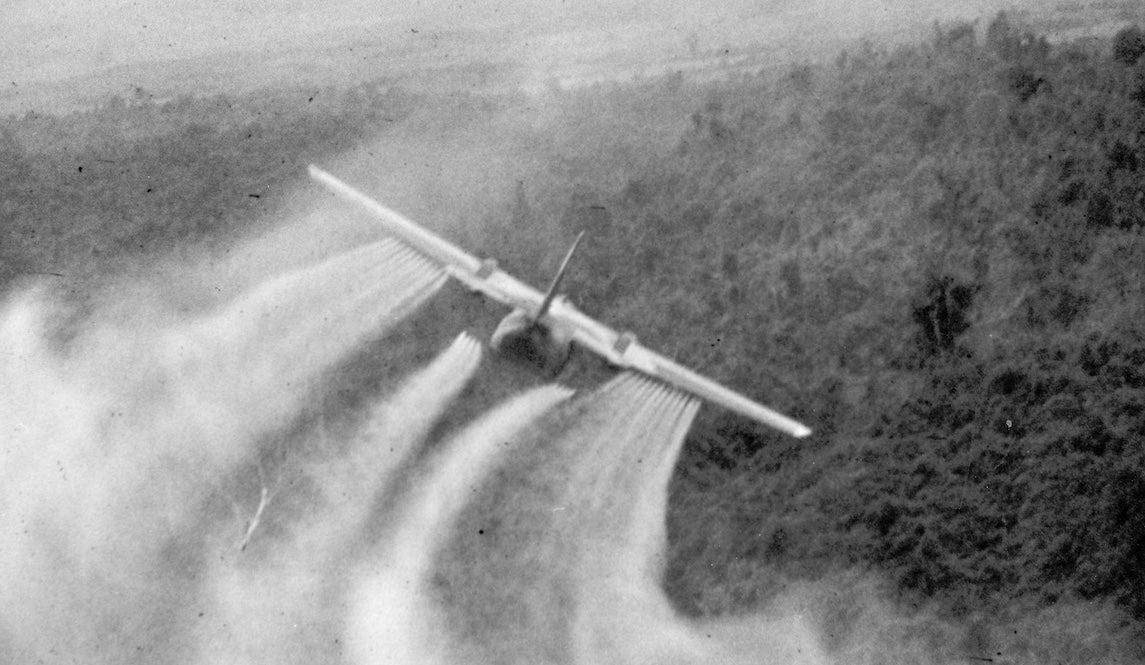
But public anxiety regarding the intentional control of weather is well-grounded in historical fact, not conjecture. The weaponization of the atmosphere is a matter of declassified military record. During the Vietnam War, the US military conducted ‘Project Popeye,’ flying over 2,000 cloud-seeding missions to prolong the monsoon season, intentionally turning enemy supply routes into impassable mud. This real-world weaponization was severe enough to force the United Nations to draft the 1977 Environmental Modification Convention (ENMOD) treaty.
As Bendell himself later conceded, current international frameworks are utterly useless. ENMOD was designed around military or hostile use, leaving a serious governance gap around interventions framed as peaceful, commercial, humanitarian, or climate-protective.
That gap has already paved the way for unregulated corporate exploitation. Startups like Make Sunsets have actively bypassed international oversight to sell commercial “cooling credits,” launching rogue sulfur dioxide balloons into the stratosphere until the Mexican government intervened to ban the unauthorized experiments within its borders.
Even the ambition to “steer” global weather systems like hurricanes, a concept still relegated to the realm of conspiracy theory, can no longer be confined to science fiction. A recent study published in the peer-reviewed journal PLOS Water outlines proof-of-concept models to use artificial intelligence and targeted cloud-seeding operations to deliberately disrupt or redirect hurricanes. As researchers openly acknowledge, steering a superstorm away from one major metro area could mean steering the destruction elsewhere, creating an immediate, terrifying ethical crisis.
When asked if he was an advocate for geoengineering, Bendell rejected the frame of the question, calling it unhelpful because it forced an artificial binary.
“No, I’m an advocate for a far smarter conversation about types of geoengineering that could be trialed and how to govern it and how to finance it,” he said. “And also that includes what kinds of geoengineering should be banned and banned intergovernmentally and through mechanisms with teeth, meaning enforcement, monitoring and punishment.”
Demanding a “smarter” conversation is great way to silence critics who lack expertise in the use of academic jargon. The public understands blunt truths like: ‘If you spray stuff into the sky, you can alter the weather in ways you may not intend.’ You don’t need a Ph.D. to ask who is at the steering wheel, who profits from the intervention, and who bears the cost of the unintended fallout.
Most people who express concern about geoengineering are reacting to the fact that humans now possess the computational power to scale up these atmospheric interventions without the ethical frameworks or legal guardrails to stop it from going horribly wrong. Questioning high-stakes, planet-altering technology is the very foundation of safe science, not a fringe theory or conspiracy “porn.”
If a technology carries risks like shifting monsoons, threatening food supplies, or toxic bioaccumulation, skepticism is not just common sense, it’s the only rational response left.
The Texas flood controversy may not prove that cloud seeding caused a disaster. But it does prove something else: the public no longer trusts atmospheric interventions to remain modest, local, transparent, or accountable. That distrust did not come out of nowhere. And dismissing it is a fool’s errand.
Weather modification has been used militarily, explored commercially, theorized globally, and governed weakly. So when experts respond to public concern with ridicule instead of explanation, they are not defending science. They are repeating the exact trust-destroying behavior they claim to oppose.
The “conspiracy theorist camp” should Not be dreaded. It is where the most consistently correct, honest and intelligent people resided in our times. 😂🤣😂🤣
For those of us are aware of our surroundings, we have clearly seen the evidence. I for one have been frustrated for years because government at the national level seems to not care. What is it going to take before they act to stop the geoengineering?