

Notes from the edge of civilization: July 26, 2026
Unz tries explaining the inexplicable (and Lau Vegys does a darn good job, too); five finger discounts on the rise; and, a Flock-ing nightmare.

The award for best Long Read of The Week goes to the inimitable Ron Unz for his 8,500-word opus, “The Iran War and the Manipulation of Oil Markets.” There’s no way to summarize it and do it justice — you’ll need to take the time to read it yourself, or click the audio button and let Ron read it to you. It’s quite worth your investment.

If you’ve been wondering why the price of a barrel of oil has hovered around the same level it was before the war began, only hitting $100 this week for the first time since May as the conflict spilled into the Red Sea, this article will begin to shed some light on the subject.
Read it alongside this excellent analysis from Lau Vegys from his new venture, SNAFU Investing, and let us know your thoughts on the picture that begins to emerge.

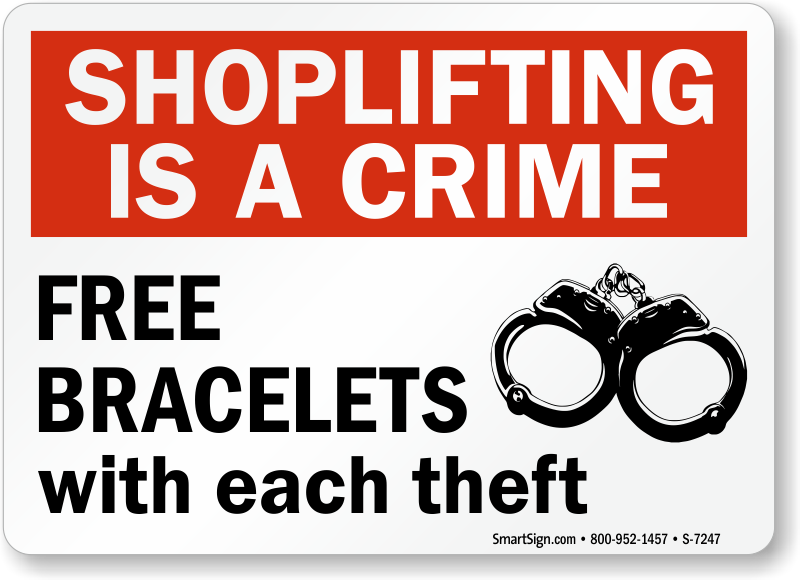
As we explored in this week’s podcast with David Haggith of The Daily Doom, the gap between official economic statistics and the economy people actually experience seems to be widening. Here’s another great indicator to demonstrate that: more Americans are treating themselves to the five-finger discount.
There aren't many economic buffers left

Everywhere you look consumers are still spending and official statistics continue to describe an economy that is holding together.
A new survey from LendingTree reveals that 30% of Americans say they’ve shoplifted, up significantly from 23% in 2024. Food and nonalcoholic drinks remain the most commonly stolen items, with most respondents citing financial strain as their motivation for shoplifting. Younger people were more likely to say they’ve shoplifted at least once, and respondents say they are more likely to steal from a chain store like Walmart or Family Dollar than from a local store.
This tracks with the sentiment recently revealed in a now-infamous New York Times podcast, in which three millennial influencers discussed their views on stealing from box stores as not “right” but not necessarily wrong either.
When wrong becomes right

“It is so hard to live ethically in an unethical society,” said one privileged millennial to another on a now-infamous New York Times podcast. “There are so many moral compromises I make every day,” she continued.
Watch this space… the shoplifting index may be the new benchmark for the real economy and public sentiment all rolled into one: when more people are stealing food and feeling morally OK about it, the economy — and society — may not be as healthy as the spreadsheets suggest.

A man and his wife went into a Kohl’s in suburban Minnesota to drop off some Amazon returns. Sounds like a pretty familiar scenario, right?
Well, imagine their surprise when they got back to the parking lot and were swarmed by four armed squad cars.
…four cop cars came flying out of nowhere and boxed us in. The officers jumped out and started shouting. It’s a situation that can quickly and frequently turn bad, so as unprepared as I was, I followed their orders, got out with my hands up, and tried to figure out what the hell was happening.
What was happening, as it turns out, is that the police had incorrectly identified the vehicle’s license plates as stolen. The driver was Joel Feder, an automotive journalist and director of content and product for The Drive. He was test driving a $155,000 Land Rover with manufacturer’s plates that had been entered incompletely into a federal database used by Flock’s system to surveil traffic around the country.
Police received a clear image showing the mismatch but failed to verify it before tracking Feder in the vehicle for days and finally confronting him and his wife as suspected felons.
The now-viral tale has an ersatz happy ending, ultimately coming down to a matter of human error. But Feder says the mix-up is a warning that the integration between Flock and police departments into a nationwide surveillance grid is far from perfect. One trigger-happy cop could have set this course of events spiraling in a different and decidedly dangerous situation.
“They need better guardrails,” Feder told “NewsNation Prime” on Saturday.
Resistance to this Flocked Up digital prison is growing, which is welcome news. But don’t be surprised if it goes away temporarily, only to return in a form that’s harder to destroy and impossible to avoid.
Let’s make resistance fertile.