

When wrong becomes right
How small acts of justified wrongdoing reveal a much larger collapse in how we think about ethics.

“It is so hard to live ethically in an unethical society,” said one privileged millennial to another on a now-infamous New York Times podcast. “There are so many moral compromises I make every day,” she continued.
“I do so many immoral things every day,” the second agreed.
“I’m constantly acting in ways that don’t align with my belief system,” the first continued. “And constantly having to justify that — like ordering in food when it’s raining out. And it doesn’t feel good. But it is part of living.”
It sounds like a Saturday Night Live skit, but these people — NY Times culture editor Nadja Spiegelman and New Yorker staff writer Jia Tolentino — are completely serious.
And they’re not wrong, even though their framing is off. It actually is hard to live well in a world full of corruption, hypocrisy, exploitation, and moral compromise. But their conversation on ‘The Opinions’ podcast revealed something more troubling than everyday inconsistency. It revealed the growing belief that wrong actions can be made right if they serve the right cause.
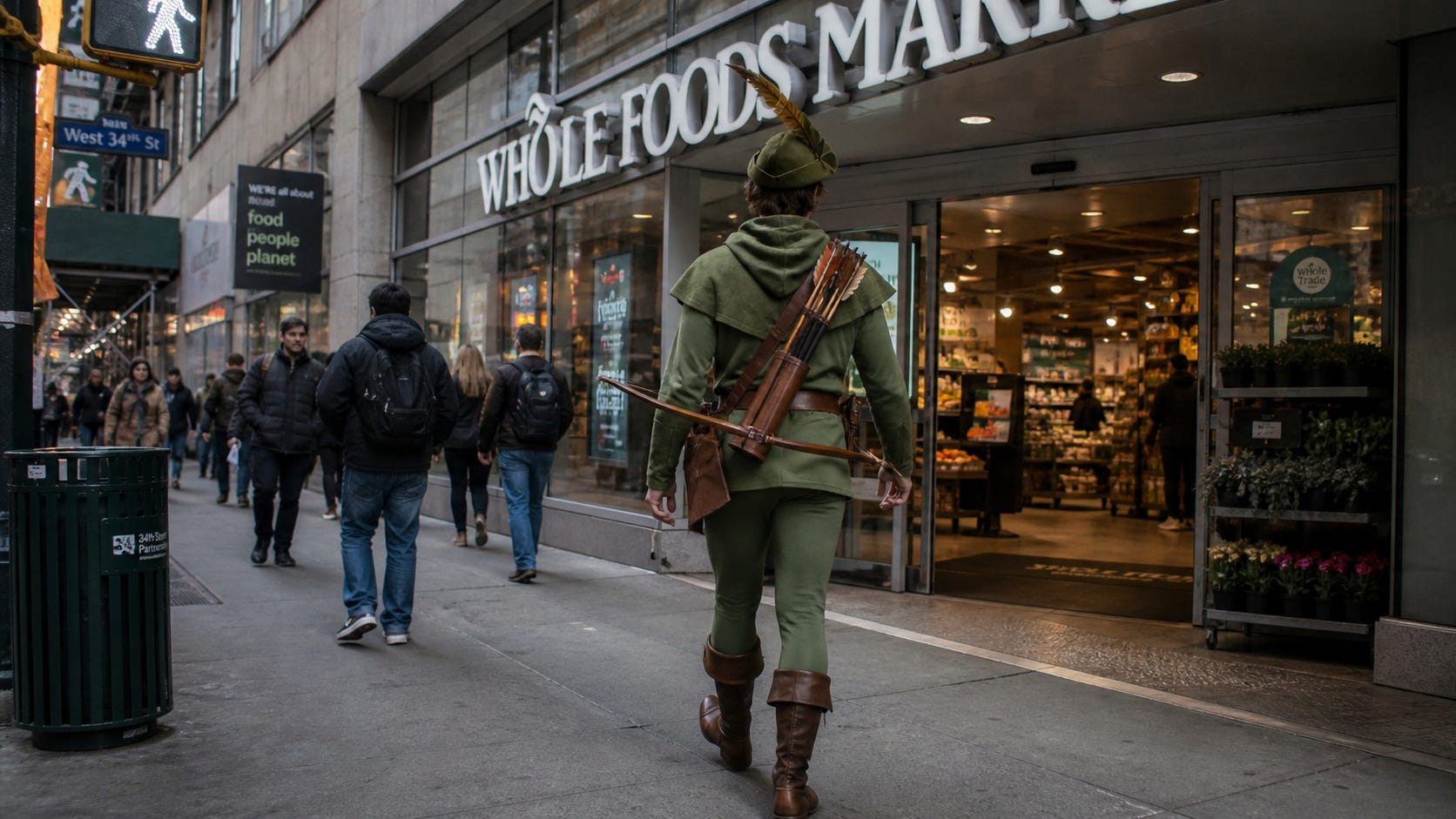
Tolentino explained that she had shoplifted lemons from Whole Foods while buying groceries for a neighbor through a mutual aid group, adding that she felt stealing from a big box store is “neither very significant as a moral wrong, nor is it significant in any way as protest or direct action.”
Spiegelman widened the point. On TikTok and social media, she said, people are justifying theft from Whole Foods out of “anger and moral justification.” The rich don’t play by the rules, so why should everyone else? If Jeff Bezos is a billionaire, why should anyone have to pay for organic avocados? She and her friends have even started calling this “micro-looting” — theft with a slightly political twist.
It’s striking to hear this argument coming from people in their position. These are not individuals navigating scarcity, eviction, or hunger. They are affluent media figures, embedded in the very institutions they criticize and are rewarded by. That doesn’t disqualify them from critiquing power, but it does make their argument hypocritical.
“Because of her, they’ll raise the price and I have to pay more,” one New York public housing resident told the New York Post when the podcast was described to her. “She is hurting me, she is not helping me.” Another put it more bluntly: “She is in a movement of her own — to justify what she’s doing.”
The disconnect is hard to miss. The people most often invoked to justify these actions are not the ones embracing them. They’re the ones absorbing the consequences.
It’s not that a certain class of people are shrugging their shoulders at morality completely. It’s that they are inverting it to bring about what they consider moral ends. The question is no longer: “Is this wrong?” It becomes: “Is my cause righteous enough to override the rules?” Is it OK to try to assassinate the president, when the world is telling you he’s worse than Hitler? Is dropping bombs on Iran justified because the regime was slaughtering its own citizens in the streets?
Behavior is no longer judged by what it is, but by who does it, to whom, and in service of which narrative. Theft becomes “redistribution,” harm becomes “justice,” violation becomes “solidarity.” The moral weight of an action is reassigned based on context, identity, and narrative.
Once ethics becomes that contingent, it loses all meaning. If every act can be reframed inside the right political or moral story, then morality stops being a standard and instead becomes a performance. When our behavior is driven by outcomes rather than governed by rules, any boundary can be crossed as long as you have the right justification.
This is a critical question to ponder given how unstable things are right now. Sure, corporations are greedy in the worst possible way; yes, inequality is a real problem. Fascism should not be allowed to flourish. But the mere existence of injustice does not dissolve the rule of law, and the failure of others to live by a moral code does not give you license for unregulated behavior.
If anything, a broken world demands greater clarity about one’s own moral commitments and a willingness to hold tightly to them even when, especially when, the prevailing mood insists that what’s wrong is actually right.
Without that kind of anchoring, ethics stops asking anything of us. It reflects us, flatters us, excuses us — and quietly abandons the very idea that we are meant to be better than whatever we can justify.
It is not a matter of the act. It is the lack of having a unified community standard for moral behavior. Those rules that govern society have some leeway. Some rules are fine to break as long as they fit in the overall morality of the society. There has to be some wiggle room to address boundary conditions that don't fit the intent of the rules.
Say a worker in the lunch line decides to break the rules and give a hungry child an extra portion. Most rational people would find that to be an acceptable deviation. We operate on different sets of rules during unusual circumstances. Applying them universally when they don't fit can be immoral in itself.
The real problem comes when there is not a shared framework of how society should work. Breaking those rules just because people have a disregard for them will break down society.
The real strength of religion for a society is not the particular articles of faith. Personal beliefs are internal. There is no difference to society as a whole, whether you personally believe in those articles as long as you share the overall moral ethics of the society.
What is going on is we have people who want to displace the existing morality and remake society by force.
Affluent people desiring the problems and passions of the common man. We see it all the time. Especially, in the media and politics.
Look at Tucker Carlson, whom I like, he’s a trust fund baby, educated with the elite and now portrays himself as a good ole boy hunter - fisher man. He’s just like us.
They crave something they can never understand. The struggles of the everyday common man.