

Notes from the edge of civilization: June 7, 2026
A few more sleeps to Grandich; floating city = floating loophole; monetizing male resentment; panic on the streets of London, Birmingham, Carlisle and Humberside... a bunker boom in the UK?

A sea of red is the only way to describe the markets this past Friday. Approximately $1.75 trillion was wiped out from the US stock market, alongside roughly $130 billion from the cryptocurrency market.
If those numbers confuse you, alarm you, or make you wonder about your investment strategy, you won’t want to miss our upcoming exclusive session with Wall Street veteran Peter Grandich, happening this Wednesday, June 10, at 7pm ET.
We want to be clear: Peter is doing this without compensation or remuneration. He likes what we’re doing at Collapse Life and wants to support our efforts and for that, we are eternally grateful. Who benefits? You.
This will be the first of three intimate and interactive discussions with Peter, and it’s exclusive to paid subscribers only — that way, there’s a chance for you to interact and get your questions answered. So upgrade today to reserve your spot, then look for the link in your email over the next day or two and we’ll see you on Wednesday!
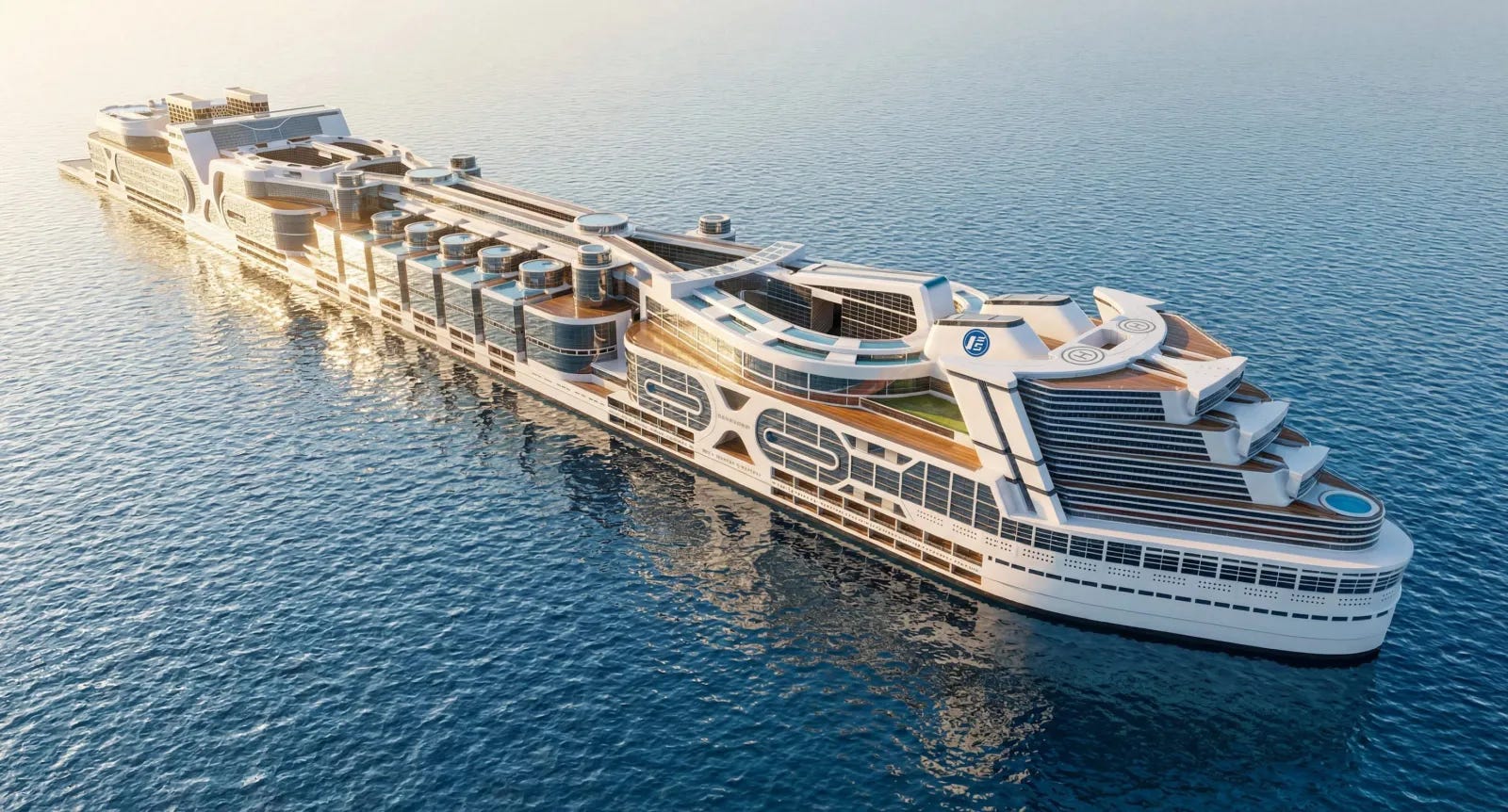
Have you heard about the “Freedom Ship”? It’s making headlines recently: a proposed mile-long floating city that would carry up to 80,000 people, including 50,000 permanent residents, 20,000 crew, and thousands of visitors. The concept includes homes, schools, banks, shops, hotels, a stadium, museums, parks, a water park, helipads, and a “state-of-the-art hospital.” It would be too large to dock, so it would remain offshore in international waters and ferry people to and from land.
The pitch is part cruise ship, part sovereign startup city, part techno-utopian escape pod. Its backers say it could be nuclear-powered, environmentally friendly, economically self-sustaining, and even capable of cleaning the oceans as it travels.
But the paragraph that matters is the one about medical research.
“We also want a state-of-the-art hospital. We’ve been approached by medical research facilities because we would be outside the reach of regulatory bodies, so the Freedom Ship would be an ideal venue for that,” CEO Roger Gooch told The Telegraph.
And now the picture starts to come into focus. This is not just another absurdly large cruise concept. It points toward a familiar fantasy: build a private jurisdiction beyond ordinary public accountability, then call it ‘innovation.’ Cruise ships already struggle with deadly outbreaks (Hantavirus anyone?) and evacuations. Scaling that up to the population of a small city while advertising ‘freedom’ from regulatory oversight does not exactly inspire confidence.
The floating city becomes a place where finance, biotech, gambling, residency, education, security, and governance can be bundled into one corporate-controlled environment that is offshore, mobile, and deliberately hard to regulate.
The unspoken promise is about exit — from national rules, public scrutiny, and democratic constraint. The risk is that the people most excited by that model may not be the ones you want designing your future.
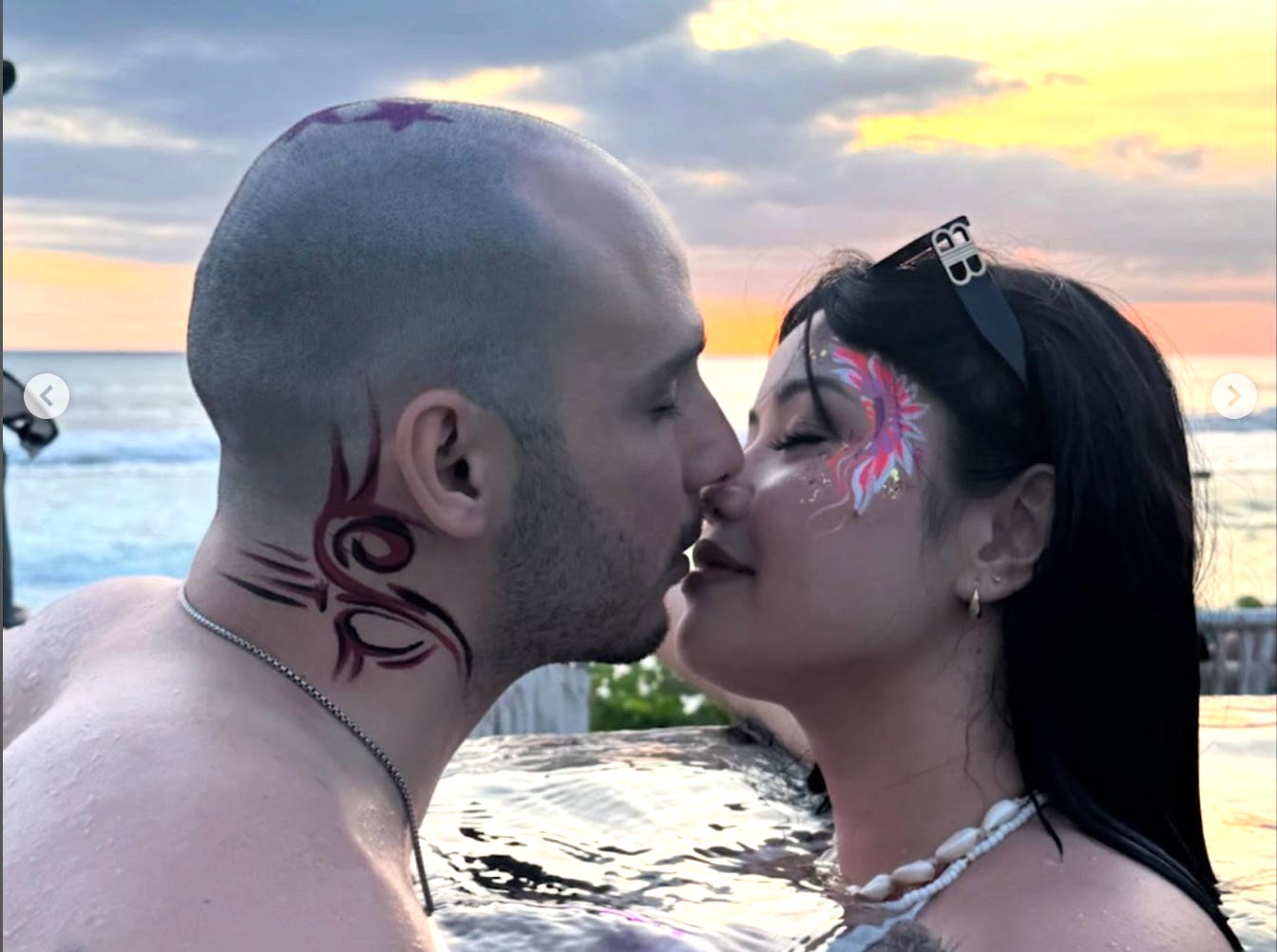
A few weeks ago, The Economist profiled “passport bros” — Western men who move abroad in search of women they describe as more traditional, feminine, and accommodating than the apparently terrifying species known as ‘The American Woman.’
The most interesting part is not that some men are finding love overseas. People have always married across borders. What’s revealing, and left unsaid in the utterly sloppy reporting of The Economist, is that several of the men profiled are not just participants in the trend. They are monetizing it.
One couple, Mike and Pafan, admit to making their living as social media influencers. Another man, Austin Abeyta, combines remote data analytics work with content creation and coaching. In other words, these are not neutral case studies of men looking for women. These are business relationships, under the guise of personal relationships. Whether love is actually found is masked by the fact that this is a for-profit enterprise, selling men hope of love via a lifestyle commodity.
That changes the story dramatically.
When Mike posts a video captioned “Point of view: you have a Thai girlfriend”, with Pafan kneeling on the floor clipping his fingernails, that’s not just a snapshot of a specific relationship dynamic in action. It’s content aimed at an audience of men who feel rejected, resentful, lonely, economically squeezed, or simply tired of competing in the American dating market.

That means The Economist should have asked harder questions, like:
Who benefits when American men believe Western women are ruined?
Who monetizes the idea that moving abroad will solve loneliness, status anxiety, sexual frustration, and economic precarity?
How much of this “traditional femininity” is real, and how much is staged content for men scrolling alone in a Cleveland, Ohio basement at 1 am?
What happens when a private relationship becomes a recurring content format?
And most importantly: are these men finding wives, or building funnels?
Passport bro culture is not just about the politics of sex, love, marriage, or even misogyny. It is also an influencer economy built on grievance. The product being sold is restored male status at a discount. And it’s downright predatory.

(Note: If you’re familiar with the 1980s British rock band, The Smiths, you’ll know the subhead at the top of this edition of Notes comes from the 1986 single, Panic. Whether there’s panic in Dundee and Humberside, we cannot actually say. We do not condone hanging DJs.)
The Telegraph reports rising UK interest in panic rooms and private bunkers, with some builders claiming inquiries have jumped since COVID and the wars in Ukraine and Iran. “A wave of new buyers is paying six-figure sums to prepare for an uncertain world,” they write.
As wars rage on Europe’s borders and geopolitical tensions rise, more Britons are exploring a question that once seemed the preserve of Cold War survivalists: if the worst happens, where can you go?
But let’s not confuse six-figure underground shelters with a national awakening. A handful of wealthy homeowners installing air filtration systems, blast doors, and backup power is not a new outlook on preparedness.
This weekend on the Collapse Life podcast, we spoke with Amy Edelman and Chris Begley, the co-authors of a new preparedness book who made the opposite point: it is exceedingly difficult to get most people to take even basic, modest steps like stocking up a few weeks’ supply of food, water, and first aid.
While the wealthy are building themselves boltholes, most people are putting their heads down and hoping the grid, the grocery store, the government, and the just-in-time economy will all still show up on schedule. Broad preparedness continues to be culturally embarrassing, psychologically uncomfortable, easy to postpone, and even easier to mock.
Towards the end of the article, The Telegraph mentions that sheltered spaces are “no longer necessarily a perk for the rich.” And maybe that’s partly true. A £32,000 home reinforcement project on a £250,000 property or a working couple outside London adding an overground shelter is not exactly Bond-villain territory, but it is still a very particular kind of “ordinary.”
The most interesting signal coming out of all of this is that the desire to bunker down may no longer be confined to the ultra-wealthy, but it also hasn’t translated into a wider public awakening. Instead, it is being privatized by the few who can afford to act individually.
They forgot to mention "15 minute" in their Floating City... Or did they just not want to make mention of the similarity (exactness)?
WRT "Passport Bros"... I guess 'The American Woman' can be terrifying to a modern-day Metro-Sexual Male with no balls... and the most terrifying aspect of the American woman is that they appear to be sick and tired of 'The Average American Man'... :D
You GO Girls!!!... You Bad-Ass American Women You! :)
The wealthy have always built castles.