Washington dropped plans for a border wall in Far West Texas. The bulldozers came anyway.
After fierce bipartisan resistance, the Trump administration has paused work... temporarily. But the contracts and the larger plan appear to remain in place.

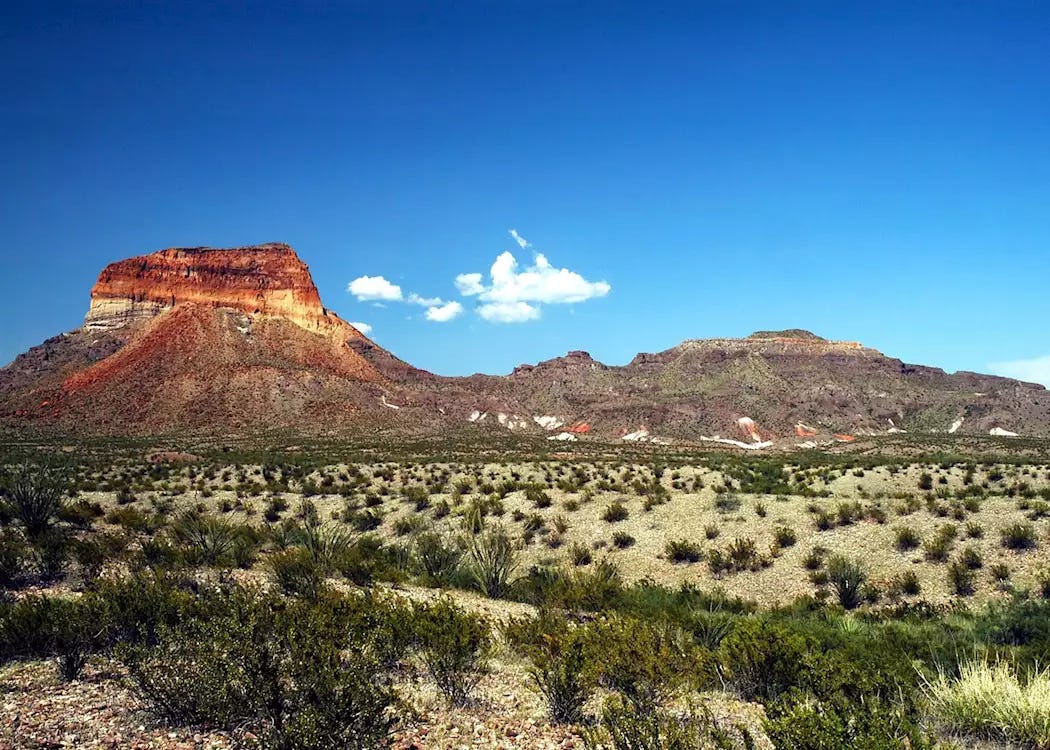
There’s a remote part of the West Texas desert that most Americans have probably never heard of and many will never see with their own eyes. If you ever watched Wile E. Coyote chase the Road Runner in Saturday morning cartoons, you can pretty much imagine what it looks like.
It’s wild, rugged, beautiful, and still largely untouched. In fact, the Collapse Life team looked to move to this area for many years, house hunting unsuccessfully and always falling short of finding just the right place.
It was attractive because few year-round residents live in the remote communities dotted across the region, which includes hundreds of miles of border between the US and Mexico. As the New York Times wrote recently, this section of the border is so remote and so rugged that people rarely try to cross it, “even at the peak of unauthorized migration.”
Fewer than six migrants a day have been encountered crossing from Mexico in recent months in the entire Big Bend patrol sector, which includes the park and hundreds of miles of border, federal statistics show.
With the harsh terrain and poisonous snakes, spiders, and other predators naturally keeping all but the most intrepid at bay, tourism was almost non-existent until Big Bend National Park was established about 80 years ago. Even then, it took several decades before annual attendance to the park crossed 100,000 visitors. For most of its history, the park hovered between 300,000 and 400,000 annual guests. A rapid surge in popularity beginning in the late 2010s pushed annual visitation to around 500,000, which is where it hovers currently.
The national park sprawls over more than 1,200 square miles and is directly adjacent to Big Bend Ranch State Park, which covers about another 485 square miles. Together, the two parks encompass over 1.1 million acres of protected, pristine land, making the contiguous public landscape larger than the state of Rhode Island. This area is one of the only places in America where you can still see the Milky Way clearly with the naked eye, so pristine is the night sky.
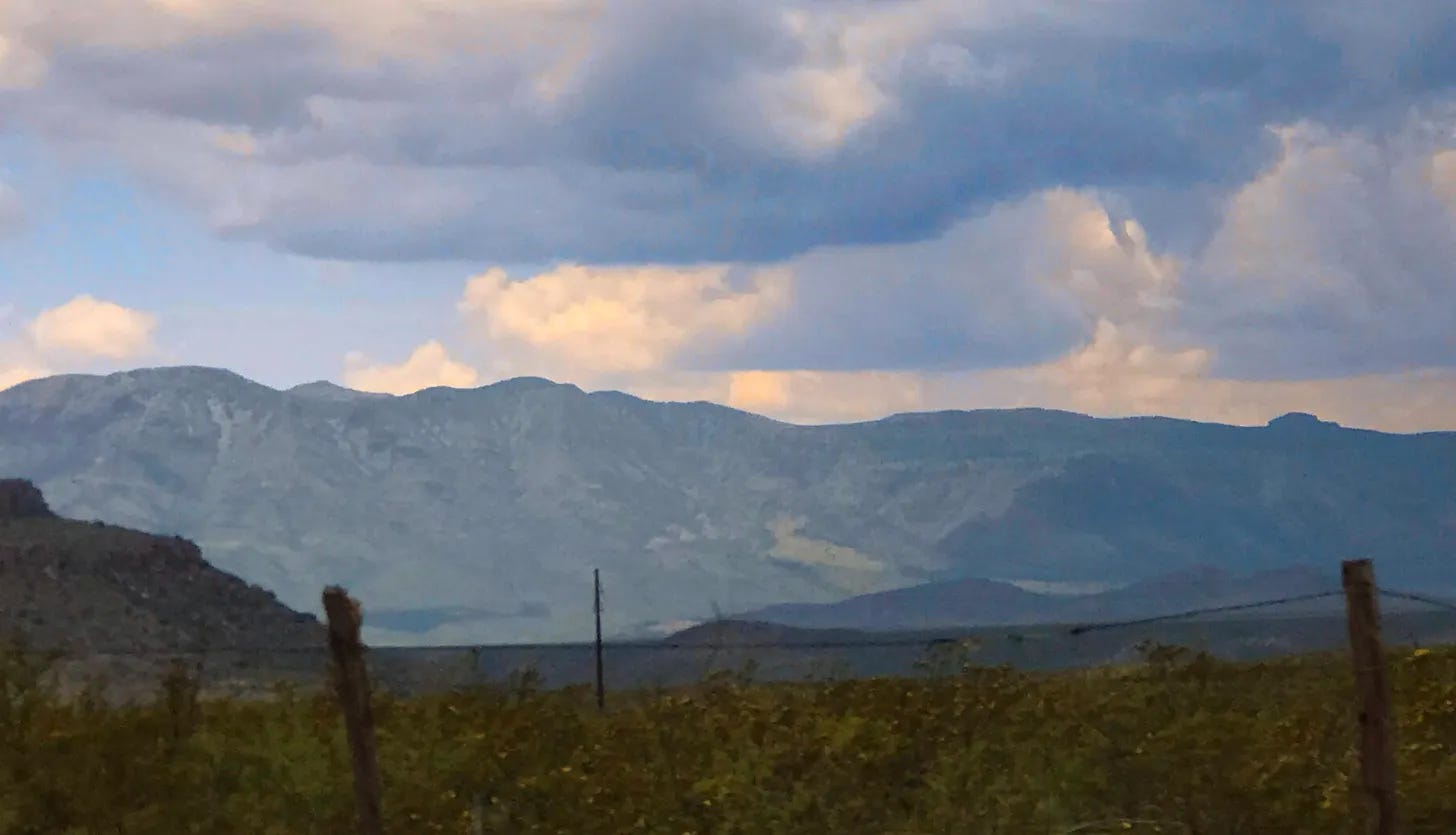
It’s not difficult, therefore, to understand why many residents were opposed to the Trump administration’s proposal to build a 30-foot wall through Big Bend National Park. Opposition came from Texans on both sides of the political divide, and for a while it appeared as though the outcry was somewhat successful, with the plans being significantly rolled back.
Nevertheless, the bulldozers showed up anyway.
Officials now say there will be no wall — only a patrol road running along much of the park’s 118-mile border, plus surveillance equipment and several miles of vehicle barriers.
For the people watching workers tear through vegetation near Santa Elena Canyon, the distinction doesn’t matter all that much.
One interesting part of the response is coming from the community itself. Local restaurants and lodging operators are refusing to serve the contractors hired to do the work — even during the slowest part of the tourism year.
There is something uncomfortable about punishing workers for a decision made in Washington. Inherently, the businesses understand that a massive federal project depends on local meals, beds, fuel, and cooperation. Some have decided they don’t have to make the job easy.
Here’s a sign posted by Venga Cafe, a coffee bar opened in 2023 in the historic ghost town of Terlingua.

The government argues that Big Bend needs more surveillance, not necessarily because there’s an opening in the border that is being exploited now, but because cartels might exploit it in the future.
Let’s face it, once contracts have been awarded, money has been committed, and equipment and manpower have been moved into place, bureaucratic momentum tends to run on a logic all its own. The 30-foot wall may have disappeared from the plans for now; the bulldozers, excavators, and trenching machines haven’t.
On August 17th, Customs and Border Protection Commissioner, Rodney Scott, announced that all construction inside Big Bend National Park would be paused while he visits the area and conducts what he called an “on-the-ground evaluation.” He says he plans to meet with local leaders, residents, and other stakeholders over the next several days. (No word on whether Venga Cafe is willing to make him a coffee.)
This is not the same as canceling the project. The contracts remain in place, and there has been no commitment to abandon the roads, lights, fiber-optic cables, or vehicle barriers. But it is a rare concession from an administration racing to expand border infrastructure and surveillance — and evidence that the demonstrations, lawsuits, political pressure, and refusal of local businesses to cooperate may have made an impact.
Big Bend has bought itself some time. What happens after the officials leave remains to be seen.
The other, less obvious yet more devious part that sets off alarms, is this: It’s easy to assume that border walls are built to keep people out. However, history shows us that roads, cameras, sensors, and barriers work just as well in the other direction. The Berlin Wall, for example, was not just there to prevent people from entering East Germany. It was there to prevent East Germans from leaving.
There’s no direct evidence to suggest that is the impetus behind what’s happening in Big Bend today. But permanent systems of control have a way of outliving the temporary fears that were used to justify them.
So isn’t it worth asking whether this infrastructure could one day be used to keep us in? And if the answer is even remotely affirmative, isn’t it a good idea to think about how you might prepare while there’s still time?
Share with us in the comments what Plan Bs you might have if our nation goes from land of the free to dystopian gulag.
*****
Before we hit ‘publish’ this morning, AI humanoid robots decided to enter the chat.
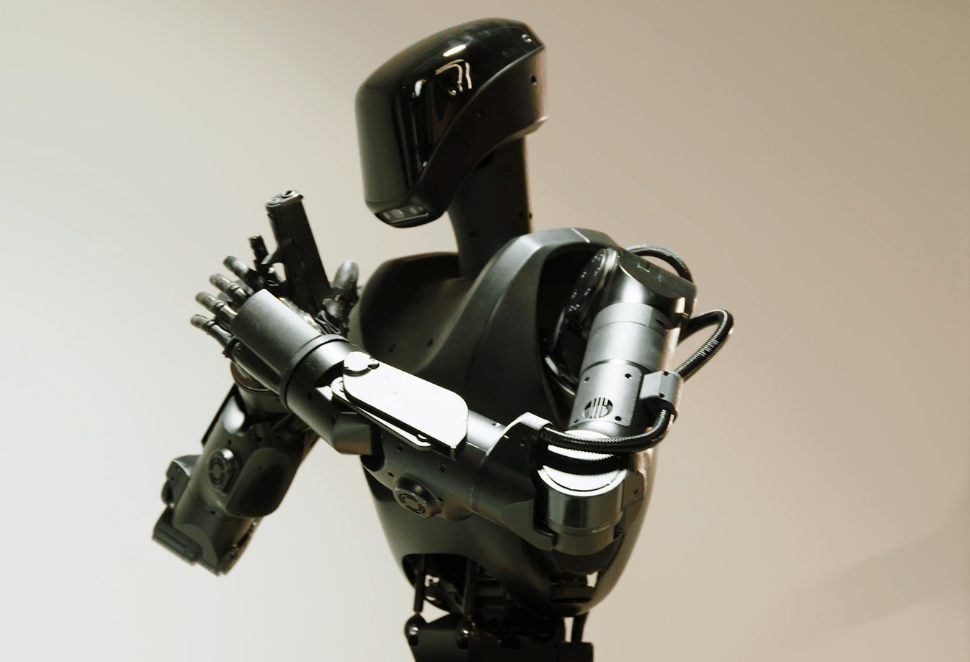
The Zerohedge headline that caught our attention was this: Humanoid War Robots Could Soon Patrol US Southern Border To Combat Weaponized Migrant Flows.
If we dig deep into our socio-cultural anthropology studies from university last century, the macro story appears a rather strange mashup of theories from Michel Foucault and Slavoj Žižek. A wall is an obvious expression of state power: you can see it, scale it, photograph it, protest it, and point to exactly where authority has been imposed.
But Foucault understood that modern power becomes more effective as it moves away from visible structures and into systems of surveillance and control (think, panopticon), while Žižek argued that the most consequential forms of violence can disappear into the ordinary machinery of society. In that light, “suspending” the border wall while developing drones, sensors, AI, and autonomous machines may not actually be a retreat of state power at all. Instead, it may mean the border is moving from physical architecture to embedded infrastructure — becoming less visible, more pervasive, and much harder to point at.
On the surface, the land would be able to remain largely pristine, but it would have been successfully subsumed into the surveillance state… more imposing — and potentially more violent — than a 30-foot border wall ever could be.
Don’t miss these upcoming live events:
Wednesday, August 19, 8pm ET: The Case for Strategic Relocation with Abraham Ojeda (connect via YouTube or Substack)
Wednesday, September 16, 6pm ET: An exclusive paid-subscriber Q&A with Peter Grandich and Michael Gentile (link will be available closer to the date)