

The war on dogs
A BBC lifestyle piece about whether Brits are too dog-friendly belies a bigger question: how far does a majority 'accommodate' before its sway stops being the default?

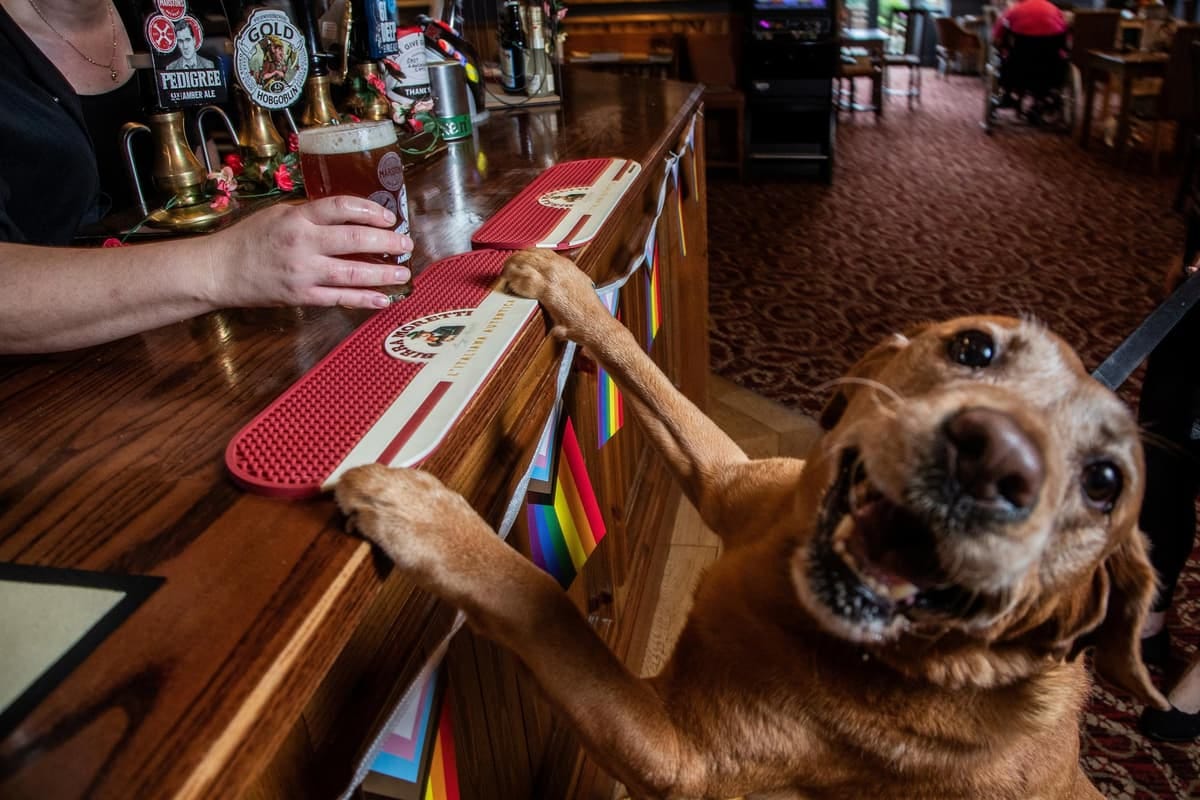
Walk into a pub or coffee shop in Britain today and there’s a good chance you’ll be greeted by a boxer or a bulldog, before you place your order at the bar.
That’s no exaggeration. There are 13.5 million dogs in the UK. Over a third of households own one. And the UK has normalized dogs in shared public spaces in a way the United States still hasn’t.
In Britain, dogs are so common in cafés, pubs, and even some shops, that it barely registers as noteworthy anymore. It’s baked into the social fabric. A pub without a dog feels slightly off, like something is missing. In fact, businesses actively court dog owners because they know it drives repeat visits and longer stays.
That’s probably why a BBC Wales story a few days ago is getting so much negative attention. “From puppacinos to doggy high tea - how dog friendly should we be?” the national broadcaster asks.
The framing makes it sound like a simple cultural check-in. But there’s more at play. On the surface, this seemingly innocent story follows a sad and now familiar pattern:
Take a widely accepted norm.
Introduce a small group that struggles with it.
Frame that struggle as exclusion (or oppression?)
Quietly shift the burden back onto the majority.
Here’s the crux of the BBC’s story:
From independent cafes to restaurants and shopping centres, an increasing amount of retailers are taking the leap in welcoming furry friends, including well-known brands Ikea, John Lewis, Zara, H&M and Lush.
But for those who may be allergic to dogs or live with cynophobia - the extreme fear of dogs or canines - they say the rise of dog-friendly spaces is a growing concern.
One woman with cynophobia, Abi Wilson, 20, said she felt “trapped” and now only goes out on “special occasions” due to the lack of dog-free zones.
This is Abi.

As soon as Abi thinks about leaving the house she starts feeling nauseated and on edge. “I can’t even step out the front door to go to the car without feeling sick and sweating,” she says. Because of her phobia, she only ventures out on special occasions and then only if she is absolutely sure that a place does not allow dogs.
While medical professionals estimate around 7% of people suffer from a specific phobia, extreme cases of fear of dogs such as Abi’s appear to be rare. In other words, we’re not talking about half the population locked out of public life because of the demands of a vocal few who like puppies. We’re talking about a small minority who are allergic to or afraid of dogs who are suddenly being positioned as the reason why a widespread behavior needs to be reconsidered.
Reader responses to the BBC story however, make it very clear where the real social tension lies.
A highly divisive sign appeared in an East London neighborhood just a few years back. Printed on a sheet of paper, the note read: “Do not walk your dog here! Muslims do not like dogs. This is an Islamic area now.”

In America, a prominent New York City pro-Palestine activist called dogs “unclean,” and suggested they should not be allowed as indoor pets. Just last month, Nerdeen Kiswani posted: “Finally, NYC is coming to Islam.” She later said the post was just a joke.

These moments — a tweet dismissed as a joke, a sign that caused outrage — aren’t evidence of cultural invasion, per se, but they are signals of a tension that has been creeping to the surface, even when the official conversation avoids naming it directly.
The story very quickly goes from comfort around dogs to competing worldviews. In a Western, secular context, people treat dogs as a member of the family — it’s a multi-billion dollar industry, in fact. Others however, would never allow a dog to cross their threshold. Of course, that’s not the whole story — but it’s a large part of it, and pretending it isn’t there doesn’t make the unfortunate tension go away.
Neither of these positions are new. What is new, and potentially concerning, is forcing them into the same tight urban spaces and pretending they’re minor differences in lifestyle choice — like choosing Coke versus Pepsi, or preferring coffee to tea.
In actual fact, it’s a question of boundaries; we all know that a boundary that keeps slipping is, in effect, no boundary at all. What looks like a debate about dogs is really a convergence of pressures:
a majority behavior (dog ownership) that has become culturally embedded and embraced;
a minority set of constraints (allergies, phobias) are translated into policy language under the guise of acceptance and compassion; and
a more subtle undercurrent of differing worldview (dogs are family vs. dogs are unclean) is what is actually at stake.
Our technocratic system doesn’t resolve the tension, it manages it; softly, incrementally, often without stating what’s actually being negotiated. A country full of dog owners is asked, gently at first, to rethink where dogs belong. Then, soon after, it’s no longer about dogs. It’s about whose norms define the space, and who quietly has to adjust.
That’s the real headline. Dogs just marked the territory first.
I used to be afraid of dogs, when I was growing up both my brother and I had been bit by one. None of my friends had dogs so I just never got comfortable with them. At 35 all the changed and now I adore dogs and have had 5 of my own. If one wants to face their fear of something they can do it. The country doesn't change for you. If you don't like it there are many other countries you could move to. As for "unclean", you can move also.
Give me dogs over people anytime