

The toll booth at the end of history
For four centuries, we told ourselves the sea was free. Then someone stood at the narrowest point on earth and asked for payment.

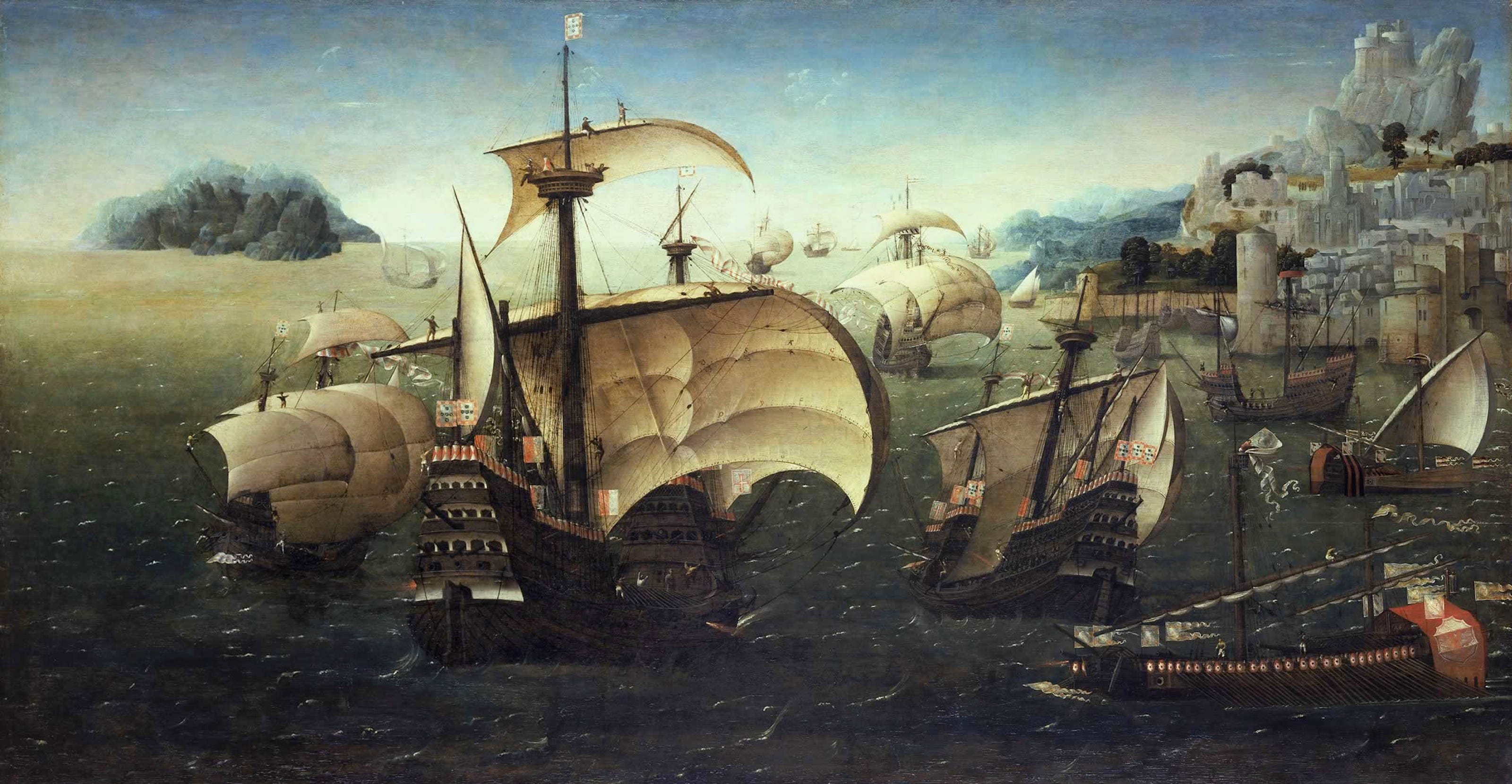
For most of our lives, the ocean has been invisible scaffolding of the global economy — vast, neutral, and governed by rules that everyone agrees to follow. Those rules ensure oil and goods can move freely, and ships can pass through narrow chokepoints without stopping to negotiate with whoever happens to live on shore.
That is a four hundred year tradition.
As we wrote about in the first chapter of our new book, Hidden Histories, the Dutch East India Company seized the Portuguese carrack Santa Catarina near Singapore in 1603. The cargo was so valuable that it stunned Europe — spices, silk, porcelain, the raw material of an emerging global economy. The problem was not the seizure itself; that was business, as it was practiced at the time.
The problem was legitimacy: on what basis does a private company capture a foreign ship in open water and call it lawful?
Enter a young legal genius, Hugo Grotius, who produced the answer Europe wanted to hear. In Mare Liberum, he argued that the sea could not be owned, that no nation had the right to exclude another from trade routes, and that navigation should be free.
It read like the birth of international law — and it was the groundwork for it — but it started as post-facto justification for a very profitable act of force.
The Dutch wanted to break the Portuguese monopoly over Asian trade routes and needed a framework that would turn disruption into doctrine. Freedom of the seas was a strategic argument that happened to align perfectly with Dutch commercial interests and naval capability.
Over time, that argument became embedded in the architecture of global trade, eventually becoming codified in frameworks like the United Nations Convention on the Law of the Sea, which formalized concepts like innocent passage through international straits. The idea was simple: chokepoints matter too much to be controlled by any one state. Ships must be allowed to pass.
Like all rules at sea, it came with an unspoken clause: someone has to enforce it.
After World War II, that someone was the United States.
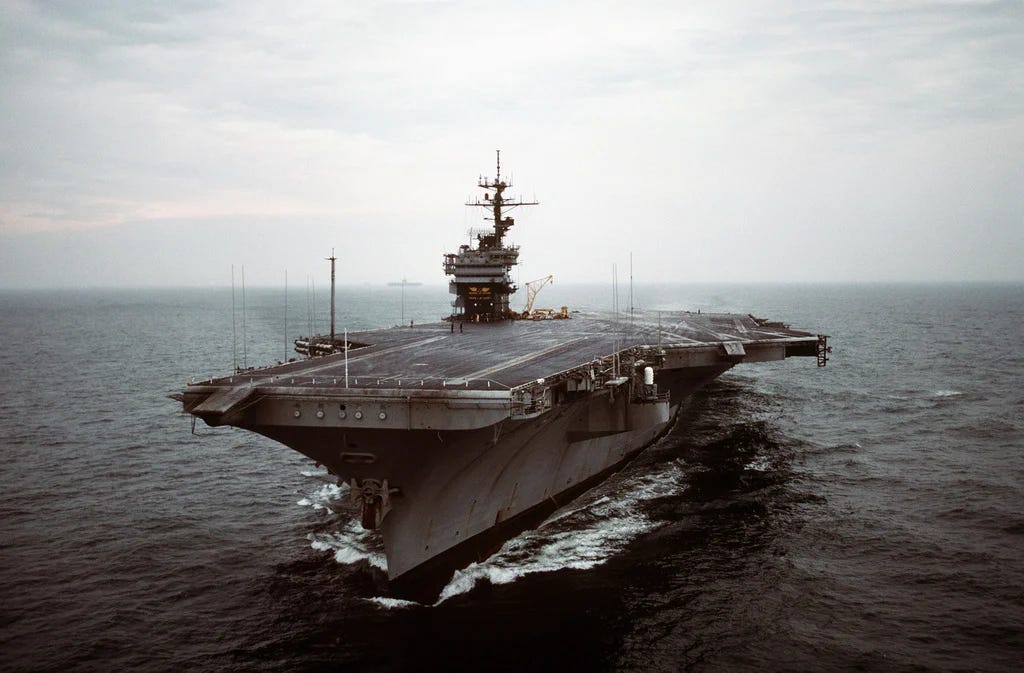
US Navy aircraft carriers in the Persian Gulf, alliances with coastal states, and a willingness to intervene meant that oil could flow through the Strait of Hormuz without interruption. As we’ve all heard a million times these past few weeks, roughly one-fifth of the world’s petroleum liquids move through that narrow channel on any given day — a statistic that only works if the passage remains open.
Which it did for centuries. That is until the United States and Israel attacked Iran. What followed was a practical, perhaps even natural, response shaped by geography.
Iran does not control global trade, but it does control one side of a critical chokepoint. So it closed the Strait of Hormuz and suddenly ships started facing delays, restrictions, and demands for payment to ensure safe passage.
There is a tendency to describe this as a breakdown of the rules, but that assumes the rules were ever valid or independent of power.
Go back to the Santa Catarina. The seizure came first, the legal theory came later. Grotius didn’t prevent the act; he just explained it in a way that made it usable for the emerging order.
The United States did something similar, on a much larger scale, in the 20th century, enforcing freedom of navigation not as a neutral principle, but as a system aligned with its interests — a world in which trade flowed, allies benefited, and adversaries could be constrained through sanctions and control of financial and maritime infrastructure. This was the plumbing and support system of globalization.
That system is being unraveled and undone, but not in the way most people think.
Iran is doing something ancient — leveraging its position along a narrow passage to extract value and exert pressure. Chokepoints have always been contested; the Ottomans regulated the Bosphorus; Egypt nationalized the Suez Canal and briefly closed it; Panama has always been a managed gateway with rules and a price tag.
But those examples existed inside a world where the broader system still held.
This time it’s different. For a few decades, US naval dominance and a broadly aligned international system made the oceans feel open, not because they were inherently free, but because one power had both the reach and the incentive to keep them that way.
That arrangement is now being fundamentally dismantled, perhaps unintentionally (but likely not).
What Hormuz reveals is not just an old pattern resurfacing, but the beginning of a new order forming on top of it. One where the language of “free navigation” still exists, but where regional powers get to test the limits in real time. Part of that is ‘cost of passage’ — not free based on reciprocal or global understanding, but negotiated — or imposed — at the point of transit. Where friends pass through cheaply or even free, but foe must pay.
The old system hasn’t disappeared completely — vestiges definitely linger — but as of 2026, it no longer goes uncontested. Once a chokepoint becomes a toll booth, the implications don’t stay confined to a narrow strip of water in the Gulf, they ripple outward into energy markets, food prices, insurance, shipping routes, and political alliances.
Slowly, quietly, it also turns into a realization that the infrastructure that was once neutral is very much not.
The Dutch once captured a ship and then argued the sea belonged to everyone. For the last century, the United States enforced that idea at scale. Now, for the first time in a long time, someone is openly testing whether that was ever a good idea.

"Rule Britannia, Britannia rules the waves" .....it's always been about control of trade...& fake money! Research the Gnomes of Zurich & "The City of London" et al....Who finances all the needless wars?
Believe me everyone, if you love history, if you love economics or if you love finance you want to read Hidden Histories. The Collapse Team has researched and found examples of debacles that have, even though relatively unknown, had an effect upon the history of nations, and yes, the US is in there as well. It is a very gripping but also a quick read and you will want to read it again just to get straight the facts, so that you can look for them happening in the world today. I would say it is a MUST read so you can visualize how quickly our world can, and most likely will again, change.