Prediction markets have democratized insider trading
Once the purview of pinstriped millionaires trading merger tips over steak dinners, it's now possible for anyone with a cellphone to cash out in hours instead of weeks.
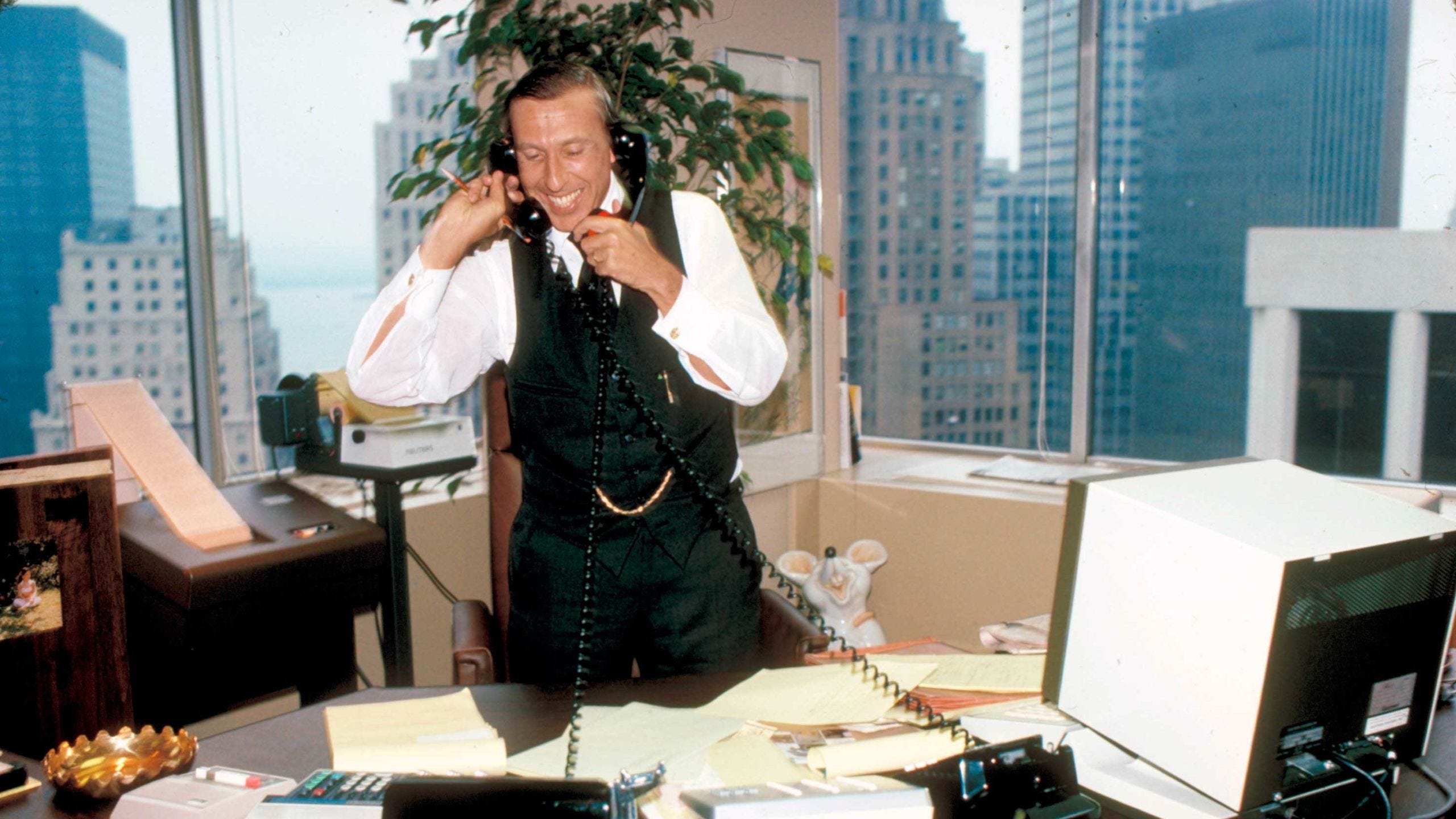
Financier Ivan Boesky was known as a consummate networker.
In 1986, a flamboyant Wall Street arbitrageur named Ivan Boesky pleaded guilty to insider trading and paid a record $100 million penalty. “Ivan the Terrible” became part of the inspiration for the character Gordon Gekko, played by Michael Douglas in the legendary movie Wall Street. Although Douglas immortalized the words in film, it was Boesky himself who first crystallized the ethos of the era: ‘greed is good.’
Boesky became a legend for placing large bets on companies rumored to be takeover or merger targets. He profited from the predictable stock price bumps that followed such rumors. His own heavy buying often triggered a self-fulfilling surge, as other speculators piled in after seeing his moves.
Publicly, Boesky claimed he only invested after formal takeover bids were announced. In reality, the SEC proved he illegally obtained advance tips from investment bankers about deals still in the works and he traded on that non-public information.
Gannon Van Dyke was charged after allegedly using classified information to bet that Venezuelan President Nicolás Maduro would be removed from office.
This week the Department of Justice and the Commodity Futures Trading Commission (CFTC) accused a US Army Special Forces Master Sergeant, Gannon Van Dyke, of allegedly using classified information to bet on the capture of Nicolás Maduro. He reportedly turned a $33,000 bet into more than $409,000 by betting on prediction platform Polymarket using classified details about the military operation, and placing the bets in the days leading up to the January 2026 raid. This marks the first known criminal insider trading prosecution tied specifically to a prediction market.
The players, the tools, and the velocity may have changed, but the game is still the same — Van Dyke profited from information others don’t have, just as Boesky did.
Something important has shifted, however. Insider trading in the Boesky era was a high-society affair built on personal relationships and 1980s merger mania. Information moved through phone calls, leisurely lunches, and whispered conversations. Trades happened in traditional stock markets, where positions could take days or weeks to build and unwind. Detection was slow, relying on tips, unusual trading volume, and eventual cooperation deals with federal prosecutors.
Penalties were severe for the time — prison sentences, massive fines, and career ruination — but the barriers to entry were enormous. You needed to be plugged into investment banking, law firms, or corporate boards. Average Americans had no realistic path to this kind of edge.
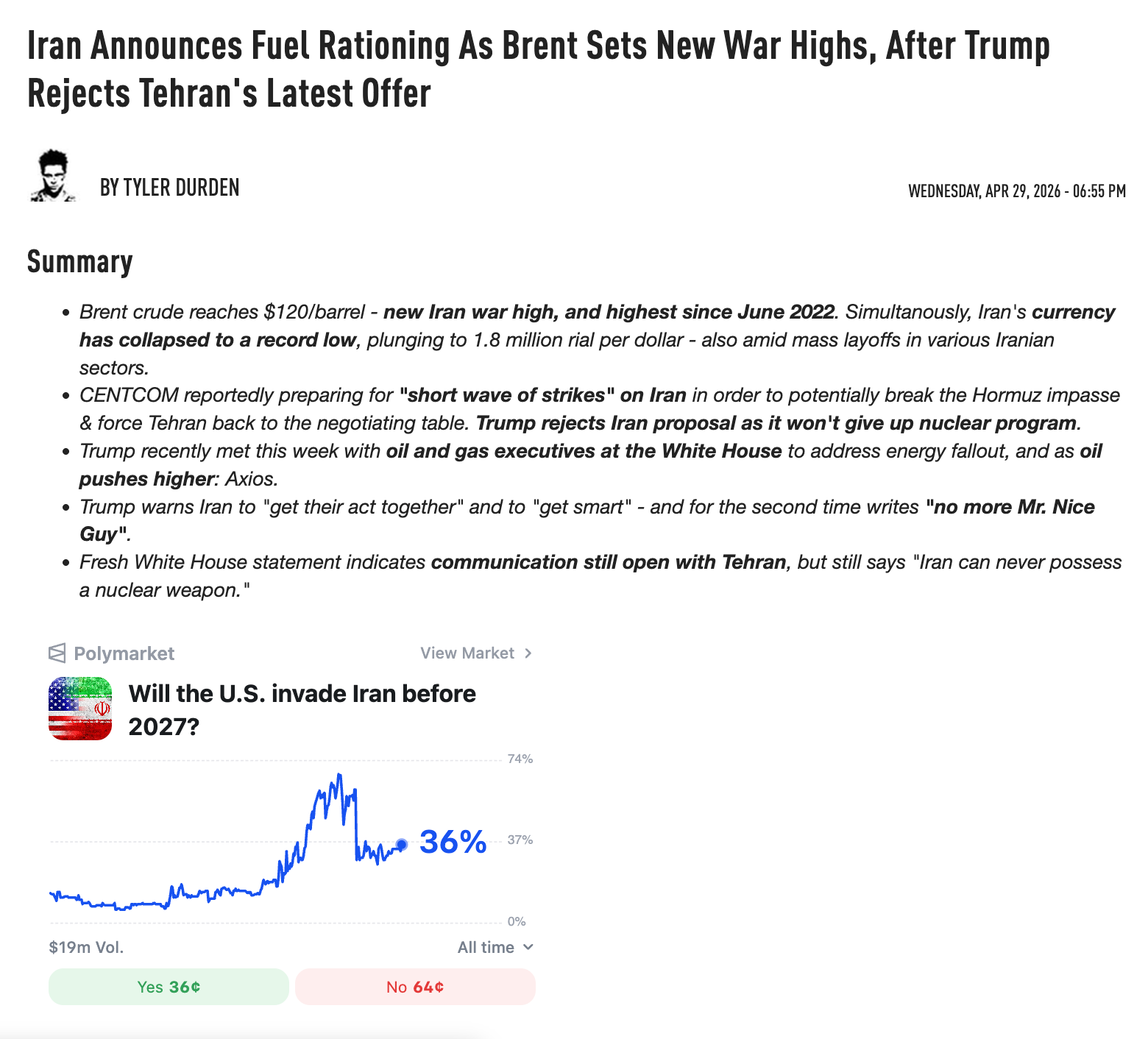
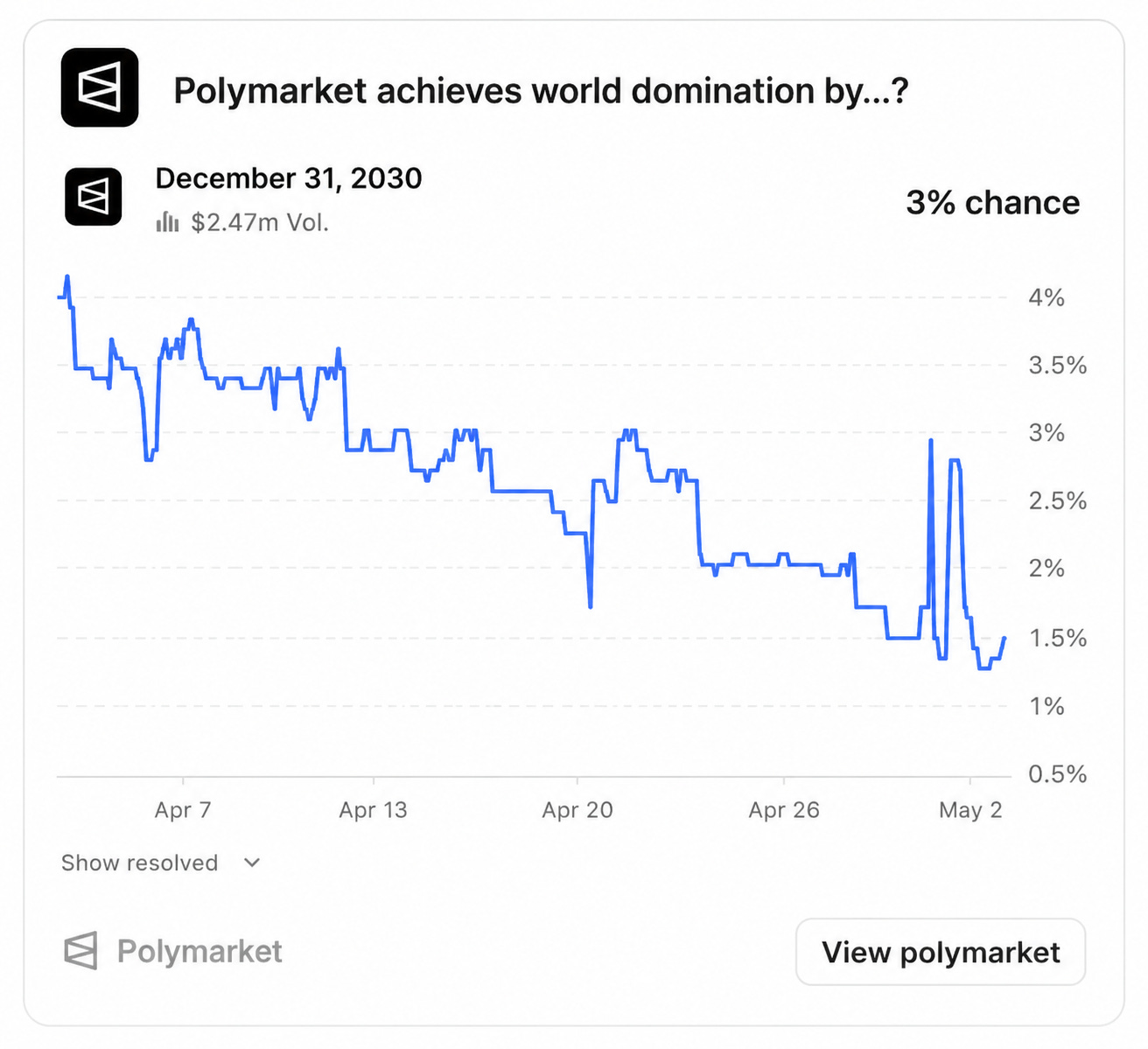
So pervasive is the gambling mentality now, that news websites like Zerohedge often include a related Polymarket graph tied to the editorial they’ve written on geopolitical events (see below). It’s even integrated into the Substack platform.
It has, in a sense, become a perverse barometer for some of the most important geopolitical events. In fairness, it’s unclear whether their inclusion of these graphs is considered advertising or editorial. Either way, the inference is that it’s possible to profit off literally anything, including the misery of your fellow human.
A recent BBC investigation looked at stock trading volume on several financial markets and mapped them against statements from President Trump. They found, “a consistent pattern of spikes just hours, or sometimes minutes, before a social media post or media interview was made public.”
Nine days into the US-Israel war with Iran, Trump told CBS News in a phone interview that the conflict was “very complete, pretty much”.
18:29 GMT: Oil bets surge
19:16 GMT: Trump says war is nearly complete
19:16–19:39 GMT: Oil drops by 14%
The first time the public would have known about the interview was at 15:16 Eastern Time (19:16 GMT) when the reporter posted about it on X.
Oil traders reacted to this news that the conflict could end much sooner than expected by selling oil, with the price plunging 14% in minutes. This added to an earlier fall, taking the overall drop from the highest point that day to 25%.
However, market data shows a huge surge of bets were placed on the price of oil falling at 18:29 GMT - a full 47 minutes before the reporter’s post.
The traders who placed those bets will have made millions of dollars from the movement in oil prices.
Put another way: the joke’s on you.
The official response has been to tighten rules, issue warnings, and emphasize enforcement. The White House has already instructed staff not to trade on nonpublic information in prediction markets. Regulators are signaling a shift toward individual accountability.
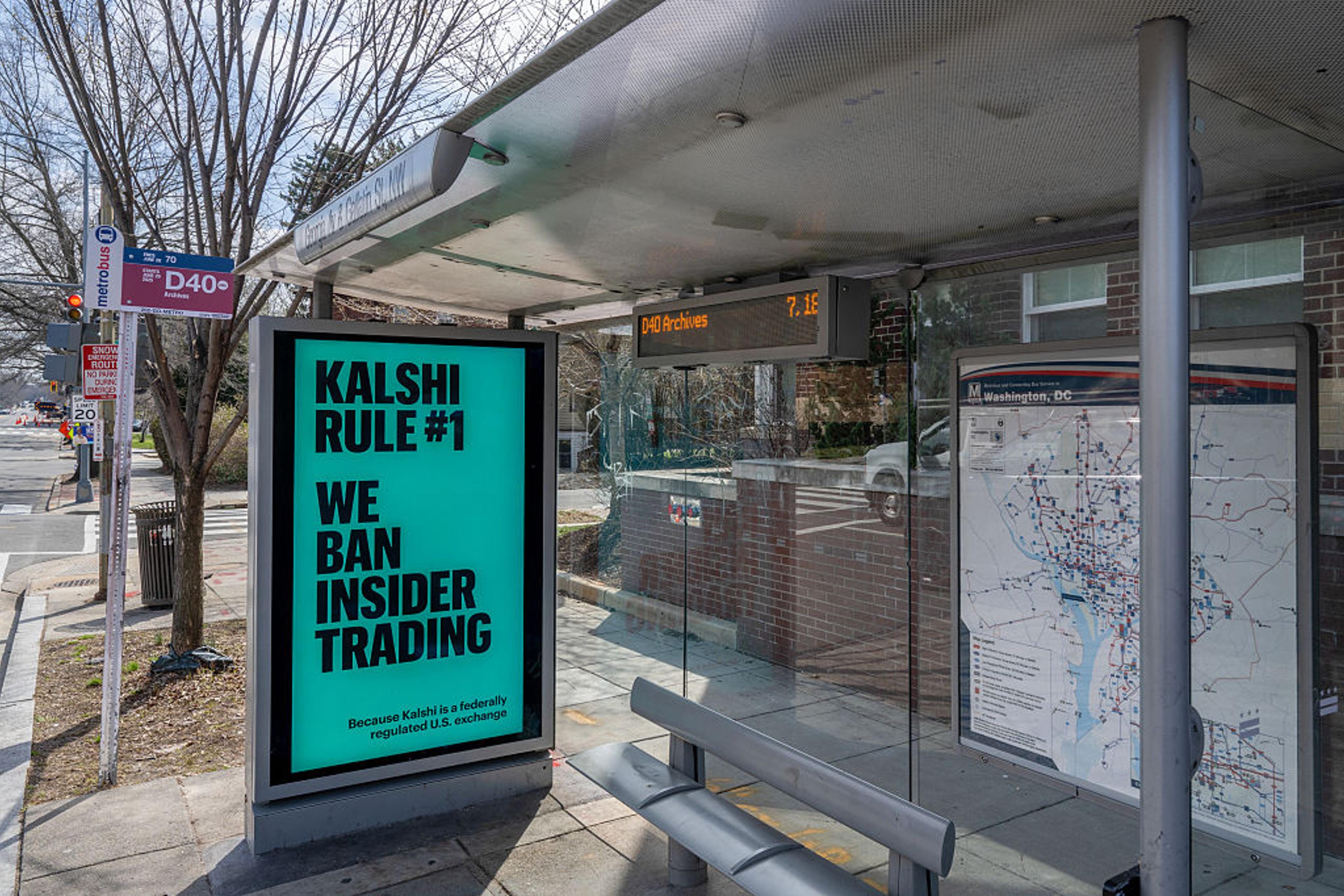
Just this week, Kalshi suspended a Democratic state senator running for a US House seat in Minnesota, an independent running for US Senate in Virginia, and a Republican who lost a House primary in Texas for betting on their own races.
In each case, the “informational edge” comes from everyday professional access: a soldier with clearance, an editor in the editing bay, or a candidate with campaign internals now has a direct pipeline to liquid markets from which huge sums of money can be made.
We’re watching the entire American ethos transformed by a gambling mentality, democratized by access and allowing for a new way to take advantage of those with addiction, mental health, and questionable decision-making who might otherwise see this as ‘entertainment’. Seen another way, this is yet another perfect venue for wealth transfer from those who think they know, to people with insider advantage who do know.
There is one adage worth remembering from the days of analog casinos — the house always wins.
What they have done is to make a new way to create a pump and dump scheme. It not a matter of whether some insider information is accurate, although there will be some to cash in on that insider information.
Insider information is something you need to keep quiet to capitalize on. The bigger picture is that it has created a venue for people to drum up as much hype as possible to create the pump. It has expanded things beyond just the markets and sports betting. Now you can do the same with a wide number of things. It doesn't really matter whether the information is accurate or not. You can throw some money and generate interest and then once the suckers start flocking into it, you can turn around and take advantage and then just pull out before people wise up.
As long as you have a sizable pot of money to start with and don't get greedy, it is a money making machine once you get things automated. Set it up to cash out when you get a 1% rise. Do that every day and you have a huge effective annual percentage rate.
The only risk is running out of people who are both greedy and stupid.






What they have done is to make a new way to create a pump and dump scheme. It not a matter of whether some insider information is accurate, although there will be some to cash in on that insider information.
Insider information is something you need to keep quiet to capitalize on. The bigger picture is that it has created a venue for people to drum up as much hype as possible to create the pump. It has expanded things beyond just the markets and sports betting. Now you can do the same with a wide number of things. It doesn't really matter whether the information is accurate or not. You can throw some money and generate interest and then once the suckers start flocking into it, you can turn around and take advantage and then just pull out before people wise up.
As long as you have a sizable pot of money to start with and don't get greedy, it is a money making machine once you get things automated. Set it up to cash out when you get a 1% rise. Do that every day and you have a huge effective annual percentage rate.
The only risk is running out of people who are both greedy and stupid.