

One Health: a step towards global government
April 2026 quietly marked the moment 'One Health' moved from theory to infrastructure — and from coordination to something much closer to governance.
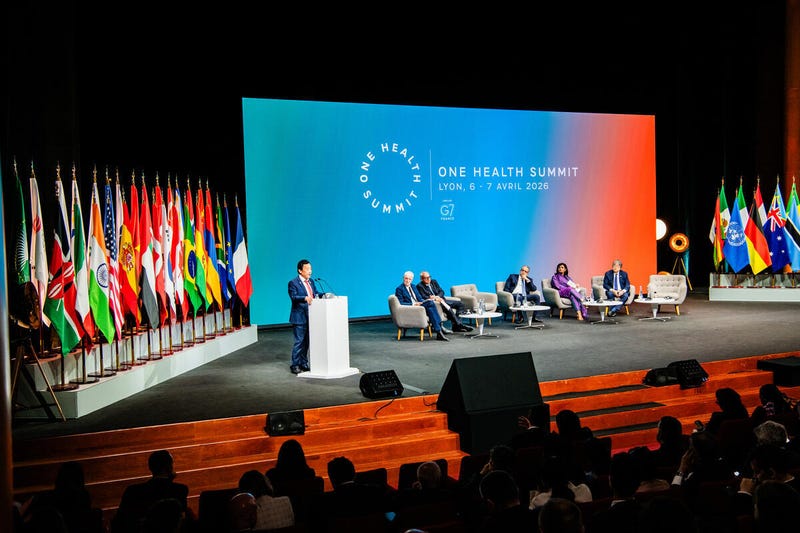
In early April, the French city of Lyon filled with the familiar choreography of globalists getting busy. They’re well practiced, after all — international delegations sporting dark-colored suits, lanyards dangling, moving between conference halls, espresso bars, and breakout rooms. As always, the press releases were carefully timed and negotiated commitments were issued in polished language designed to reassure more than reveal.
Nothing about the One Health Summit seemed groundbreaking on the surface, although the World Health Organization described it as a “milestone.” But what seemed like a staid gabfest actually marked, at the end of those few days, the crossing of a significant threshold.
Put that thought on the back burner for one moment.
Two years ago, we wrote about three diseases that were being hyped by the global public health community as emerging concerns: bird flu, monkey pox, and rabbit fever.

It’s no coincidence that all three supposedly potentially deadly pandemics have animals attached to them and embedded right in their names. Turns out, the entire premise of the ‘One Health’ approach is that human health cannot be separated from animals or the environment. Diseases that threaten human life move across boundaries that can no longer be treated as fixed, the argument holds. Accordingly, there is a pressing need to give up autonomy to a global architecture that can coordinate responses in real time. In public health circles, this has become orthodoxy.
The Lyon meeting in April 2026 moved One Health from theory into infrastructure without any visible public outcry. In doing so, it has begun to reshape how authority itself is exercised.
Here’s how:
For many years in the international development sphere, One Health was an effective way of promoting the much-lauded but rarely attainable goal of coordination. It served as a way for global health agencies to speak to one another across technical silos — but that’s where it remained; the purview of boffins and development bureaucrats.
Lyon was very different. It was the first summit that brought together heads of state specifically around this framework. One Health graduated into the technocratic big leagues by throwing governmental weight behind the launch of a global institutional network, the alignment of hundreds of research bodies, and integrating once loose and disparate ideas into binding international agreements. All of this suggests the system is no longer a bridesmaid, but now a blushing bride — ring, veil and train.
If you’ve read this far in, you might be wondering why any of this matters. Isn’t coordination among technical agencies a good outcome? If these organizations exist, shouldn’t they be working together and sharing knowledge? Answering those questions is the precise point at which this story turns ugly. The graphic below is a hint.
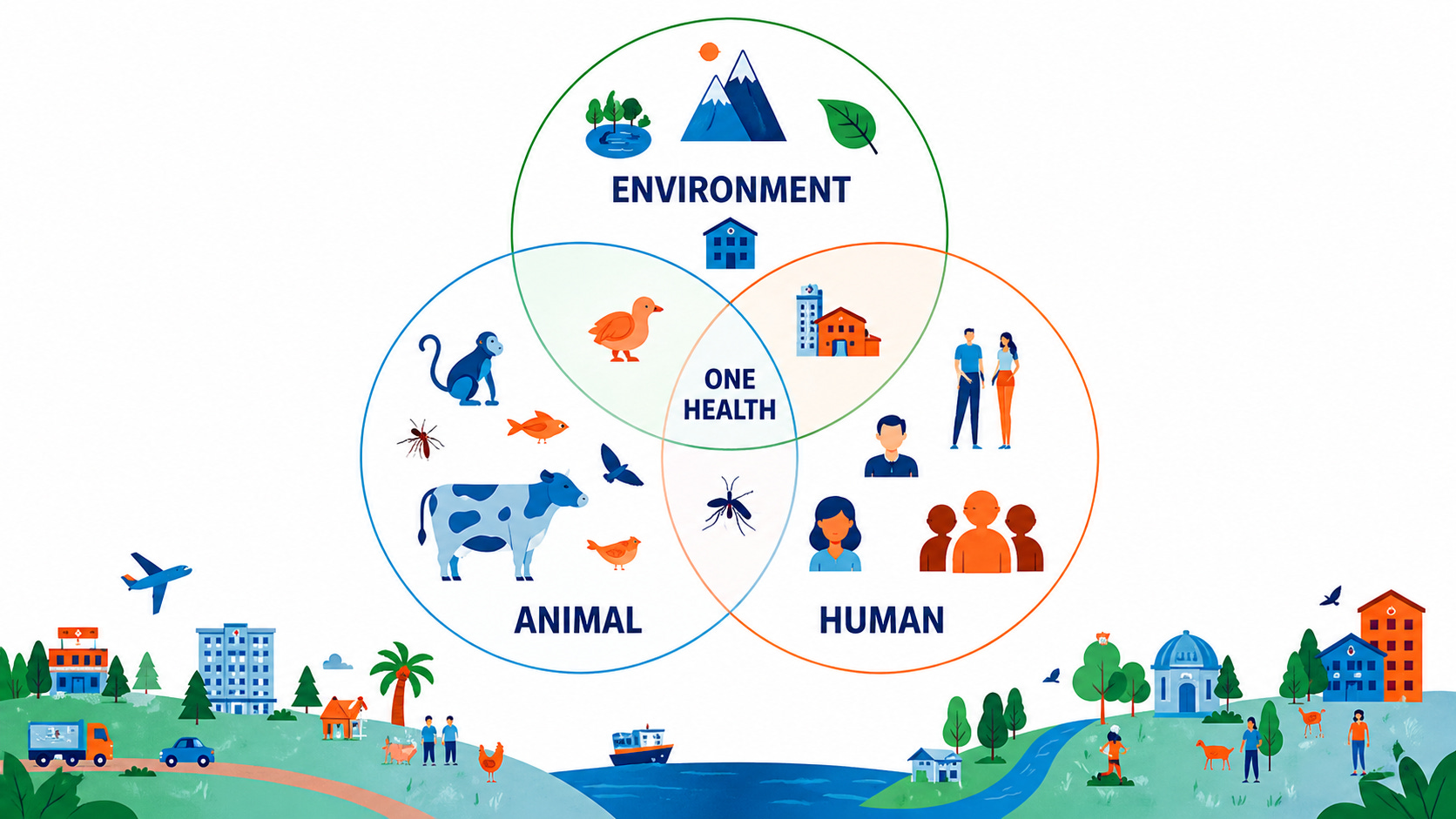
Coordination, in isolation, is not controversial. No one objects to better communication between scientists, faster sharing of data, or a more coherent response to genuine outbreaks. But once coordination scales beyond information-sharing and starts to standardize how risk is defined and how responses are triggered, it’s not just technical coordination anymore — it starts to take on the characteristics of global governance.
That raises more fundamental questions: who gets to decide, on what basis, and how will it affect the rest of us? Just think back to COVID and you’ll see why these questions matter so much.
Revisiting our article from two years ago: Bird flu did not become a mass human pandemic. Monkey pox did not spiral into a global emergency. Tularemia (Rabbit fever) remains obscure enough that most people will never encounter it. Each of these so-called threats, on their own, seems manageable and even marginal.
But seen together — as the World Health Organization would like you to do — and placed under the banner of One Health, these pathogens serve a different and potentially dangerous purpose. They illustrate a world in which risk is all around us. No longer does a crisis emerge, peak, and recede. Now we have constant conditions that must be monitored, modeled, and managed across human populations, animal reservoirs, and environmental systems simultaneously. Naturally, it requires more surveillance, more control, and less individual freedom. Countries, states, or even municipalities that deviate from the coordinated response put the rest of the world at risk. Compliance with a global mechanism is what’s needed for the greater good, of course.
Continuous risk necessitates continuous surveillance. And, if surveillance is continuous, it must be standardized to be meaningful across borders. And if it is standardized across borders, then the authority to define what constitutes a “threat” and what response is warranted to that threat moves upward, away from local or national discretion and toward the unelected institutions filled with ‘experts’ that aggregate and interpret the data.
That’s what Lyon was about. It erected the scaffolding, laid the cornerstone, and has kicked off the rapid construction of global health control.
This is the quiet efficiency of technocratic systems. They do not need to compel compliance in overt ways if they can shape the conditions under which decisions are made. When policy is framed as the inevitable outcome of scientific consensus — when it is presented not as a choice, but as a necessity — the space for disagreement narrows without ever being explicitly closed.
So a meeting in Lyon you didn’t hear about is able to punch above its weight, expediting the convergence of health into a lever to shape your life, all based on the anticipation of a supposed ‘health emergency.’
And if you think this sounds far fetched, you must have been sleeping during COVID. That was the test run. The deeper story running beneath the surface is not Monkey pox, or Rabbit fever, or whatever other panic-worthy illness they can scare us with, but rather the system being built to manage the diseases — and you!
"Naturally, it requires more surveillance, more control, and less individual freedom."
It always comes down to that, doesn't it?
And just like with COVID, they will plan and create the crises.
I'm just going to say it; these people are 'rhe disease'.