

On nomads, tribalism, and letting go
As cities become unaffordable and property itself becomes a liability, people who once equated rootedness with security are reconsidering whether resilience may depend on the ability to move.
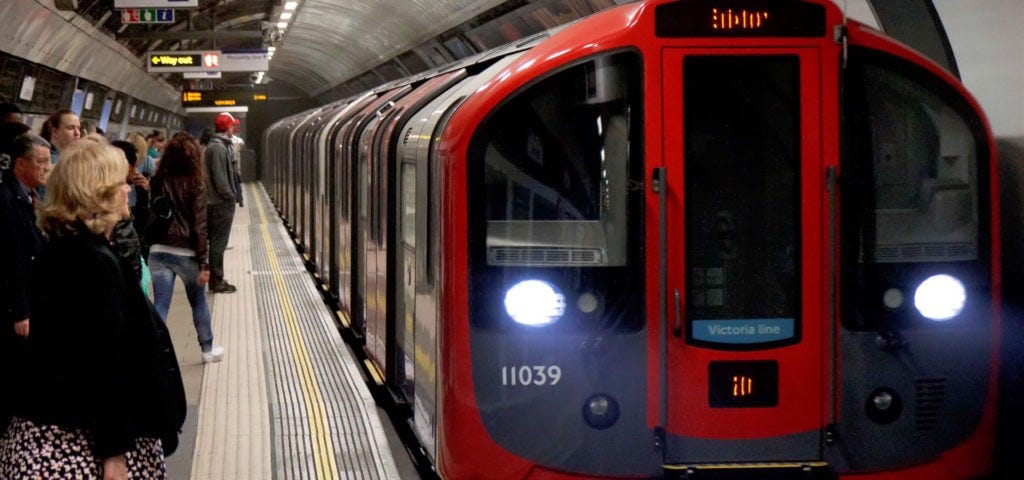
New mid-2025 population figures from England and Wales reveal an interesting phenomenon. From the middle of 2024 until the middle of 2025, the combined population of England and Wales grew to 62 million. London, however, was the only region to experience a drop in population.
Even though London had more births than deaths and international inward migration, this was more than offset by the 420,492 people who moved from the capital to other regions. This population decrease is the first since 1988, with the exception of the unprecedented events of the COVID pandemic.
As the London Evening Standard notes, “More and more Londoners are deciding to quit the city to move to its commuter belt or further afield in search of a better quality of life.”
There’s an odd paradox at play here. Our grandparents and great-grandparents, especially those of us descended from immigrants, moved outward because cities represented crowding, pollution, insecurity, and limited space. We, their descendants, later moved back in, securing desk jobs and recognizing that urban culture could be had with the convenience, safety, comfort, and domestic stability once associated with suburbia. Today, housing costs, family needs, remote work, and declining confidence in urban life are pushing many of us out again — often farther than our grandparents ever went.
*****
For generations, security has been synonymous with being rooted: buying a house, acquiring land, building durable systems, and establishing yourself in a community. Modern preparedness culture largely still accepts this as the working model — the ideal is the homestead, the small farm, the rural retreat or, in its most exaggerated form, the fortified bunker.
But that model assumes wherever you choose to be is — and will remain — affordable, safe, governable, and suited to your needs. More and more, people who believed they were permanently settled are discovering that those conditions can’t be taken for granted anymore.
The deeper story is not just that people are leaving London, but that established people everywhere are starting to treat location as conditional rather than absolute. Nomadic and itinerant populations were historically regarded as suspicious, rootless, and unwelcome, but now even globally important cities are beginning to lose their hold over people who once expected to remain static, urban, and entrenched.
Making a life in one of these urban centers was once a sign you had made it. Today, many urban families are discovering that simulated village life in cities all over the world is probably too expensive, too socially fragmented, and too fragile in the face of growing homelessness, mass immigration, and associated levels of crime to remain permanent.
Will families begin to move outward again — as if to signal a swing of the pendulum when, urban decay of the 1970s saw “white flight” out of city centers?
*****
Disagreement in a city is often avoided because of the sheer diversity and number of people with whom you encounter on a daily basis. At the end of the day, who cares who votes for who, or what part of the political spectrum someone is on? Most everyone is anonymous, just trying to get through the day, avoiding the dog poop (or worse, these days) on the sidewalk, shoo-ing away annoying pigeons, and steering clear of the scourge of annoying-but-necessary tourists, as they crack on to get through another day.
The rhythm of rural life is a distinct contrast. In a village, the same people you interact with and with whom you may or may not get along could sit on the council, run the shops, organize local events, and determine whether a newcomer is accepted or shunned.
Our friend and Book Chat co-host, Susan Harley, recently posted on Substack about what happened when she and her husband revived a local cinema club in their rural British village. Her experience suggests that geography alone cannot deliver shared understanding.
At a local pub, they screened The Agenda — a documentary dealing with claims about global governance, surveillance, digital identification, central bank digital currencies, and the centralization of food and health systems. Depending on where you are in your own personal awareness journey, the film’s arguments might be considered controversial. But that’s the point — ideas in the film are certainly worthy of consideration, discussion, and contemplation.
At least, that was the thought.
At the interval, one man stood up and announced to the room that he would not continue watching what he called “rubbish.” Around half the audience left with him. They then remained outside talking among themselves for more than 20 minutes. When approached and asked: “What exactly triggered you about the film?” (presumably so that a dissection and discussion could occur), the man who initiated the walkout declined to explain what, specifically, had upset him.
The other half of the audience stayed and, afterwards, continued discussing the film at length. Some were overwhelmed or visibly shaken, while others said they felt validated hearing concerns they had previously carried only privately.
The episode exposed a fault line that runs through many contemporary communities. The division was not just between people who reached different conclusions after weighing the same evidence. They appeared to disagree about what could safely or legitimately be considered in the first place.
*****
As we noted in a comment back to Susan, the people who walked out didn’t just disengage. They took the time to create their own discussion outside, just as those who remained gathered around a different interpretation inside. Both groups turned toward people who shared their reaction, but not in equivalent ways. Those who remained continued examining and discussing the film’s claims. Those who left appeared to seek reassurance about what had unsettled them.
We argue this is a perfect example of tribal self-selection. It’s built into our DNA, and it’s been one of the very clever ways in which social media has used our own ancient biology against us, in order to revive the possibility that we all end up in a caste system… easy to control, easy to manipulate, and easy to propagandize.
This is one of the weaknesses in the familiar advice to “find your community” in order to deal with the coming collapse. A community is not necessarily a body of people who understand events in the same way. It may simply be a collection of people who occupy the same place while living within incompatible realities.
Yes, moving from the city to the country may measurably improve life on certain physical metrics, but it doesn’t necessarily eliminate fear, status competition, conformity, or tribalism. In fact, it may amplify them.
*****
One of our recent podcast guests, Kemble Hildreth of Alt_Ordo, explained this challenge well when he told us about the demographic changes in the county near Chattanooga, Tennessee, where he owns a cabin. He said that more than 10,000 Californians had moved to the area in five years and that roughly three-quarters had voted Republican.
“There are people clearly moving from California for political reasons,” he said, “and the irony is they’re being mislabeled by the people in Chattanooga that have got some issue with it.”
All this makes us wonder whether the search for the right place is becoming another form of magical thinking. Is there even such a thing as a “right place?”
Many of us pine for the perfect postal code — social Shangri-La, as it were — where safety, affordability, social trust, competent local government, and neighbors who see the world the same way we do abound. In reality, when people move, they often carry their fears, loyalties, and divisions with them. A community that looks cohesive from the outside may just as readily contain fault lines that become visible only when something genuinely contentious enters the room.
Kemble’s own story adds another dimension to this problem. Sometimes what we think we want doesn’t turn out to be what’s good for us.
He once believed, as many people in preparedness circles do, that resilience required land — preferably a lot of it. He bought seven acres for his young family and spent years imagining that they would eventually build a large farmhouse, keep animals, and create a largely self-sufficient life.
Then, reality caught up to the dream.
After volunteering on farms, working with livestock, and even helping out on Joel Salatin’s Polyface Farm, he learned that the life he imagined wasn’t what he really wanted.

“The truth is, I never wanted the big farmhouse,” he said. Nor, he eventually admitted, did he want to spend his days maintaining seven acres and caring for cows and pigs.
He still values the people who do that work and wants to support them by purchasing what they produce. But he no longer believes that resilience requires duplicating every part of that life himself.
His advice is simple: before committing yourself to a new life, “rent the lifestyle.”
That doesn’t just mean renting a house in the country. It means working on a farm, caring for animals, spending a winter somewhere remote and learning how it feels to be far from a hospital, a mechanic, and a grocery store. Learn what happens when the well pump fails, the road washes out, or you need help that can’t come through the click of an app. Maybe you’ll thrive. Or maybe you’ll recalibrate what you think you can manage.
Kemble has now sold his seven acres and, while he has a small cabin, his main home is in an urban historic centre on three-tenths of an acre. The future he describes with the greatest enthusiasm involves not a farmhouse or a fortified retreat, but a small car, a camper, and a few simple systems that can move with him.
*****
The point here is that, the way to live well in the coming years is not one-size-fits-all. Not everyone should sell their house and live in a vehicle. Not everyone should move from the city to a small rural village. There are a million ways to “prepare.”
Kemble’s change of mind reveals something important about resilience. Property may make us resilient, or it may be the very thing that prevents us from adapting.
Land requires labor, buildings require maintenance, and animals restrict movement. Property taxes and insurance could very well dictate whether or not you can afford your life. A deeply rooted person may possess considerable physical resources while having almost no room to respond when the surrounding conditions change.
Real resilience may lie in the distinction between the people who maintain optionality in their lives and the people who do not.
The old model of preparedness emphasized accumulation: more acreage, more equipment, more infrastructure, more spare parts, and more stored supplies. The emerging model may place greater value on portability: practical skills, manageable expenses, adaptable systems, and relationships that extend beyond one property or community. To take the tribalism thought a bit further, perhaps being prepared to hunt-and-gather in places where abundance exists from year to year, is an ancient form of preparation most of have ignored.
Such an approach requires a different mentality. It asks us not only what we should acquire, but what we are prepared to release. Letting go of a house, a city, a profession, or a political tribe that has become part of our identity can feel less like adaptation than failure, but holding on is not the same as remaining strong.
Perhaps we’re all destined to become nomads, not because we are programmed to wander endlessly, but because permanence can no longer be assumed.
We may still seek to put down roots, but we need to find a way to avoid allowing those roots to become an unwieldy anchor.
This is a very powerful argument for changing the ‘model’ of resilience as the conditions change. Thanks for including my story of the film showing. To finish the story we received an email from ‘angry’ man.
He said “ How surprised he was that such a right wing propaganda film could be shown at the Cinema Club. That it contained dangerous stuff that challenged Vaccinations and Climate Change and should not have been shown”.
Given one of the messages of the film was about censorship this seemed the ultimate irony. But then he obviously had better judgement than the rest of us 😂
As you say in the article you are much more visible in a village than a city. This was a great exercise in knowing who was open, who was willing to talk about ‘stuff’ and who could be a threat in the future.
“Letting go of a house, a city, a profession, or a political tribe that has become part of our identity can feel less like adaptation than failure, but holding on is not the same as remaining strong.”
Wow! I regularly read multiple Substacks, and so many “break their necks” to refine already refined points, solely preach to the converted or righteously declare “this hill I will die on.” Thank you CL for not submitting to the sameness. You make me think —and feel. “I don’t know” is not the same as “I don’t care.” Thanks for the honesty and keeping it real.