

Notes from the edge of civilization: May 17, 2026
Cheat codes; down with 'experts'; paging Mr. Peanut; Way-mo than people want to see.

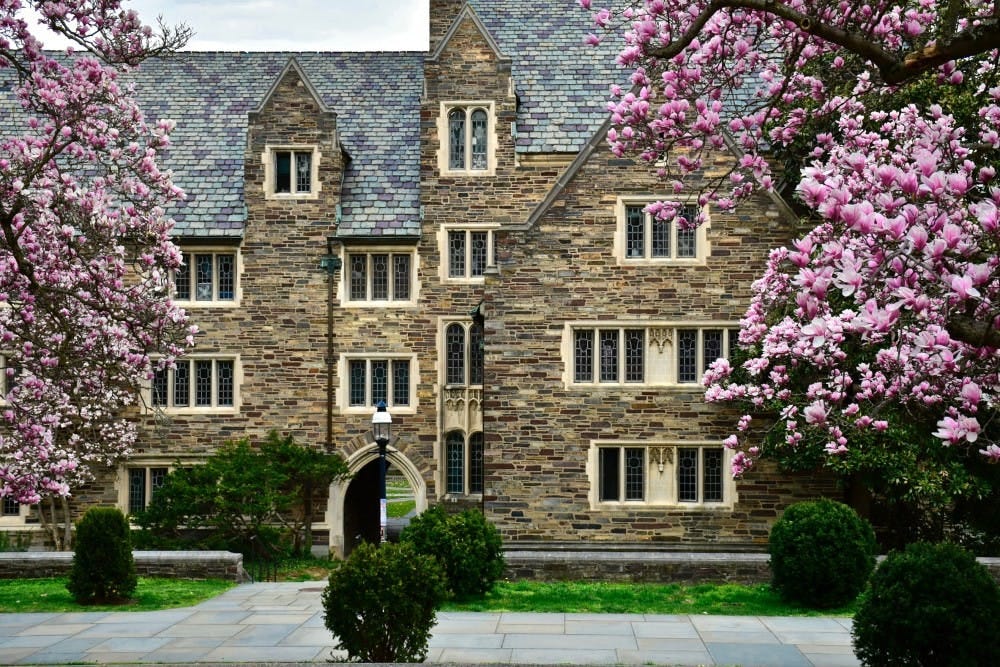
Princeton University just killed a 133-year-old honor system, which allowed students to take exams unproctored, because too many students were cheating with AI.
One of the most prestigious universities in the world — an institution whose entire brand rests on cultivating intellectual excellence, character, and self-discipline — has concluded that the scaffolding that holds its exam system together no longer functions in the age of ChatGPT.
A 2025 survey found that more than 1 in 4 Princeton seniors admitted to using AI to cheat. Roughly half said they knew of honor code violations. And that’s at Princeton — meaning the actual situation across the broader education system is likely much, much worse.
Needless to say, this is bigger than “Pffft — kids these days!” or technology changing classroom dynamics. It points to something deeper: the collapse of trust in institutions that once depended on internalized norms rather than external enforcement.
The irony is almost too perfect. Students are taking on life-altering debt to obtain elite credentials while increasingly outsourcing the intellectual labor required to earn them. Then, many will graduate into a labor market where the same AI systems they used to cheat are rapidly consuming the entry-level white-collar jobs their degree was supposed to secure in the first place.
Debt-financed credentialism meets automated cognition.
For years, the “worst case” climate scenario, the one behind countless headlines about earth becoming uninhabitable, mass extinction events, and civilization-ending warming, was treated as the default future.
It was a very useful tool to scare an entire generation into believing they were inheriting a dying planet. It spawned activists like Greta Thunberg and the Extinction Rebellion movement, the media had a field day with it, and a certain brand of politicians used it to curry favor and create policy.
Now, climate scientists are retiring the scenario, admitting it was never really plausible. It assumed exploding population growth, endless coal expansion, and virtually no meaningful technological shift toward cleaner energy — in other words, a world that does not resemble the reality we inhabit.
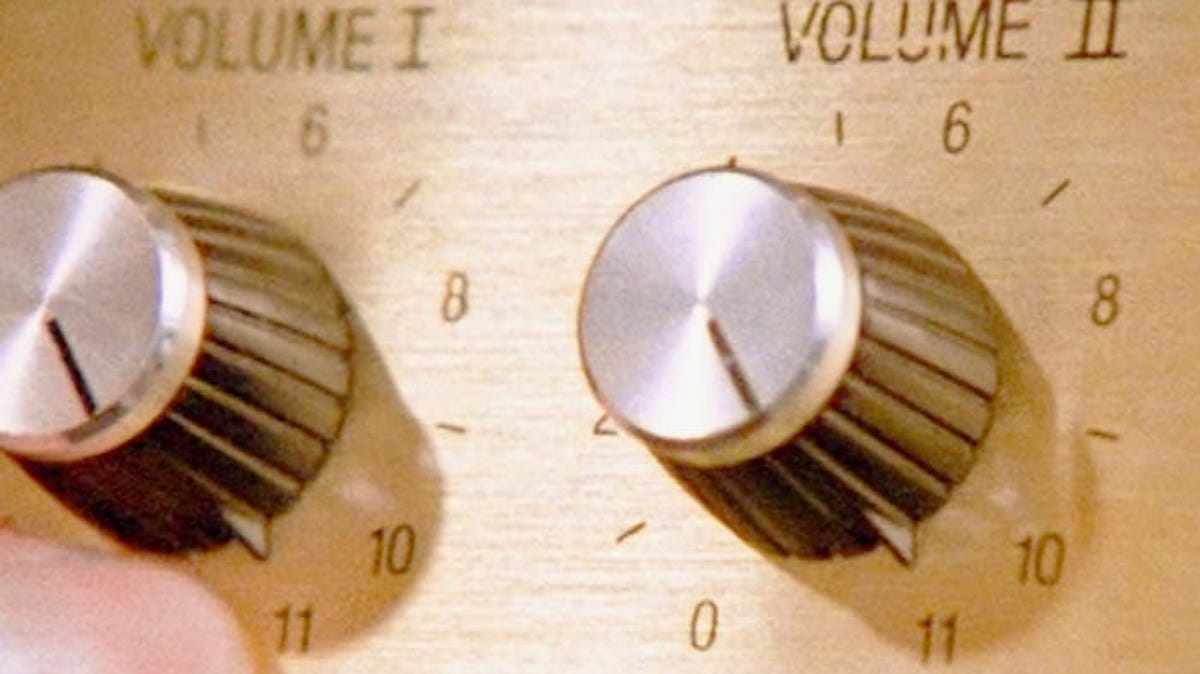
The so-called RCP8.5 scenario didn’t just shape climate science, it normalized a culture of permanent emergency, amping up the hysteria (to use a Spinal Tap reference) to 11. Armed with RCP8.5, every problem was existential and every demand for skepticism was treated like heresy. The hypothetical modeling became the eschatological doctrine of the high-priests of climate and end-time prophecy for the laptop class.
Turns out the world may not be ending quite as advertised. But once a narrative gets entrenched it’s very hard to dismantle. It’s also worth remembering that this is what the future looks like — Silicon Valley is betting on technocrats displacing the political system with an unelected, unaccountable expert class. We saw what this did with a doctor who headed the COVID response in America; consider this a second example of what happens when the grip of hysteria fomented by experts is revised downward. No one is held accountable for the costs of the error, and real science dies slowly from yet one more papercut.

Late-stage societies often look bizarrely decadent and financially stressed at the same time. People cut back on groceries, delay children, live with roommates into their 30s — then queue overnight for a luxury collaboration object manufactured to create artificial scarcity and social buzz. Rome had bread and circuses. We have riots for Swatch watches.
Swatch announced its newest collaboration — with watch maker Audemars Piguet. The watch is called Royal Pop, comes in eight colors, and costs around $400. Potential re-sellers hoping to score a few and flip them for thousands of dollars have been queuing up in places like New York, London, and Bangkok.
Those gamblers may be sorely mistaken — after all, we expect to see these hit Ebay and other marketplaces for a significant mark-up to capture the initial excitement. But honestly, the Royal Pop pocket watch feels more like infantilized luxury for people who want to cosplay eccentric aristocracy while standing in line at the mall. All that’s missing is a monocle, top hat and cane — a modern, Mr. Peanut aesthetic!

Beneath all of this is a deeper psychological shift: when the future feels uncertain, people increasingly optimize for the present — instant gratification. Why save patiently for a stable middle-class future that no longer feels guaranteed when you can at least participate in the spectacle now? Which creates one of the greatest contradictions of this era: people simultaneously insisting the economy is collapsing while stampeding each other in shopping malls to buy a $400 plastic watch on a lanyard.
Civilization may be fraying, but the merch drop starts at 9 am sharp.

A chilling glimpse of our dystopian future came this week via a local news story out of Atlanta, Georgia.
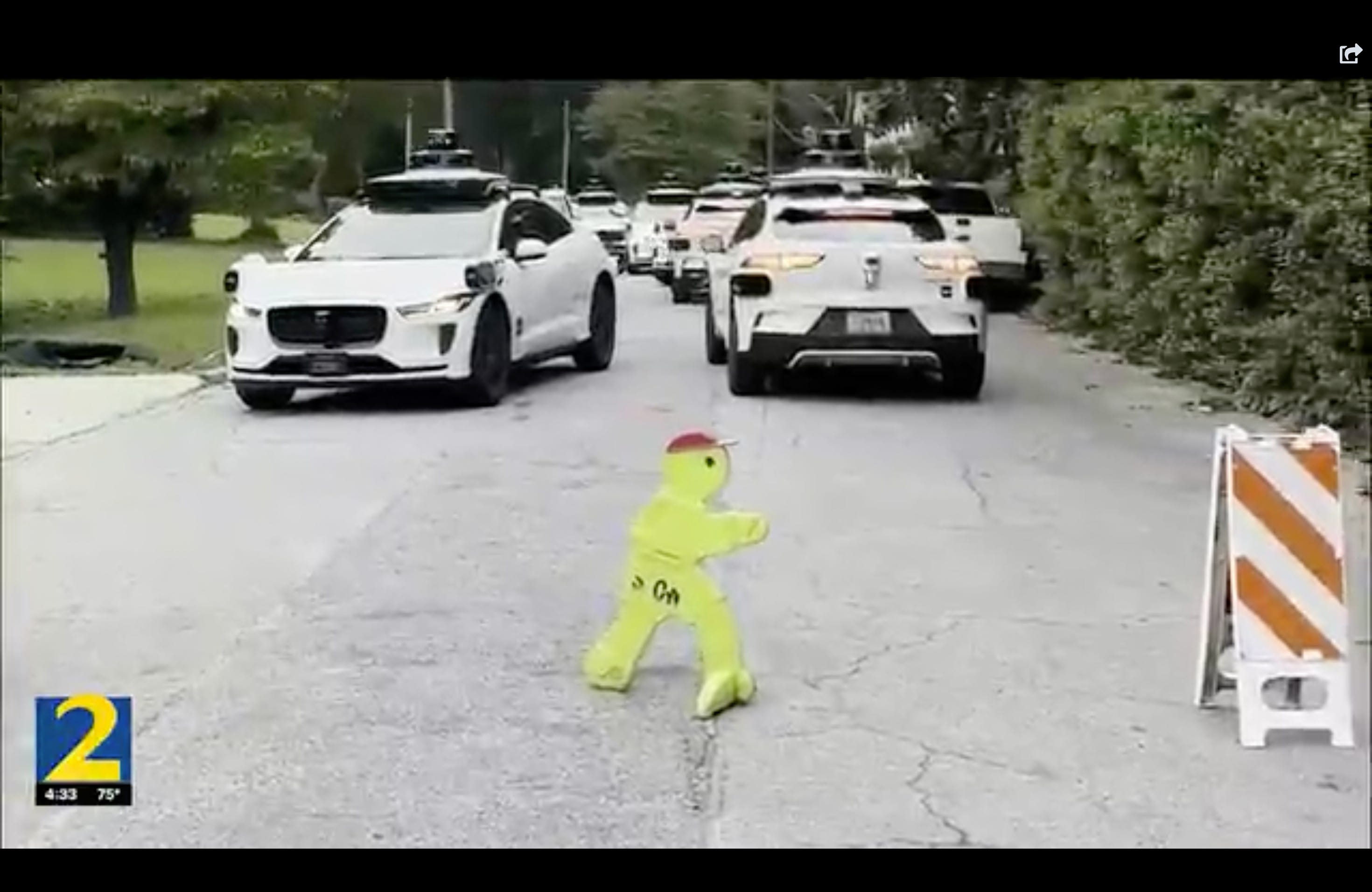
Residents of a neighborhood in the city’s northwest say dozens of self-driving Waymo cars end up endlessly circling their cul-de-sac.
There’s something almost darkly comic about the image: empty robot taxis looping through a suburb where they don’t belong, unable to comprehend why they are there or find a way out.
The best part of the story is when neighborhood parents put out a plastic “Kid Alert” warning sign, which effectively confused the ‘advanced’ AI vehicles into gridlock.
The official metrics say the system is working — Waymo points to “500,000 weekly trips” and improved safety statistics — but the lived experience of ordinary people feels increasingly surreal and invasive. Parents watching empty cars orbit their street at 6 am are not experiencing “innovation.” They’re experiencing loss of agency over the physical space where they live.
In regards to climate change up here in Canada I'm not seeing much of a narrative modification. It still seems to be an unassailable doctrine of the current government despite the inconsistancies and false premises it relies on. Economicly our country is floundering in part due to the rejection of oil pipelines and infrastructure. Even the integrity of our country is affected as oil rich Alberta moves to separate over these issues.
I think Carney and his globalist friends are still using this "crisis" to bring about a new control grid to restrict our movements and freedom, while they profit from new "green" technologies and giant funds like Brookfield. The publicly funded media helps them to sugar coat the dire situation so the awareness of reality is unfortunately sadly lacking.
Great stories of the craziness that prevails and we let happen….