

They sold us the cloud. Now those clouds are enveloping our towns.
As data centers move into communities that were barely warned, residents who ask basic questions about water, power, land, and tax breaks are being recast as a threat.
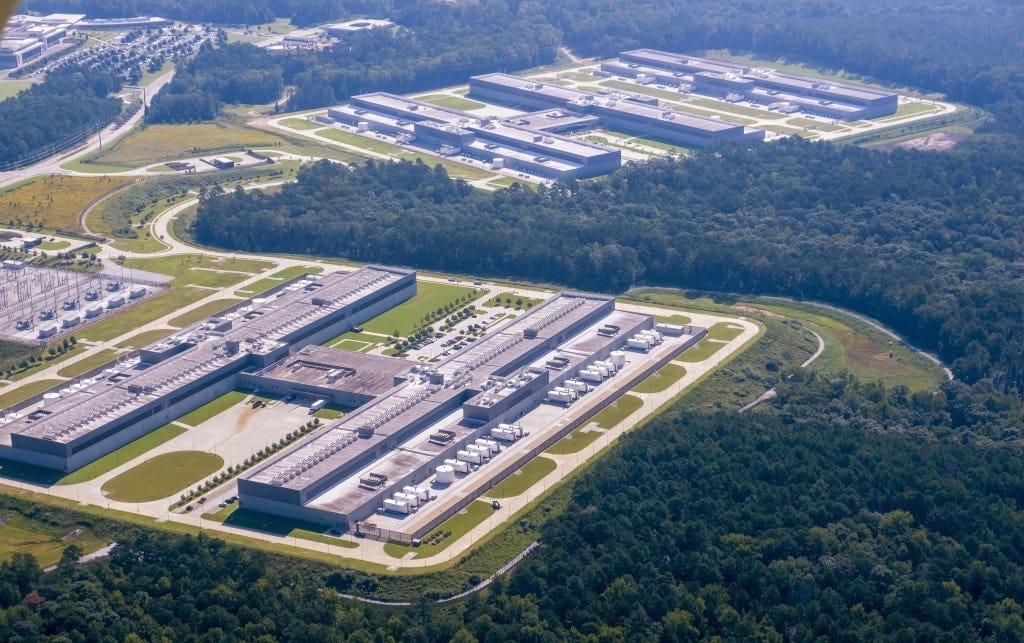
Artificial intelligence crept into our lives in stealth mode. At first it was a mere novelty, then it became a convenience, and soon it was an inevitability. It wrote emails for us, summarized meetings, answered questions, generated images, and helped the kids with their homework. We thought of it all as part of “the cloud.” But soon, it began to help companies cut labor and now it is moving everyone a little faster towards a future we may not even want.
Data centers are demanding space in our communities, massive amounts of water and electricity, and sprawling land to house their servers and supporting infrastructure. They need new transmission lines, substations, cooling systems, diesel generators, tax credits, zoning changes, and industrial buildings the size of small towns.
While some communities across the country are pushing back and successfully blocking, stalling, rejecting, or reshaping data center projects, others are finding out too late that the decision to install the infrastructure has already been made.
Earlier this week we noted that infrastructure like facial recognition cameras often arrives quietly, without meaningful oversight or debate beforehand. With data centers, it seems as though some public oversight is happening, but typically a few steps behind the industrial machinery, trying to catch up with approvals that were signed before most people even knew what was coming.
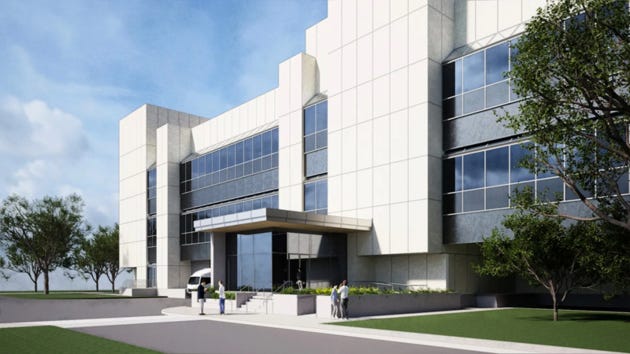
In Kenilworth, New Jersey, CoreWeave is building a massive AI data center on a former pharmaceutical campus right off the Garden State Parkway. The project has been described as a roughly $1.8 billion facility of nearly 400,000 square feet in a borough that spans just two square miles. The data center will draw roughly 66 times more electricity than the entire residential population of the town it sits in. The company received a $250 million state tax credit — $50 million a year for five years — under New Jersey’s AI incentive program. CoreWeave has stated the project will create all of 143 jobs.
In a recent video from The Garden State podcast, host Josh Sobo talks to ordinary people who live nearby who are trying to understand why enormous new electrical poles were going up and why nobody seems to have meaningfully informed them.
“I’ve been here over 10 years and they did not tell anybody they were doing it,” one resident says. He describes the day trucks arrived and started putting up the huge new poles: “There was at least 15 trucks here and they just put them up.”
When asked whether he had spoken to neighbors and what their reaction was, the man’s answer reflected his resignation: “Everybody’s saying, ‘what the hell are we going to do?’ Nobody knew.”
In community after community, residents are discovering late in the process that enormous AI infrastructure projects have been planned for their towns with little public awareness, little plain-language explanation, and little meaningful consent. When they raise their voices to object, they are often confronted with local and state administrations who promise prosperity, economic development, and the old familiar claim that ‘progress’ cannot be halted because of “NIMBYism’ (Not In My Backyard).
These residents are acting exactly as engaged citizens should act when they ask how a massive data center will affect the grid, electricity rates, local infrastructure, noise, emergency planning, land use, and the character of their towns.
All of a sudden, the story has taken a darker turn.
This week, WIRED reported that US law enforcement and intelligence agencies have started tracking and warning about a new category of threat: “anti-technology extremism.” WIRED’s scoop, based on more than 1,000 pages of documents obtained through public records requests, describes federal and local agencies that are tracking anti-tech sentiment tied to AI, job displacement, CEO violence, and data center opposition.

The article quotes from a New York Intelligence and Counterterrorism Bureau report that uses a novel term for what it purports to be an emerging extremism threat:
“The chaotic atmosphere that may result from emergent AI technology in the next five years may fuel large-scale protests that devolve into civil unrest and anti-tech violent extremist activity, especially in large urban areas such as New York City,” the report reads. The term “anti-tech violent extremism” does not appear in any publicly available DHS or FBI domestic extremism reports or guides and represents a novel grouping of a wide range of ideologies under a single extremist category.
To be clear, there have actually been some real and serious incidents related to this issue. In 2021, a Texas man who plotted to blow up a data center in Virginia was sentenced to 10 years in federal prison. In 2025, a Tennessee man was charged with an act of terrorism after he bought explosives and threatened to burn down a data center in Memphis belonging to Elon Musk’s xAI. This February, a man in Illinois was charged with threatening public officials negotiating a data center in the city of Troy, while an Indianapolis city councilman had 13 bullets fired through his front door in April after he voted for a controversial data center.
These attempts to target infrastructure and public administrators should not be minimized or excused, but they stand apart from communities raising opposition to major development projects happening on their doorstep. Protest is democracy. Sabotage and assault are not.
But those cases of isolated violence can become politically useful if they allow a much broader field of civic opposition to be viewed through the lens of ‘threat’. The town hall meeting attendee, person filming a construction site, or neighbor sharing a petition be seen as potential risks through this sleight of hand. It almost certainly puts a chill on the reactions of people in places like Kenilworth, who might be hesitant to ask practical questions for fear of being labeled ‘domestic extremists.’
The timing of this is significant. Just weeks ago, the activist Erin Brockovich launched an AI Data Center Reporting Map to track data center development and community complaints. Her site lists thousands of operational data centers, projects under construction, proposed facilities, and user-submitted locations across the country.
The concerns being reported are not exotic: water, electricity, health, safety, land use, and the feeling that communities are being left in the dark until after permits are already signed.
In other words, the backlash is not fringe. It is local, practical, and growing because people are beginning to understand that AI is an industrial project with neighbors. Those neighbors want answers: Why was this approved? Who benefits? Why does a private, venture-backed AI company deserve a quarter-billion dollars in tax credits? What does the town get in return? Why are public servants ignoring the public?
Their frustration is directed as much at the companies as at the elected officials who are supposed to represent them. Thing is, that’s not extremism. It is local democracy arriving late to a process that seems designed to move faster than they can organize and framed as necessary for the AI economy.
So while communities debate whether or not they want data centers, the real fight is over whether or not they will be allowed to say ‘no’. And that is a debate worth having — loudly, clearly, and on every sidewalk and council chamber where the industrial future is being imposed and democracy is being eroded.
It is the audacity of the tax credits they will receive each year , that got me . Good to hear about how people are fighting back.
The only way to slow down or stop these projects is to sue. Defeating the politicians takes a long time and there is no guarantee that the incumbents will lose. A sympathetic judge can get results much faster and these communities look like they have a good case.