

Facial recognition and the transformation of public life
Mass identity scanning is quickly becoming a background condition of modern life.
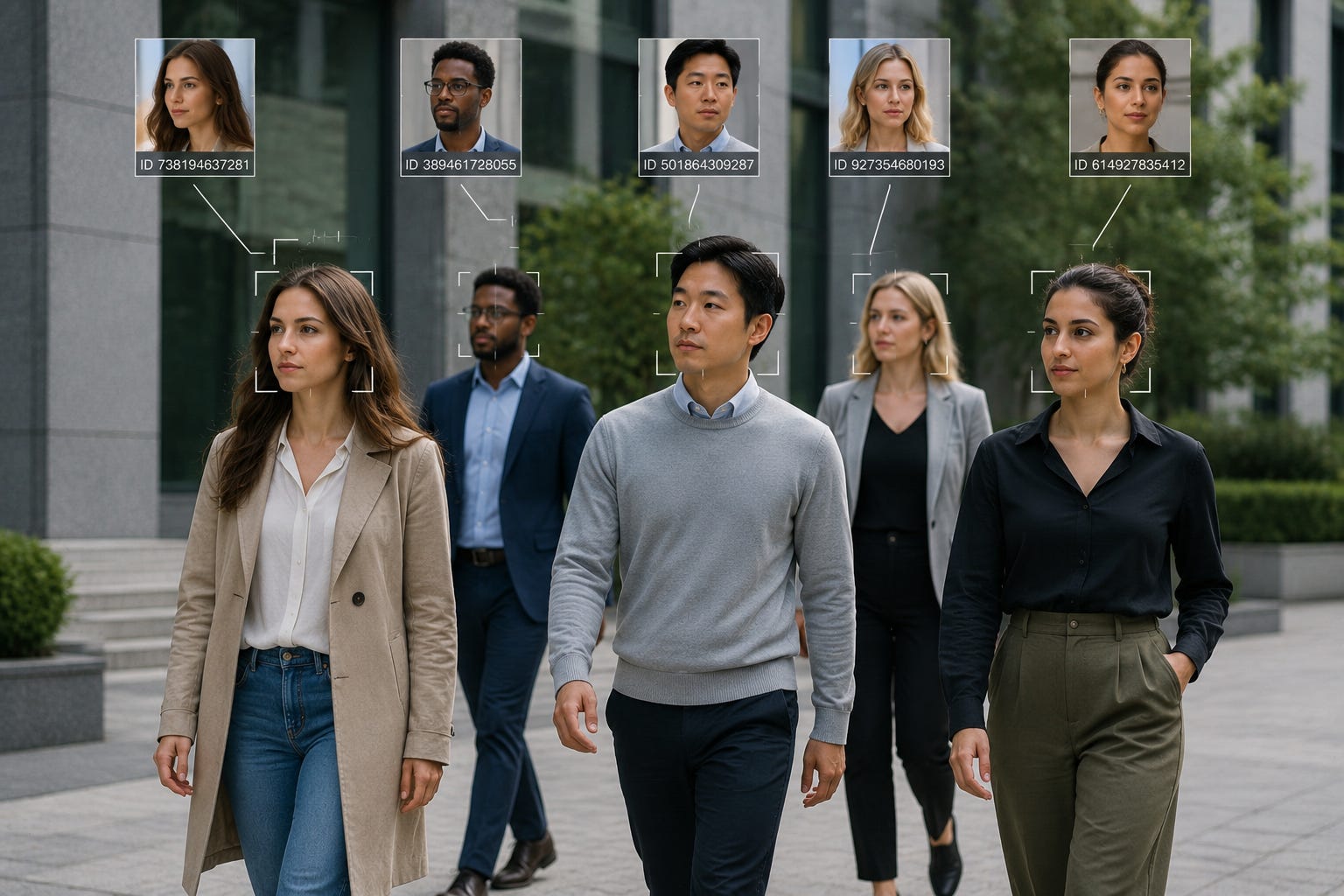
There was a time when surveillance was difficult by design.
A police officer had to physically follow a suspect, obtain a warrant, wiretap a phone. Surveillance was targeted because of how expensive, labor-intensive, and conspicuous it was. But now, in an age when computerized cameras follow our every move, surveillance is (as the kids say) frictionless.
None of this is surprising to Collapse Life readers. We — and many other outlets on Substack and beyond — have been sounding a warning. Yet, given how complex life has become with a flood of constant news taking up mental bandwidth (are we actually close to a peace in the Middle East?), it’s worth reminding readers that the cliché ‘show me your papers’ is no longer necessary — your face gives you away.
Last week, London’s Metropolitan Police expanded live facial recognition after a legal challenge to the technology failed. The force says scanning faces using live facial recognition cameras and checking them against a police watchlist has helped arrest around 2,500 wanted individuals over the past 18 months.
Supporters argue these numbers are clear evidence of a system that works, while critics say millions of ordinary people were subjected to ambient biometric surveillance in order to identify a relatively small number of suspects.
The thing is, both sides are missing the deeper transformation underway.
The relevant question is not: can facial recognition assist law enforcement? Clearly it can. The question needs to be: at what cost? What are we giving up as a society when we are willing to normalize mass identity scanning as a routine condition of everyday civic life?
For decades, we’ve seen a slow and steady creep of cameras in public spaces: on streets, in stores, airports, offices, and apartment buildings. Most people move through modern life appearing on dozens or hundreds of cameras each day with little thought. But AI-empowered facial recognition fundamentally changes what those cameras can do.
In the past, a closed circuit camera would record footage that a human could review later. But often that footage was never screened unless there was a reason for it.
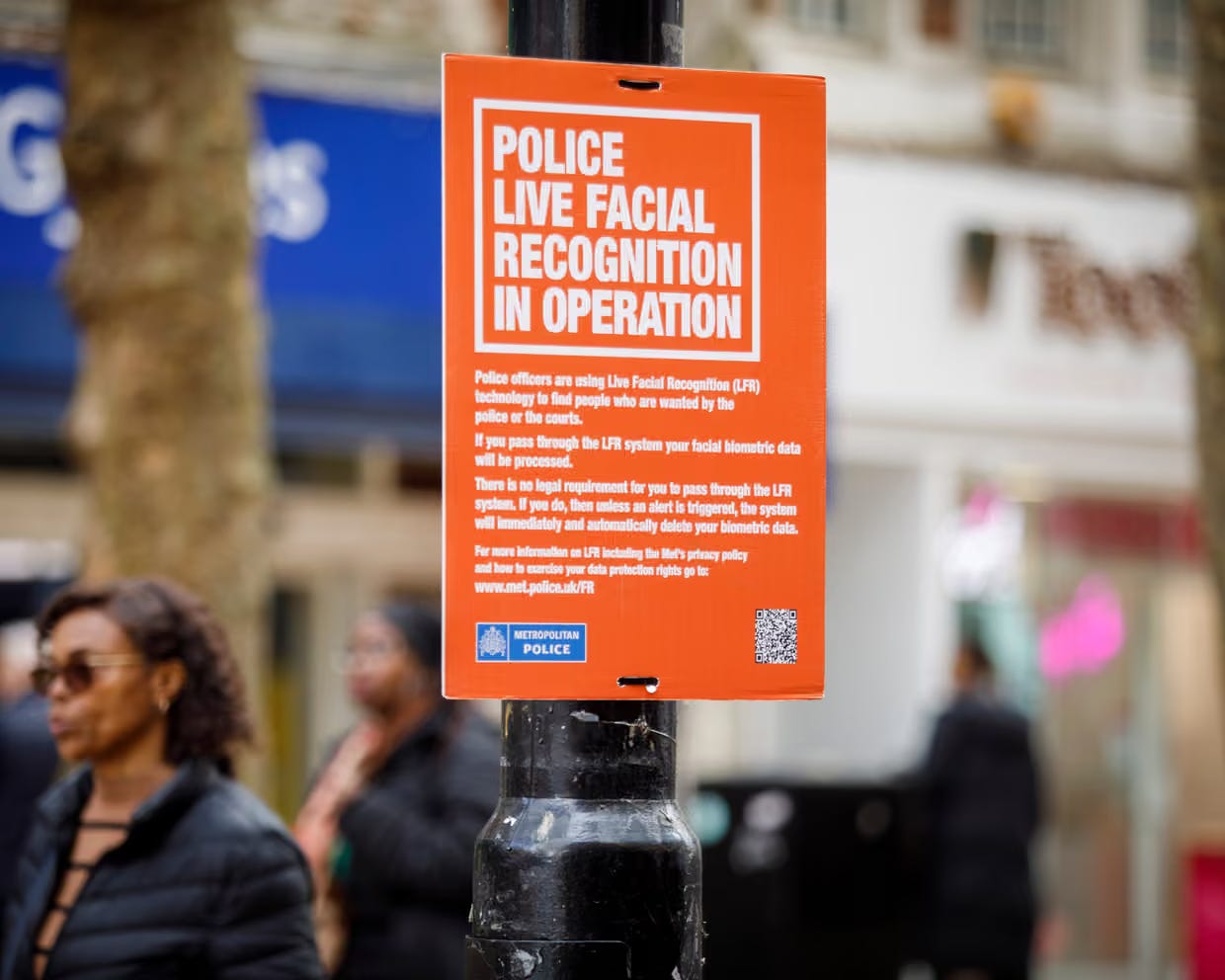
The kind of facial recognition systems in place today, like the ones being expanded in London, turn every camera into a real-time identity checkpoint — continuously scanning, matching, categorizing, and flagging individuals. So it’s not just that public spaces are being observed; it is that every time you go out in public you are being checked against a database to see if you might be a criminal.
There was a time when you could walk through a city, attend a protest, browse a bookstore, visit a doctor, or simply move through society without automatically generating an identity trail that was tied into a centralized system. Facial recognition has done away with that. Your movement is data and before too long, AI pattern recognition of your day-to-day movements will be overlaid on a behavior map in order to predict your movements, your purchases, your likes and dislikes, and ultimately your crime.
Some readers will no doubt respond with: “going out in public always meant a loss of privacy,” or “I think it’s a good idea that we round up all the criminals!” Consider some recent examples that illustrate the human cost of this so-called development.
In the United States, the ACLU has documented more than a dozen wrongful arrests caused by the police relying on flawed facial recognition matches. One Oklahoma woman spent six months in jail for a crime she had nothing to do with, in a state halfway around the country, all because Maryland police, using facial recognition technology, thought she looked like the suspect. Similarly, in the UK, innocent shoppers who were falsely identified by retail facial recognition systems have struggled to clear their names of suspected shoplifting.
We are entering an era where we are all just one mis-identification away from the violence of the State.
Each use case sparks its own political debate, but the broader pattern is more significant: facial recognition is moving from being a specialized tool for investigations to a normal part of civic infrastructure.
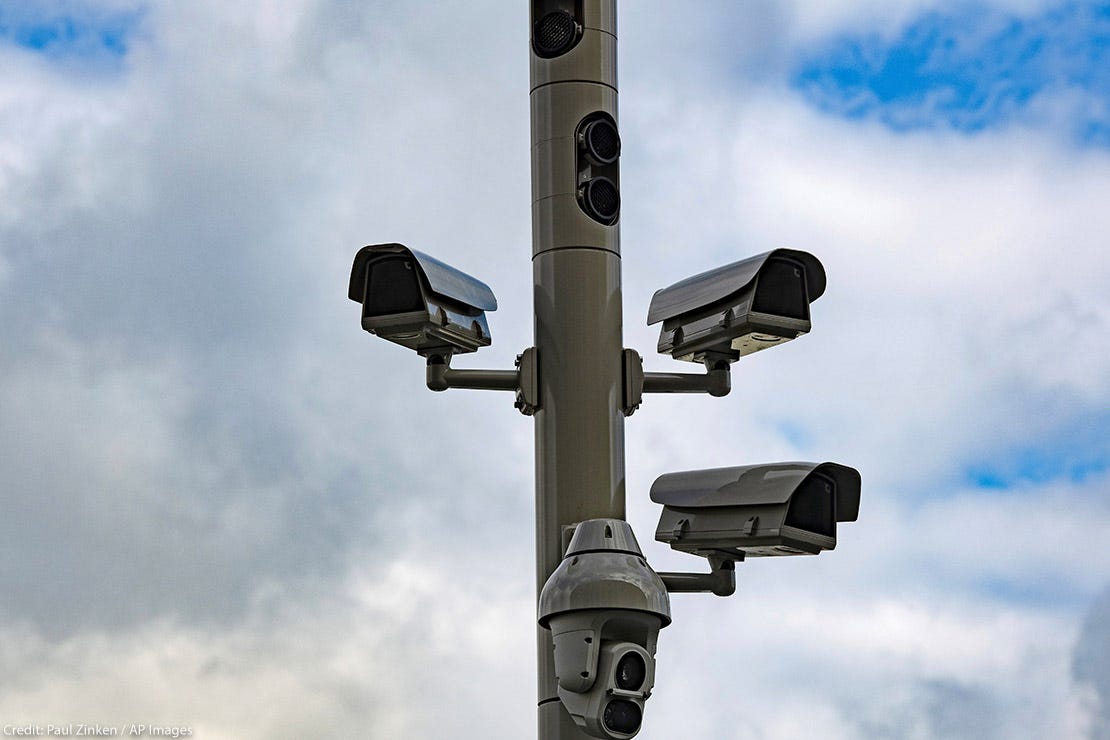
This shift didn’t happen overnight. Just think back to the aftermath of 9/11, and you’ll recognize when the logic of surveillance began being sold to us as a preventative screening tool for our “safety.” As increasingly affordable technologies made mass biometric scanning even more practical it began its spread. As a result, we have real-time identity matching at scale — pioneered in China, coming to a neighborhood near you in America.
At one time, societies would have demanded a public conversation before surveillance was widely deployed. NIMBY — Not in My Back Yard — used to be a real thing when building power generating stations or landfill sites or wind farms. But these days, infrastructure arrives first… often quietly, with meaningful oversight or debate happening afterward, if at all. Once the tools get erected and embedded in transportation, employment, law enforcement, and retail systems, it becomes very difficult to roll them back. So people just learn to live with them. Mission creep happens gradually, and then we forget what it was ever like beforehand.
Technology doesn’t have to be overly dystopian to transform society. It only needs to become ordinary and ubiquitous. That’s the line now being crossed. It’s not even the presence of cameras themselves, but the normalization of continuous facial scanning as a background condition of public life. Once we accept that as routine, we’ll never again default to being anonymous in society.
Your privacy then becomes a temporary privilege, rather than an absolute right. And privileges can be granted and revoked by an institution according to your behavior.
We ain't seen nuth'n yet! Buckle up Buttercups! If our would-be overlords (you know the ones I'm talking about... the self-appointed masters of society that want to reduce our carbon footprint (read rid the planet of useless eaters) and have dominion over those that are left) have their way, privacy, along with human autonomy, is going the way of the typewriter... and it's coming soon to a neighborhood near you!
"... the greater part of the population is not very intelligent, dreads responsibility, and desires nothing better than to be told what to do. Provided the rulers do not interfere with its material comforts and its cherished beliefs, it is perfectly happy to let itself be ruled." - Aldous Huxley
Catherine Austin Fitts has been trying to warn America for years that the technocracy was coming and now it is here and the love child of the Trump Administration. Every fence ever built to keep people out has also kept the other side in when the need arose.