

The math of farming no longer works
Crop prices are down 58%, bankruptcies are up 60%, and farmers on both sides of the Atlantic are questioning whether planting in 2026 is even rational.

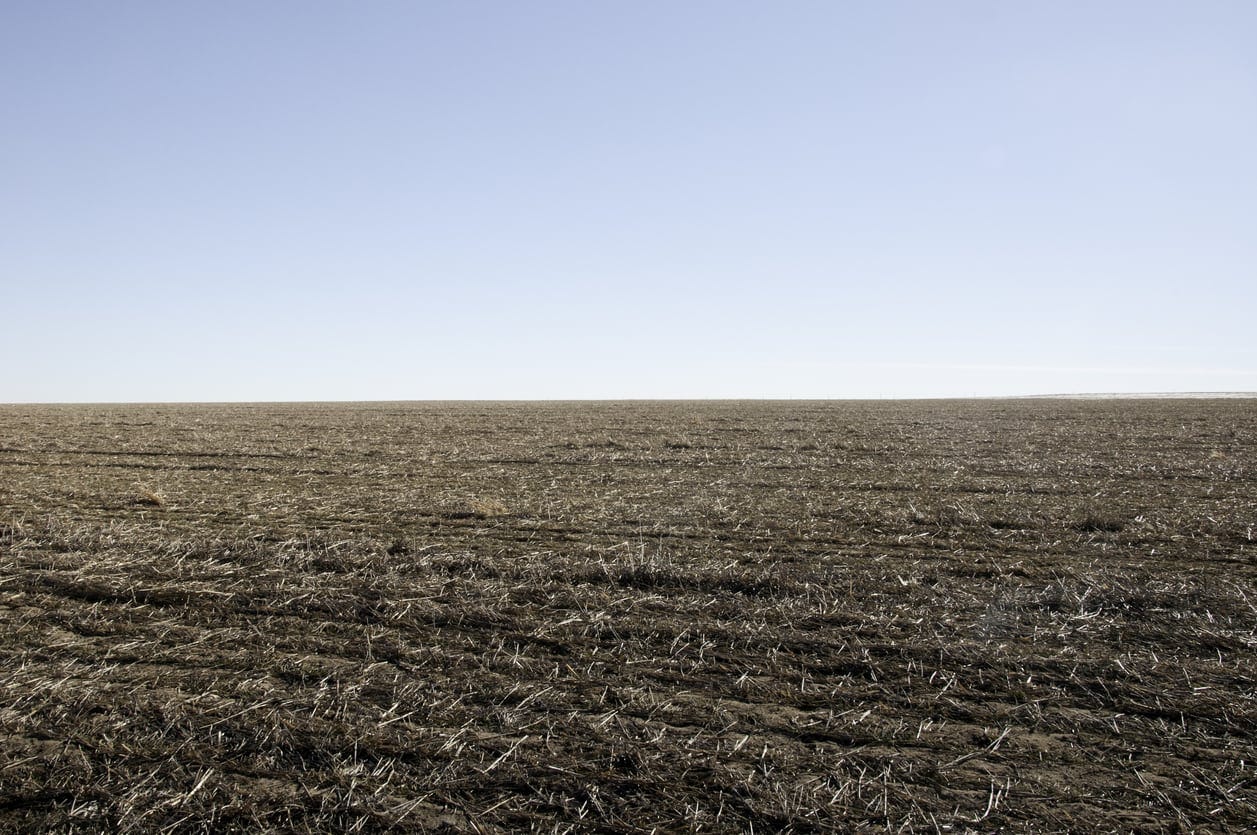
Across the world, farmers are running their numbers and arriving at the same conclusion: why bother planting at all?
In Lee County, Georgia, farmer Alex Harrell recently told AgWeb he is planning to cut production of his 6,000 acres by almost half. Despite record yields, he says many growers are now “paying to farm.” Put another way, land that should be actively producing yield in 2026 is being left idle because planting it would mean farmers would basically be subsidizing their own crops.
“There will be significant acres in my area that won’t be planted next year,” he says. “I’m seeing it with my own eyes in real time. People don’t realize there was ground here in 2025 that didn’t get planted, but you can already see what’s developing for 2026. Guys are walking away.”
In Arkansas, farmers profiled in a documentary by A More Perfect Union described how they operate at losses of $150 to $350 per acre while they watch emergency aid funds flow straight through them and on to big corporate seed, fertilizer, machinery, and grain giants.
Across the Atlantic, in England, fourth-generation Nottinghamshire farmer Oliver Collingham told the BBC last month that the per ton price he is being offered for wheat is below his cost of production. He says if he hadn’t diversified into storage and haulage, the farm wouldn’t survive.
"If the pricing remains like that... it is already looking like it would be pointless us growing any cereals in 2026,” he says.
Although this is happening in two different countries, under two different policy regimes, with different weather patterns and different currencies, the pattern is the same.

The State of the American Farmer report from the Modern Ag Alliance indicates that crop prices have fallen as much as 58% since 2022. Farmer bankruptcies are up 60% year-over-year. Only about half of farmers report that they expected to be profitable last year. And 60% now say farming may “cease to exist as we know it” without course correction.
If the fields are producing but the farms are failing, it’s well past time to look at solutions to the agricultural crisis.
Farmers talk about being squeezed out by consolidation, monopolization, perverse incentives, and subsidies, but there’s another piece of the story… and it involves all of us.
In a conversation for this week’s Collapse Life podcast, regenerative farmer and restaurateur, Mollie Engelhart, talked about whether there’s still time to turn this around — if consumers can shift how they think and how they buy.
“It depends on how quickly people choose to make this important,” she said.
At her restaurant and farm store, she asks guests a simple question: “If you say this is your favorite restaurant, why haven’t you been here in over a year? Why are you spending your money somewhere more convenient?”
“The people get to decide,” she said about the dire situation in farming. “We the people are actually going to decide the fate of this.”
During COVID, Engelhart noted, the majority of people were willing to radically alter their way of life, supposedly for the sake of humanity — even at personal economic cost.
So the question becomes almost painfully simple:
If we were willing to change how we lived because of a virus, are we willing to change how we buy food for the farmers who grow it?
The acres being left unplanted in 2026 are real. If enough farmers decide the math doesn’t work, there will simply be less food grown. Eventually that leads to higher prices, more industry consolidation, and potential dependence on distant supply chains, or food from Big Ag farms, or potentially something worse.
If this situation is news to you, be sure to keep an eye on it; it’s certainly on our radar.
I grew up on a small farm in Australia, and still have regenerative farmers in my family – so sure, this has been "on my radar" for quite some time already. But many thanks for bringing this pressing issue to the attention of a wider audience, because it's really a gigantic one.
The more smaller farms disappear, the less access we have to "real foods", and the more we get forced to eat what the corporate giants want us to. And if you think they could give a fig about our actual health, think again.
Two years ago I wrote and helped produce this video for my close friend and Australian of the Year 2020, Dr. James Muecke. The video is short, and is all about the importance of real food – you know, that stuff that comes from real farmers who are not corporations. I hope you might watch it!
https://youtu.be/S-Dmn7X4l0I?si=A90eg22reMCIVH-3
I live in a small coastal community in the northwestern states. We have local farmer's markets and a co-op grocery store that supports organic farming. I don't understand people that choose Safeway, Fred Meyer, Walmart to buy their food from. Is it more convenient, less expensive? Yes, but the local, organic produce tastes so much better, is far healthier and supports the local farmer and the community. Why do we even need to discuss the options? It's obvious which way to go.