

The UN is bringing the world to Nairobi — and pricing locals out of it
As the United Nations expands its headquarters in the name of efficiency and 'empowering' the Global South, residents living beside the diplomatic enclave fear rising rents and displacement.


Gigiri is a leafy enclave in Nairobi often dubbed the city’s “Beverly Hills.” Diplomatic vehicles regularly glide down tree-lined streets, past golf clubs, swimming pools, fancy hotels, and gated communities currently preparing for a new influx of international civil servants.
Just over a mile away, the roads narrow into crowded passageways in the Githogoro informal settlement. A recent article in Al Jazeera tells the story of 36-year-old Agnes Karimi, who manages a stall selling meat in Githogoro. Every day, she stands over a wooden table cutting meat in the heat. And every day, she watches part of her stock spoil because she has no electricity to power a refrigerator.
The reality gap between those two locations is now at the center of a growing tension surrounding the United Nations’ proposed expansion in Kenya’s capital. As part of a broader restructuring agenda, the UN is relocating major operations and staff from expensive Western hubs like New York and Geneva to Nairobi, a move framed by officials as both financially responsible and symbolically important for the “Global South.”
The UN argues that operating costs in East Africa are dramatically lower, that Kenya has already established itself as a regional diplomatic center, and that decentralization represents a long-overdue redistribution of global institutional power.
Yet on the ground in Nairobi, stories like Agnes’ highlight how the arrival of thousands of highly paid international staff is not actually an act of empowerment, but rather the expansion of a parallel economy that threatens to deepen the very inequalities international institutions claim to address.
“I only wish that the UN community could help us get electricity,” Agnes told reporters. “I could buy a refrigerator to add to my stock and ensure I have fresh meat and food for my clients.”
It’s not inconsequential that the UN recently warned of a worsening liquidity crisis and budget shortfalls severe enough to affect operations. “The crisis is deepening, threatening programme delivery and risking financial collapse, and the situation will deteriorate further in the near future,” Secretary-General Antonio Guterres wrote in a letter to ambassadors in late January.
At nearly the same moment, the UN General Assembly approved close to $340 million for major construction projects at the Nairobi campus, including a new Assembly Hall and infrastructure upgrades intended to accommodate expanded operations. That work is already underway, with the new office buildings inaugurated in early May along with groundbreaking of the conference facility.
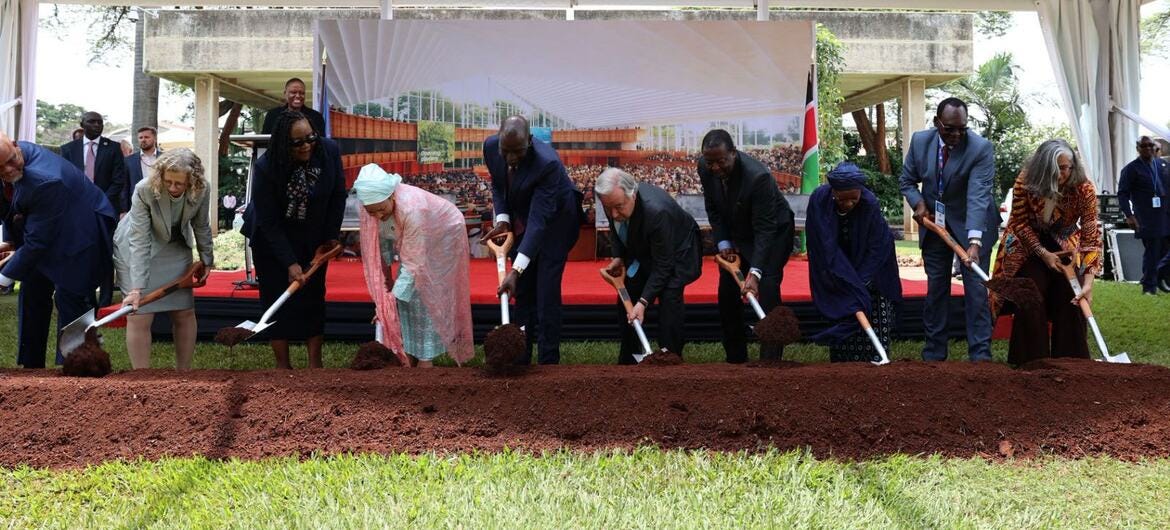
Officially, there is no contradiction here. The budget crisis facing the UN and the Nairobi development budget, come from separate funding mechanisms; the investment is being presented as a long-term cost-saving measure. New York and Geneva are among the most expensive administrative cities in the world, while Kenya donated land for the complex. Relocating staff to Nairobi could significantly reduce long-term real estate and operational expenditures, UN officials say.
But the costs avoided by an institution do not disappear, they are simply redistributed. In Nairobi, that is already becoming brutally obvious.
Al Jazeera’s report indicates that the city’s upscale districts — Runda, Muthaiga, Kitisuru — have begun preparing for the expected influx of international personnel. Luxury housing developments are being accelerated. International schools are expanding. Restaurants and long-stay hotels are repositioning themselves toward a new diplomatic clientele. According to Joachim Ombui, chairman of the Landlords and Tenants Association of Kenya, rental prices could rise by 10-15% by 2026 as developers target incoming UN staff with gated communities and mixed-use luxury developments.
Rents of just a few thousand dollars a month may sound like a dream compared to Geneva or Manhattan, but they skew the market for local people in Nairobi. In districts like Ruaka, located near the UN complex, journalist Rwamba Njagi told Al Jazeera that rents that recently sat near $155 per month have climbed beyond $380 in only a few years, driven by speculation, infrastructure expansion, and investor anticipation surrounding international demand.
Housing costs already consume between 40% and 60% of many middle-class incomes in Nairobi, according to local real estate reports cited by Al Jazeera. The arrival of thousands of globally salaried professionals into an already strained housing market will not go over particularly well.
Njagi described how families who inherited land in these rapidly developing areas sold to investors and developers, only to return later as watchmen and caretakers on the very properties their families once owned. Meanwhile, nearly 60% of Nairobi residents continue living in informal settlements occupying only a tiny fraction of the city’s land area.
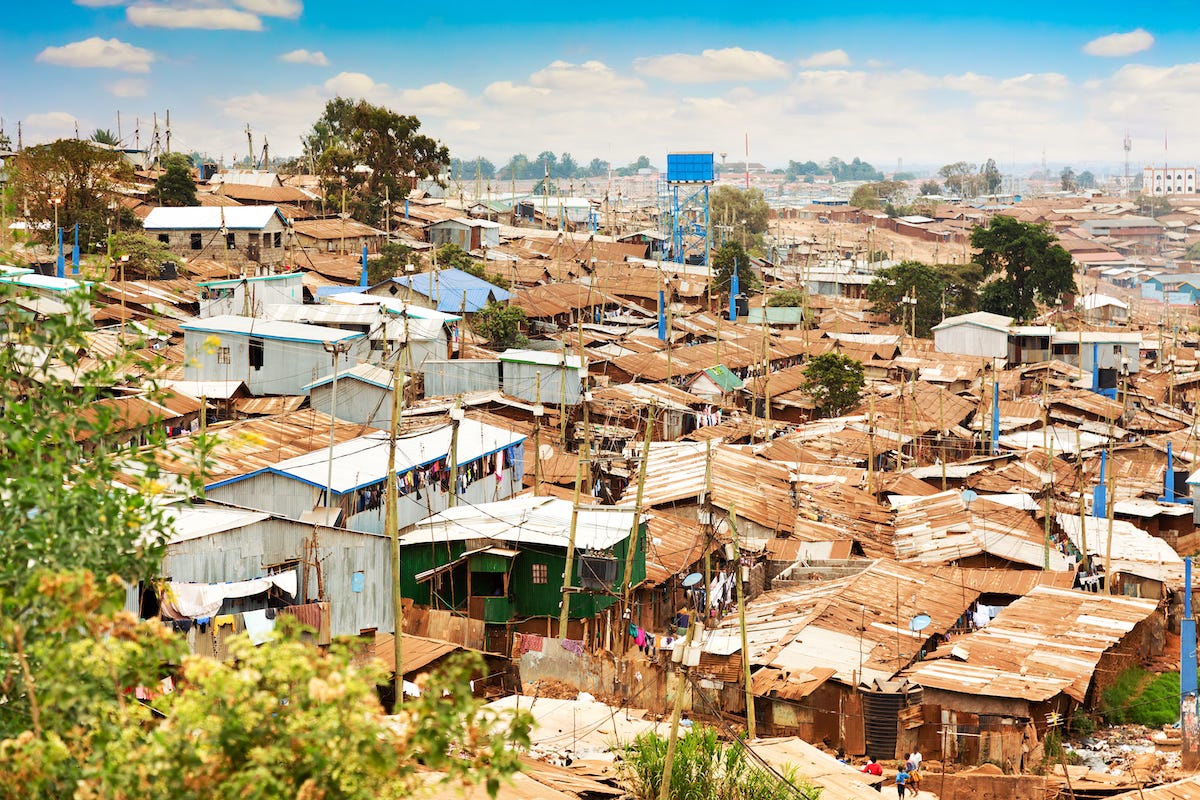
The geography begins to resemble something older than globalization likes to admit.
Colonial administrative capitals were often organized around insulated districts where foreign officials lived beside, but not within, the societies they governed. Roads, electricity, sanitation, and security concentrated around those enclaves first. Economic activity flowed toward them. Land speculation followed. Entire urban landscapes reorganized themselves around the needs of a relatively small international class whose purchasing power vastly exceeded local norms.
The modern diplomatic ecosystem insists it represents the opposite of that history. Its language is development, inclusion, sustainability, partnership. Yet the polished rhetoric collides with the material reality of rising rents, speculative housing markets, and infrastructure increasingly optimized around globally connected corridors.
Years of development promises have also produced visible exhaustion. One resident of Githogoro, Simon Awene, told Al Jazeera that “the only time anyone helps us is when they are pushing for their agendas.” International organizations arrive carrying the language of development and opportunity for all, yet for many communities living beside these projects, daily life changes very little except for the cost of remaining where they already are.
The deeper question hanging over Nairobi is whether global institutions still understand the environments they create around themselves. The UN presents Nairobi as evidence of decentralization and empowerment — a transfer of institutional weight away from expensive Western capitals toward Africa. Yet the mechanics of the move increasingly resemble a familiar form of administrative offshoring, where wealthy institutions relocate operations to lower-cost regions while importing wage structures capable of distorting the surrounding economy.
The result is a schizophrenic city, one torn apart by two parallel realities existing side by side. Ultimately, the question becomes whether the UN’s relevance in a rapidly changing world actually unleashes forces it purports to combat and bifurcates places like Nairobi into K-shaped economies where everything flows to the wealthy internationals at the expense of locals eking out a living.
I would think the UN knows perfectly well what the effects of its relocating would do to the local economy. They are the World Authority on underprivilege after all.
When the first world invades the third world, the impact is seldom even considered, let alone addressed ... and it's always the same... Take for instance the situation where well-to-do Americans are expatriating from the U.S. to Central America and the Caribbean, and the adverse impact that is having on the local population in those countries... it's all the same... rising rents and displacement.