

The lesson the queue teaches us
Waiting in line for a Soho boutique looks like a lifestyle choice. But it's also practice for metered access, moralized patience, and professionalized scarcity.
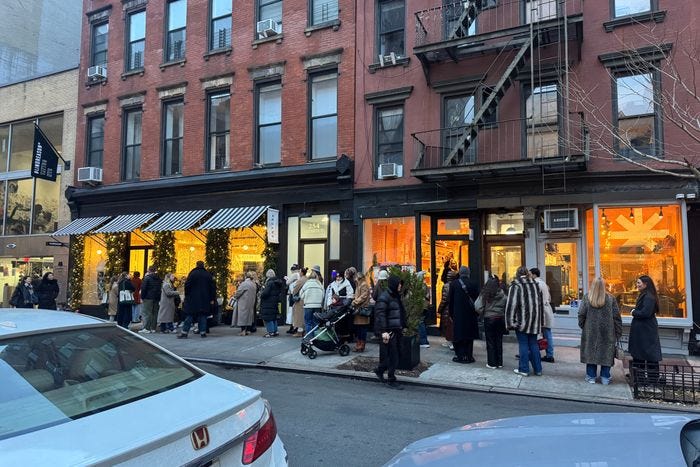
New Yorkers tend to fall into two camps: those who will wait in lines wrapped around the block to access the trendiest restaurant or boutique, and those who refuse to ever join one of those lines.
In more than two decades of living in New York, the Collapse Life team remembers only one occasion of waiting to be seated in a restaurant and it was a no-regret moment. Una Pizza Napoletana (then in its original East Village location) ran out of pizza dough minutes after we sat down, meaning we were among the last to eat that night. And the irascible chef left the city later that week, meaning we were among the last to eat at that location ever. In (20+ years of) retrospect, probably worth it.
A tiny article in New York Magazine’s The Strategist yesterday noted that even so-called “normie” stores now have velvet-rope queues. Apparently bouncers mete out access to fuzzy cardigans and bottles of perfume like it’s a nightclub, not a retail shop.
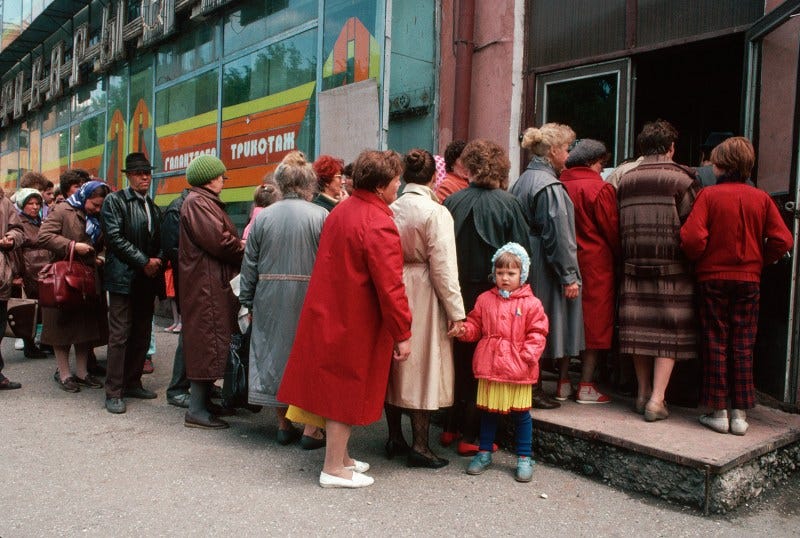
If you’re old enough to remember the photos from the Soviet Union — the thick coats, empty windows, crowds lined up for “maybe bread, maybe nothing” — you can feel your mind recoil. Bella Druckman, the junior writer who wrote the Strategist piece, was likely not even born when that imagery got burned into Western consciousness. The cultural memory of austerity has faded enough over the decades that we can now flirt with the act of queuing without recognizing what we’re rehearsing. Who knew — communist chic is now trendy!
In a city of abundance, waiting in line is entertainment, a form of status theater. In New York, you don’t even have to wonder what people are waiting for anymore — there’s now an app-in-progress literally called “What is this line for?” built to tell you what the queue is, how long it is, and whether the wait is worth the bother.
If you’re not the kind of person who waits for anything ever, late-stage abundance has you covered. TaskRabbit has turned “waiting in line” into a full-on category of paid labor. Just hire someone at the click of a button to stand there on your behalf — prices begin at $29 an hour and there are currently more than 5,000 line-standers available for the job — perhaps an apt insight into how ravaged (desperate?) workers in this economy actually are.
What does it say about where we are as a society when thousands of people are available, on-demand, to perform patience for other people? One thing it says is we are actively metabolizing scarcity — professionalizing it, turning it into a gig.
Just over a decade ago in Britain, politicians seriously floated the idea that immigrants should be taught how to queue properly as part of integrating into British life, treating queuing as a form of moral education. In their framing, “taking one’s turn” is central to social cohesion.
Which sounds cute and quaint until you notice what hides beneath: the line isn’t just a way to organize strangers, it’s a civic virtue. A test of belonging and a ritual of compliance, dressed up as an act of fairness.
New Yorkers are being taught the same lesson through boutiques, restaurants, and “viral” pop-ups rather than citizenship books.
Some will say this is voluntary and only idiots will opt in. Fair enough — it is optional, for now. You can always walk away, order online, declare you’re not “a line person.”
But soon enough, the optionality disappears. First, there’s limited capacity. Then, timed entry, followed by appointment-only, followed by verification. Then come priority lanes.
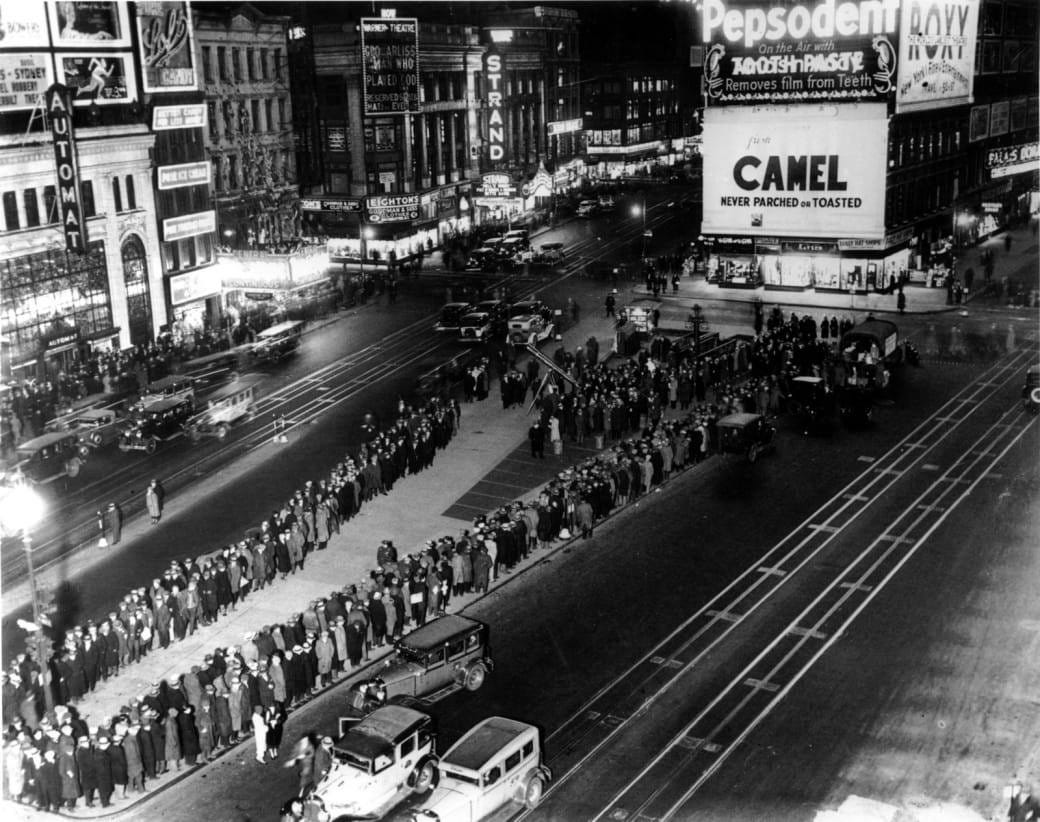
By the time we need to line up for essentials — housing, medical care, energy, water, decent food — we won’t experience it as a symptom of collapse. We’ll be so practiced at it, we’ll just make peace with the line.
Line waiting for cash seems pretty bazaar. What do the other people in line think about that I wonder? Doesn't seem fair to everybody else who have to physically wait in line. I would say it's a little unethical but I can see how it could be popular for people, like me even, who don't like line waiting much.
Great observation. Here is a relevant piece about waiting:
https://iamgarrett.substack.com/p/the-waiting-room