


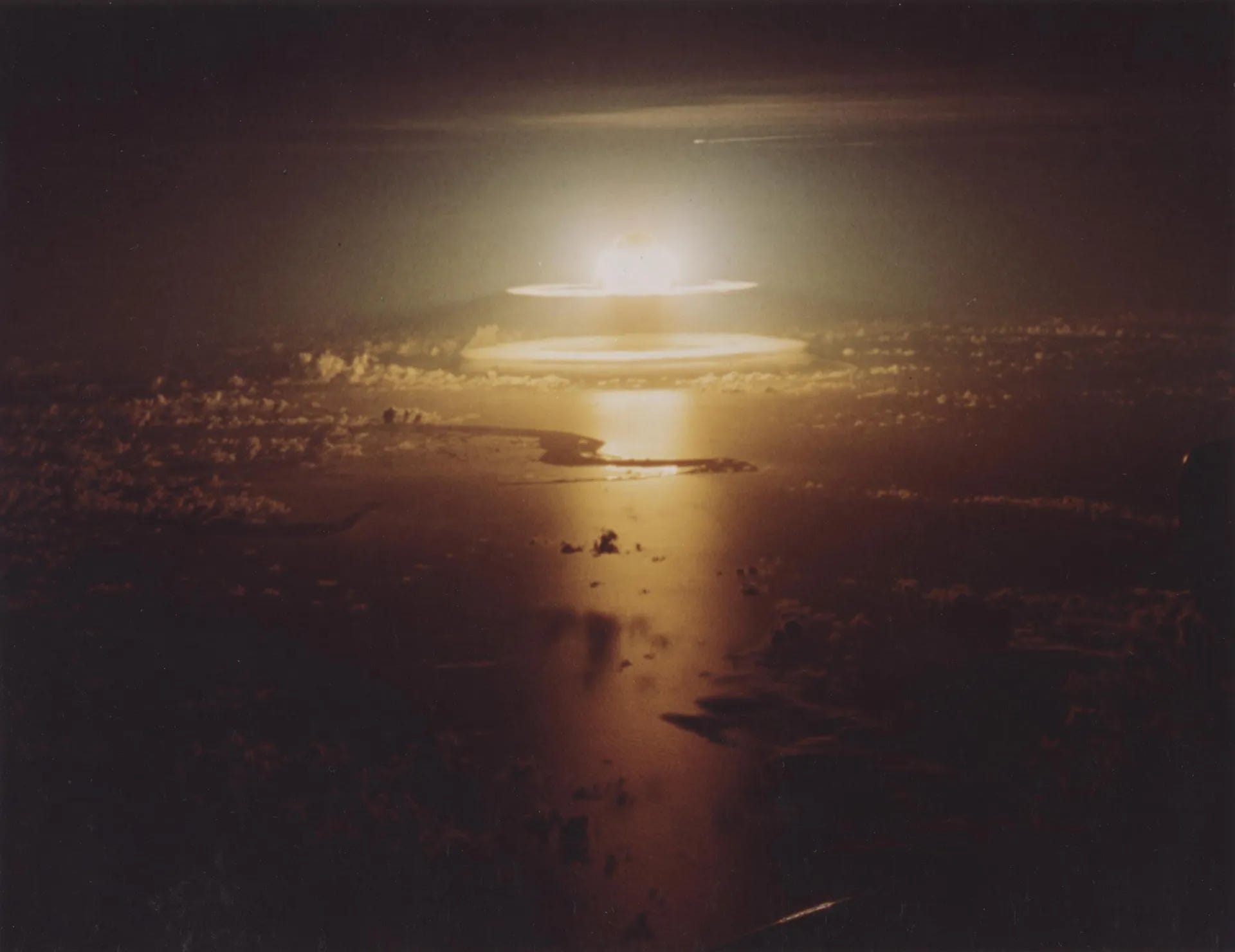
Security expert Prof Robert Pape has been making the rounds in mainstream media recently, discussing his theory of the Escalation Trap, in which the initiator of a conflict is drawn into a more complex and protracted engagement than they originally bargained for.
According to Pape, the trap consists of several stages: stage one began with Israel and America’s initial attack on Iran, which achieved its goals tactically, but not strategically. When decapitation strikes did not lead to decisive victory, the aggressors doubled down and moved up a rung on the escalation ladder. Now Pape says we’re on the cusp of stage three, which is when the attackers begin to contemplate far riskier options.
It’s a clean framework, but it’s by no means new or novel.
What Pape is describing is a modern expression of something mapped out in the 1960s by Herman Kahn, an American nuclear strategist said to be the inspiration for Stanley Kubrick’s Dr. Strangelove.
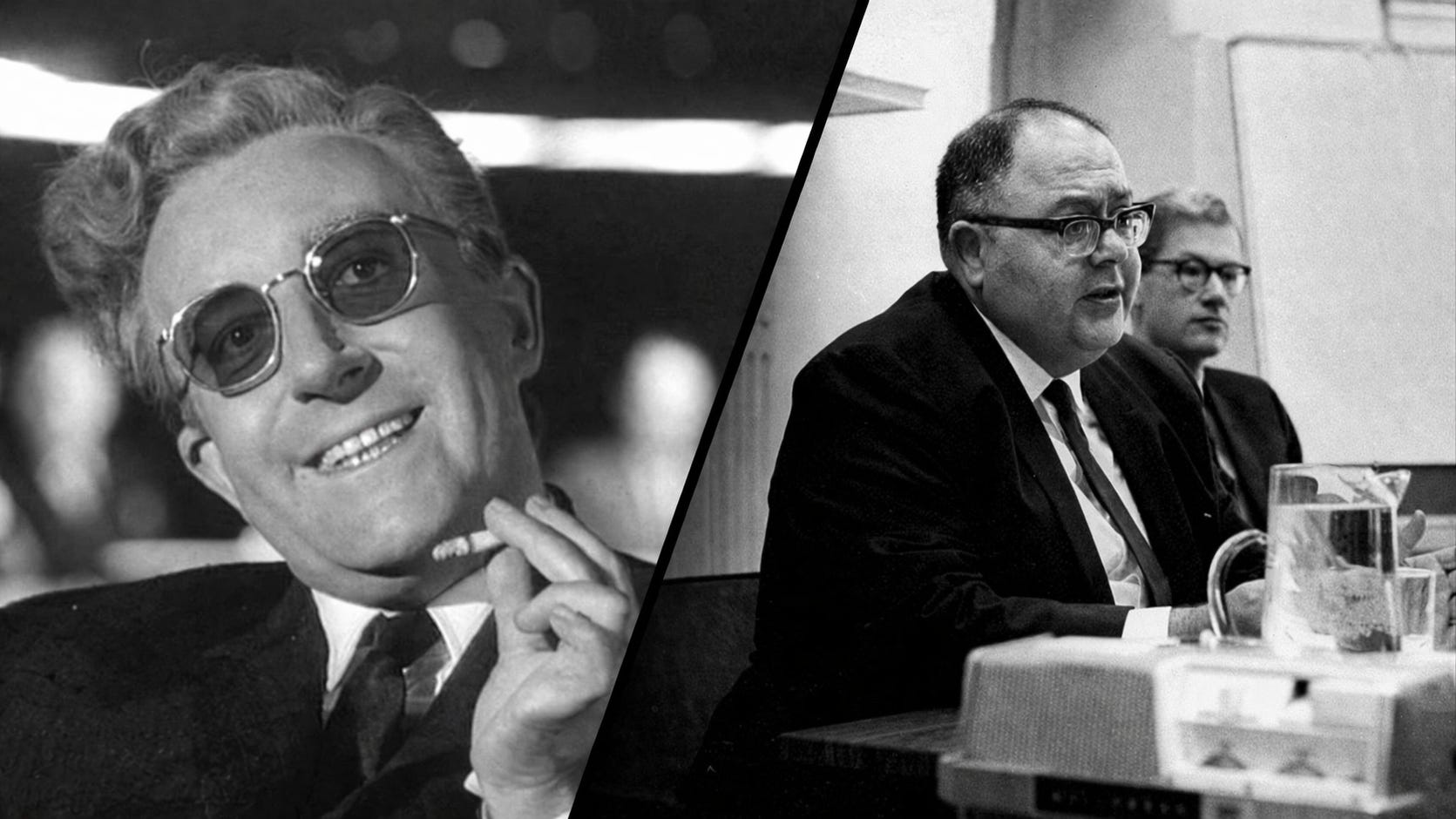
Kahn — founder of the Hudson Institute, a conservative think tank — rose to prominence during the Cold War for his analysis of the consequences of nuclear conflict. His escalation ladder is a 44-rung framework articulated in his book On Escalation, in which he outlines the incremental steps a conflict can take from a diplomatic crisis to total nuclear war. It was designed to help policymakers understand and manage crises by identifying thresholds that could lead to catastrophe, allowing for managed escalation or de-escalation.
The premise was simple and deeply uncomfortable: no one starts a nuclear war. They arrive there, one rational step at a time.
Kahn’s model can be applied generally to how conflicts between powerful states behave once escalation begins. The actors, geography, and language can change, but the sequence does not. Once certain conditions are met, the process unfolds.
Pressure begins outside the battlefield — sanctions, economic isolation, political signaling, rungs 1 through 9 of Kahn’s ladder. Then comes an intensifying crisis, rungs 10 through 15, in which war becomes conceivable. On rungs 16 through 20, more direct confrontation begins, justified as necessary. That’s likely where we are now.
In the next phase, rungs 21 to 30, nuclear weapons would be introduced, but their use would remain limited and controlled — more for demonstration than outright destruction. In the penultimate phase, rungs 31 to 39, escalation begins to target civilian infrastructure and populations, and devastation increases. The last and final stage, rungs 40 to 44, involves uncontrolled nuclear exchanges and post-war consequences.
It’s both frightening and relevant. And we wonder, given the whack-a-doodle flailing at the presidential podium and on Truth Social, whether anyone in the general vicinity of the Oval Office actually knows about Kahn and his precise taxonomy.
Avoiding escalation requires restraint. That is, recognizing where you are on the ladder and choosing not to climb on to the next rung.
That’s what makes our current situation so utterly alarming. We are racing up the ladder, invoking scripture and prophecy at the expense of sanity.
Writing in the The New York Times this week, Pape described the conflict in blunt terms:
The Iran war is not a military conflict from which the United States can simply back out, with things reverting to how they were before. Iran would surely demand a heavy price in a new accommodation with the United States — but this price will surely be less costly than that of the alternative future. This is a transformational war, and if these changes continue for even a few years, the global order will change irrevocably.
That’s not the language of a contained conflict. Rather, it indicates we have already crossed a threshold, just like after 9/11, and the world we are entering looks very different than the one we once knew.
It is alarming. I think most importantly, don't get fearful. Get alert. Get more ready, more independent. Create a more redundant support network. You need to not just survive disruption, but let it be structured so that no single disruption is existential. My little bit of creating redundancy (and we have a very small place) is I moved our kitchen into half of our lounge, and created a small third bedroom, with bunks for the grandkids. Optionality now built in :)
Trump might not know anything about Khan, but I'll betcha those manipulating him sure do.