

The anesthesia of the rules-based order
International law was never about restraining power, it was about managing perception and optics. Multipolarity is dispelling illusions and the result, while more unstable, is at least more honest.
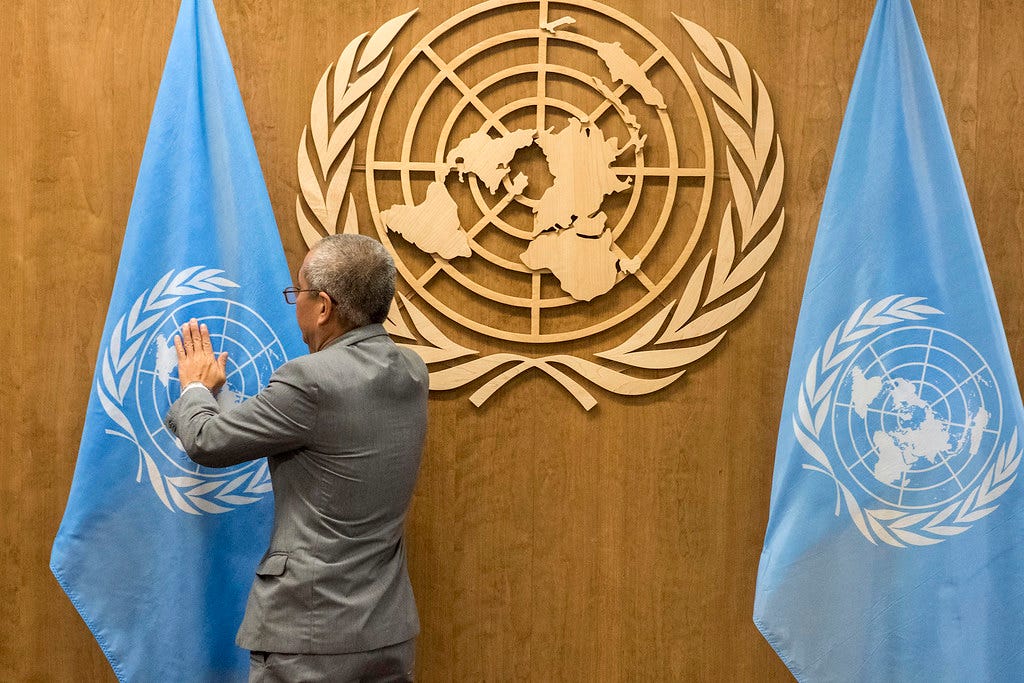
In a provocative January 2026 essay for Foreign Affairs, Brazilian academic Matias Spektor advanced a somewhat heretical thesis: the postwar international system thrives (or thrived, to be more accurate) not in spite of Western hypocrisy, but because of it.
He writes:
… Western countries prospered by invoking a rules-based system that they knew was hypocritical. They cited liberal ideals while routinely exempting themselves from adhering to them, championed free trade while enforcing it selectively, and spoke the language of international law and human rights while applying those principles unevenly to friends and rivals.
He quotes the now infamous speech by Canadian Prime Minister Mark Carney at the recent World Economic Forum meeting in Davos: “We participated in the rituals, and we largely avoided calling out the gaps between rhetoric and reality.”
Spektor argues that pretense is an essential lubricant of global affairs and a feature, not a bug. “When great powers feel obliged to justify their behavior in moral terms, weaker states gain leverage,” he writes. “They can appeal to shared standards, invoke international law, and demand consistency between rhetoric and action.”
But as figures like Donald Trump steer toward an unapologetically transactional foreign policy — shedding even the veneer of principle — Spektor says the world stands on the brink of something far more precarious: a naked contest of raw power, where trust dissolves and instability reigns.
This raises an uncomfortable question: did the acting and pretense actually ever restrain anything? And, stripped of any kind of moral grandstanding, could Trump’s transactional approach not be seen as preferable, in that it at least lays bare the fact that self-interest is what motivates?
Spektor warns that jettisoning hypocrisy removes vital guardrails and that those professed norms, however inconsistently applied, at least created a common language that restrained aggression. Without them, he says, alliances could splinter, and conflicts might multiply as nations resort to coercion over consensus.
While Spektor sees hypocrisy as a stabilizer, in reality it functioned more like Novocain. The postwar order didn’t “lubricate” the system so much as numb it. The speeches, summits, communiqués, and carefully worded condemnations were a kind of diplomatic anesthesia — administered before each incision to dull the public’s pain. Meanwhile, the cutting continued unfettered.
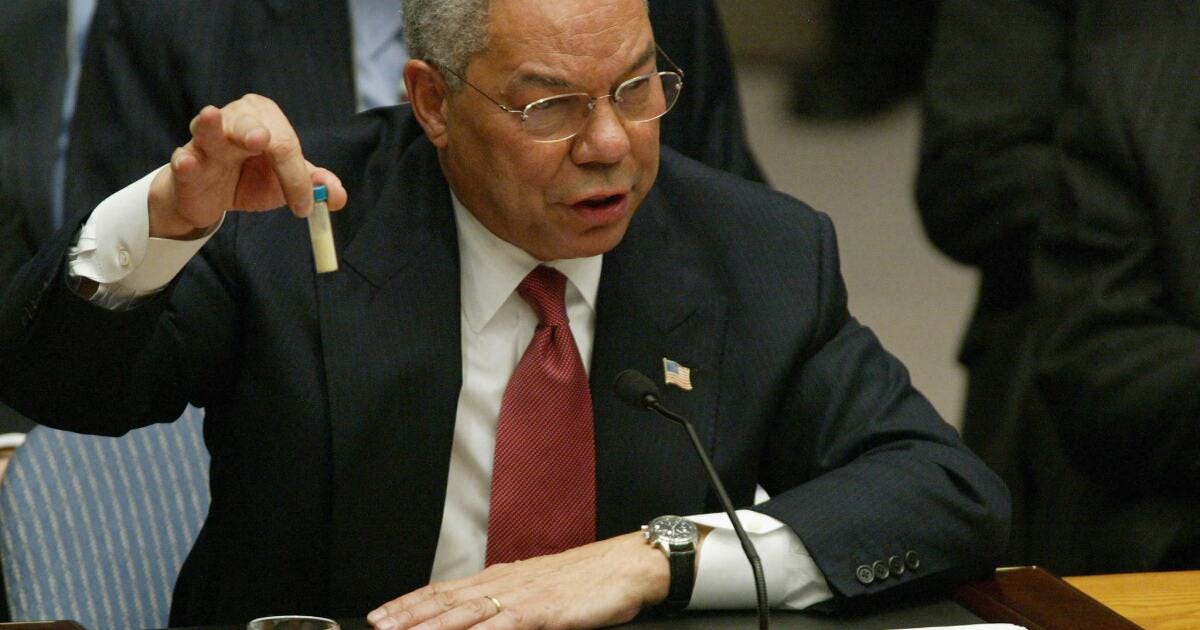
Think back to February 2003, when Secretary of State Colin Powell addressed the United Nations Security Council, holding up a small vial of yellow liquid as purported evidence that Saddam Hussein possessed weapons of mass destruction. The chamber was heavy with ritual — translators in their booths, diplomats in dark suits, reporters hanging on every word — and the full display of international law’s sombre cadence. All the theatrics alluded to due process among the nations of the world, yet when the claims unraveled and no stockpiles were found, the invasion not only proceeded, accountability was wholly absent.
Sadly, Iraq was not an anomaly. The 2011 Libya intervention, authorized under the doctrine of ‘Responsibility to Protect’, was framed as a limited humanitarian mission but quickly expanded into Western-sponsored regime change. The episode hardened Russian and Chinese resistance to future humanitarian resolutions. If hypocrisy was meant to build trust in shared norms, selective enforcement degraded it instead.
Even structurally, the “rules-based order” contained built-in escape hatches. The veto power of the five permanent members of the Security Council ensures that great powers and their allies can block action when their core interests are threatened. The rules exist only until they collide with power, at which point they fold.
The same pattern appears in global finance, with institutions like the International Monetary Fund and World Bank framing ‘structural adjustment’ programs as technocratic necessities in service of stability and development. In practice, austerity measures often deepened economic inequality and fueled political backlash in borrowing countries. The language of reform softened the blow but it didn’t alter the underlying asymmetry between creditor and debtor. [For a detailed case study, see the chapter on Jamaica in our book ‘Hidden Histories’.]

Spektor argues that hypocrisy gave weaker states leverage, but leverage only works if there is enforcement. Appeals to shared standards matter only if the powerful fear the consequences. When enforcement is optional and penalties are uneven, rhetoric becomes theater. And so, the language of democracy and human rights didn’t constrain elites so much as reassure voters.
Now the anesthetic is wearing off and the patient is awakening.
Yes, the operating room looks harsh under full light. Yes, self-interest is spoken more plainly. But clarity, however destabilizing, is the preferable state because a public that understands power is less easily pacified by ceremony.
As the last 80 years have shown, illusion is effective at delaying reckoning. But it can’t hold it off forever.
Clarity is absolutely more preferable. Lovely substack, and ooooooh, new book :) Congratulations
It seems regardless of the opinion on the matter we all agree it’s hypocrisy. When is someone gonna finally do something about that?