

The next Carrington Event would hit a very different world
New calculations show a major solar storm could trigger cascading failures across GPS, communications, and navigation.
As 2025 comes to a close, the conversation about collapse — when it might happen and what might be the trigger — seems to be heating up. Some say the “climate crisis” will push us over the edge. Others argue that supply chains, economics, and politics are bigger threats.
You know who doesn’t care about these minuscule debates? The sun.
A new scientific paper, which has yet to be peer-reviewed, suggests a major solar storm could disable Earth’s satellite infrastructure and push the globe into a major crisis in less than three days.
That margin has narrowed dramatically in recent years, the researchers say. In 2018, when roughly 4,000 satellites occupied low-Earth orbit, operators would have had months to maneuver and prevent cascading collisions if they lost control. Today, with more than 14,000 satellites — many packed into dense constellations — the buffer has collapsed to just over 67 hours.
“Our calculations show the CRASH [Collision Realization And Significant Harm] Clock is currently 2.8 days, which suggests there is now little time to recover from a wide-spread disruptive event, such as a solar storm. This is in stark contrast to the pre-megaconstellation era: in 2018, the CRASH Clock was 121 days,” the team writes.
One reason the margin has shrunk so quickly is the rise of what the researchers note as satellite “megaconstellations,” most notably SpaceX’s Skynet Starlink. Designed to provide low-cost internet access worldwide, Starlink satellites have an operational lifespan of roughly five years, meaning the system requires constant replenishment just to maintain its size.
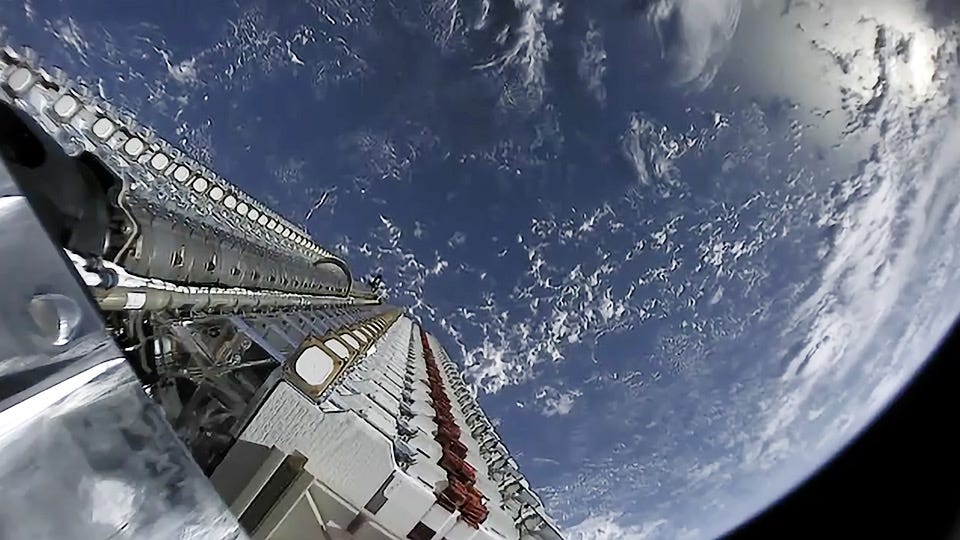
As of October 30, 2025, 8,811 Starlink satellites are already in orbit, according to astronomer Jonathan McDowell, who independently tracks satellite deployments. SpaceX has stated its long-term ambition is to expand the network to as many as 42,000 satellites.
This rapid growth has dramatically increased congestion in low-Earth orbit and with it, the consequences of any widespread loss of control.
Modern satellites rely on constant communication. Operators guide spacecraft through a continuous orbital choreography, adjusting trajectories just enough to avoid collisions at tens of thousands of miles per hour. While the system looks advanced, its tolerance for disruption is razor thin and when control falters, chaos accelerates.
Coronal mass ejections can interfere with communications, navigation, and onboard control systems. If operators lose the ability to steer satellites even briefly, orbital space quickly turns hostile.
One collision could create debris that destroys other satellites, generating still more debris. The consequences would include GPS failure, communications outages, inaccessible zones in space, and long-term damage to humanity’s ability to operate in the outer orbit at all.
This research comes at a time when Earth is experiencing a solar maximum, a phase when solar storms occur more frequently and with greater intensity. It’s the same cycle that is currently making it possible for people in southern latitudes to witness the aurora borealis.
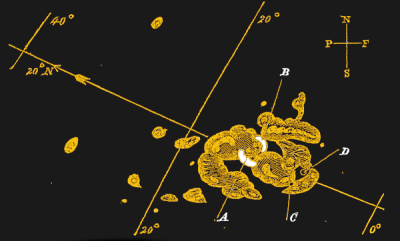
The last time the sun forced us to sit up and pay attention was in 1859. The so-called ‘Carrington Event,’ which occurred that September, was the strongest solar storm ever recorded. Auroras lit skies as far south as Florida and the Caribbean. Telegraph systems across Europe and North America failed. Operators reported sparks jumping from equipment. Some lines continued transmitting without power, energized directly by the storm. The damage was dramatic in the context of 19th-century infrastructure, but it was contained, and systems bounced back fairly quickly.
Today, scientists warn a storm of similar magnitude would be far more devastating, triggering continent-wide blackouts, permanently damaging transformers, and crippling the satellite-dependent systems we have come to rely on.
We often think that as technology develops and becomes more sophisticated, our lives naturally become more secure — in other words, more complexity begets more control.
Sadly, history suggests a less comforting pattern. Civilizations that rely on layered systems optimized for growth, speed, and efficiency are highly vulnerable to external stresses, and a small shock can have a damaging ripple effect across interconnected domains.
What makes this moment different is not just the technology, but how thoroughly it has been woven into everything else. Satellites no longer serve a narrow set of functions; they quietly synchronize time, route financial transactions, guide logistics, enable emergency response, and hold together the invisible scaffolding of the digital gulag daily life. When one layer fails, others misfire. Decisions are delayed, signals desynchronize, backups fail to align and in a tightly coupled world, disruption doesn’t stay local. It propagates sideways, crossing sectors that were never designed to fail together.
That’s why looking back at moments like the Carrington Event is so instructive. Past civilizations have given us prescient warnings that can help us if only we take the time to re-examine them under modern conditions.
The Collapse Life team has written a booklet, Hidden Histories (available on Amazon in January 2026) that explores that very premise. The book looks at eight particular moments in history where societies encountered shocks they did not fully understand at the time, and the long shadows those moments cast. For readers who want to understand how such shocks echo into the present — and why modern systems struggle to absorb them — this book is an invitation to look again.

The sun will continue doing what it has always done. But here on Earth, where we’ve allowed men like Elon Musk (whose net worth is closing in on $700 billion — with a ‘B’… for what it’s worth) to launch satellite megaconstellations and where everyone demands nothing less than continuous connectivity, our resilience is measured not in months or weeks, but in hours.
That’s the profound warning embedded in this new scientific paper. Catastrophe may not be guaranteed, but if something were to happen, the buffer we once had has virtually disappeared by virtue of scale, speed, and dependency.
No, the sun hasn’t grown more dangerous. Instead, our systems have grown more tightly coupled, which ultimately makes us highly vulnerable and extremely fragile. Prepare accordingly.
Maybe we've reached a limit in our ability to use technology to do everything for us. It's reducing our skills and resilience in exchange for ease and convenience. The way it's going seems to be a set up for a nasty fall and decline as people and systems become more dependent and fragile.
The ultra wealthy are unbalancing the natural order of things as they profit from the situation. They won't be saving us, they're riding a giant wave of money and power with them on the top and humanity down below.
Maybe the crash will be huge and heartbreaking for the most fragile, but I still think it's probably necessary to correct our course back to Nature.
Tree rings have shown Carrington scale events are relatively common, and storms 10x more powerful occur on the order of once every 1,000 years. The last really big one was the Charlemagne event, 1250 years ago. If we got a direct hit from that level, all global power grids would collapse and it’d take probably 5-10 years to restore half the transformers as production capacity is limited. It’s interesting to see how the constellations of satellites have made things less stable.