

Plan B doesn't always involve moving to a new country
As missiles land in Dubai and migration influencers sell escape routes on social media, an uncomfortable truth is emerging: there may be no 'safe' jurisdictions left.
There’s a new genre of influencer on social media — not selling skincare products or touting the latest cryptocurrency, but ‘exit’ strategies. On Facebook, TikTok and YouTube you can find them ranking the best passports for $100k, explaining how to qualify for tax residency in Paraguay, or urging Pakistanis to consider a move to Azerbaijan.
“Villa lifestyle at affordable prices,” promises Javid Karim of New Life Migration AZ. “In Azerbaijan you can own private villa with the view of the Caspian Sea.” Your Baku dream villa awaits!
Like Karim, many of the people popping up on your social feeds are consultants building lead funnels for migration firms. Still others are lifestyle influencers documenting their new expat lives abroad. Together they form a rapidly growing ecosystem built around a single idea: if things fall apart where you live, you can simply move somewhere better.
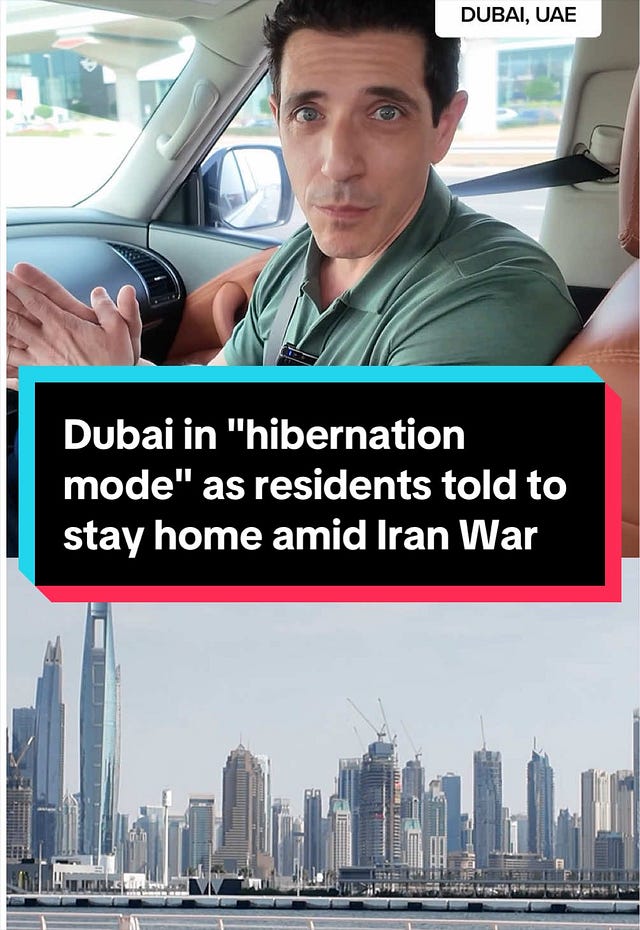
It’s certainly a seductive premise and, for a while at least, it seemed plausible. That is, until someone decided to pick a fight with Iran. Dubai, once among the world’s most popular relocation destinations, has suddenly become a target in a widening war.

In the early days of the conflict, drones and missiles began hitting targets in the UAE, including civilian infrastructure. Airspace disruptions followed, flights were canceled, and some foreign residents scrambled to leave the country entirely, booking private jets and minibuses to take them to safety in Oman or Saudi Arabia. Others stayed put, comforted by the thought that UAE missile defense systems were intercepting most inbound missiles while they were still in the air.
 Tiktok failed to load.
Enable 3rd party cookies or use another browser
For years, Dubai has been marketing itself as an oasis in the geopolitical storm. Whatever chaos was unfolding in the world, the Emiratis promised it would stop at the airport lounge. But when shrapnel starts hitting high rises, the fragile assumption behind the entire Plan B passport industry gets quickly exposed.
The world is growing ever more unstable; its pace is moving as fast (or faster!) than any Plan B relocation influencer’s ability to post. Whether it’s Americans moving to Portugal, Europeans moving to Dubai, Pakistanis moving to Azerbaijan, or Russians moving to Serbia, each corridor is based on the same underlying belief: there is always another place to go.
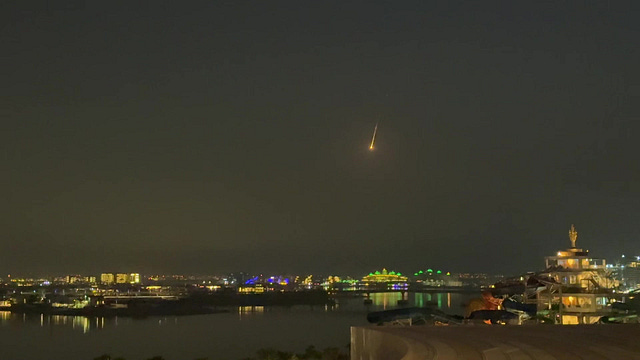
Nope! Missiles in the Dubai night sky made that stark reality abundantly clear.
 Tiktok failed to load.
Enable 3rd party cookies or use another browser
Ironically, the surge in migration influencers on social media is itself a symptom of the problem. People don’t research second passports when they feel secure about the future, they do it when their confidence in where they live now has already begun to erode. Those manic Google searches for “best Plan B country” reflect a growing sense that the ground beneath the global order has already shifted.
When instability is systemic and global, the idea that a change in geography can solve the problem is called into question. Most relocation content ignores that reality. The Collapse Life team has been examining this for many years, even relocating ourselves more than once across multiple continents. We can attest that, when systems break down, your most important assets are not residency permits or cash liquidity: they are relationships.
If you live in a place the State Department calls unstable but you’re surrounded by family, trusted neighbors, and local supply networks, you are likely far better off than someone who lives in manicured luxury but can’t rely on the people next door.
If the power goes out or supply chains falter, people know each other: someone has tools; someone has eggs; someone knows how to fix a well pump; someone’s cousin runs a trucking company. Problems get solved informally.
People who enjoy immaculate lawns and high-speed internet are probably more likely to use the NextDoor app or their Ring camera. The community immune system doesn’t band together to fight an invader, it calls the authorities. So what happens when the authorities aren’t there?
Instead of asking which country is safest, Collapse Life thinks the better questions to ask are this:
Where are my most trusted relationships?
Where do people still know how to solve problems locally?
Where will neighbors help each other when things get difficult?
The answers may not always point to another country. Sometimes they may lead you right back to the place where you are, especially if you have been spending time investing in the people around you.
Looking at those questions may also show how vulnerable you are in your current situation and whether you may need to seek out places with stronger local economies and looser social structures, where life still operates partly outside digital systems and algorithmic oversight.
The Plan B passport industry sells the idea that safety and prosperity can be purchased through relocation. But in a world where instability is spreading, the real safety net may not have anything to do with geography. It may be have everything to do with humanity.
While I admit to have a familiarity bias, there are good reasons that hordes of people have been trying desperately to move to the US.
As all good cattle know, the grass is always greener on the other side of the fence. The problems you deal with on a regular basis seem huge. When you read the travel brochures and watch all the videos people are putting out hyping other places, they rarely dwell on the drawbacks.
Although there can be differences in individual situations, in general, if you go somewhere else, it can be a long road to actually being accepted as belonging there as part of the community. Some places, you will never be fully accepted. Historically, things have not gone well for outsiders who have not fully integrated into society if things get dicey.