

Notes from the edge of civilization: February 1, 2026
We made it to February, folks. Congratulations!

You know how everything feels more expensive now? This infographic from Visual Capitalist helps illustrate exactly where the highest hikes are happening. No surprise, it’s largely in places where you have no ability to opt out, like insurance, energy, food, and rent. These categories didn’t just rise — they sprinted.

Car insurance leads the pack, with prices rising 56% since 2019. Modern cars are rolling software bundles wrapped in lots of lightweight aluminum, so one fender-bender now requires checking and replacing sensors and cameras, recalibrating motherboards, and a lot of prayer (that the repair is right, or that the car itself doesn’t get written off). Insurers know this, so your premium followed suit.
Utilities aren’t far behind, with piped gas and electricity up roughly 40–49%. Turns out “energy transition” + infrastructure neglect + financialization = permanent volatility in what used to be a fairly stable sector.
Rent is up 31%. Coffee, meat, bread, and milk are all up 24–46%. Eating out is up nearly 35%, which quietly forces a lifestyle downgrade across society: fewer meals out, fewer low-wage labor jobs, higher prices across the board. Or worse, opting for poor health choices — dollar meals, seemingly cheap prepackaged freezer meals… the list goes on and on.
Notice the pattern? You can skip buying a new phone or delay taking a vacation, but you cannot skip insurance, electricity, food, or rent.
Inflation has concentrated itself in categories that trap you — the baseline costs of participating in modern life. Those shrinking choices and tighter margins lead directly to more dependency. Knowing this, position yourself now, as best you can.

Years ago, in an backwater airport of an underdeveloped country, the Collapse Life team ordered a cup of coffee. The hot black liquid was served with a small white packet that read “Non-Dairy Creamer.” When the pack was flipped over, a small disclaimer shared the rest of the story: “Contains dairy.” Whaaaaaa?
It was an early lesson in how truth can mean many things to many people. Laughable while traveling, but less funny when the fungible truth comes home to roost.
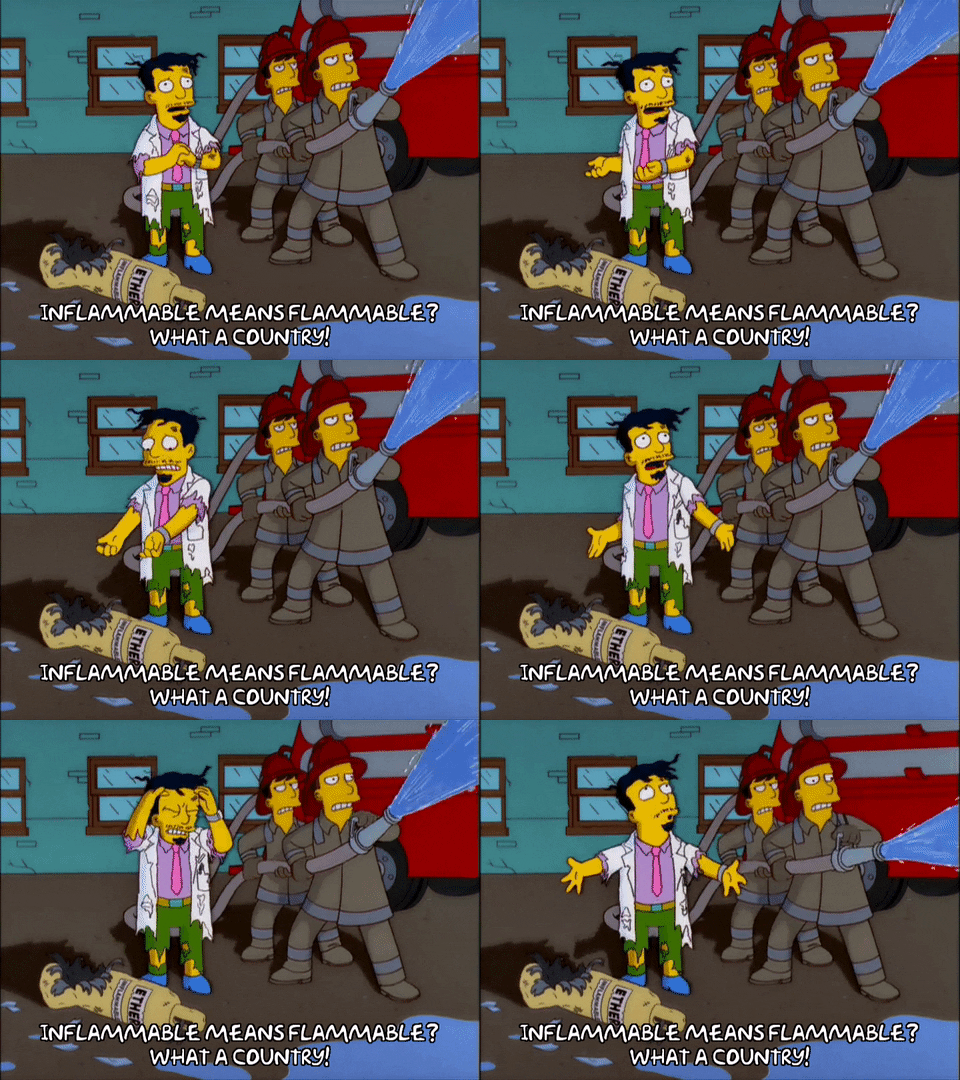
That memory came flooding back this week with news of a class-action lawsuit against Costco. Customers are suing over the retailer’s insistence that its famously cheap $5 rotisserie chicken contains “no preservatives,” despite signage showing two added preservatives: sodium phosphate and carrageenan. (NB: The company has removed the signs since the suit was filed.)
Apparently, if you squint hard enough, reality becomes a branding exercise. Actually, you don’t even have to squint that hard. People are all too willing to redefine “preservative” the way “non-dairy” once meant “some dairy.” That way, the chicken stays cheap, the vibe stays healthy, and everyone pretends not to notice that chemistry is what’s holding the whole thing together.
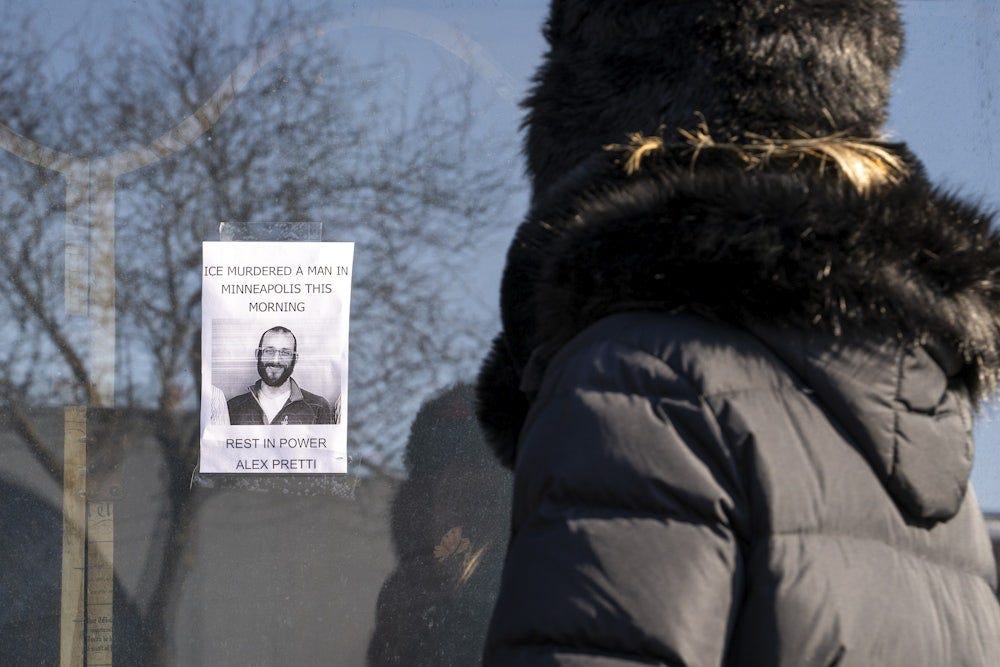
An article in Semafor frames the clashes between ICE and protesters in Minneapolis as a battle of technology.
In this view, what looks like localized street drama is actually a snapshot of a broader technological class war between a state with industrial-scale surveillance, and civilians trying to invent a digital counter-culture.
It has been well documented that, under the guise of immigration enforcement, the federal state has weaponized AI, facial recognition, phone tracking, spyware and massive data networks against ordinary people. Surveillance, powered by entities like Palantir, is now the backbone of policing.
In response, activists are cobbling together their own digital tools, including license-plate databases, Signal messaging groups, and alert systems that track and broadcast the movements of unmarked federal agents. What was once a protest tactic has become a distributed surveillance network operating outside state control.
In response, administration figures and powerful tech moguls are describing these grassroots tracking systems as “organized illegal insurgency” and domestic terrorism, simply because they turn the state into an observable, accountable object instead of an invisible authority.
Legally, this could be a test case: is using tech to watch government actors still free speech, or will courts redefine digital documentation of state power as a punishable offense?
We’re in the opening David and Goliath salvo — as commentators and pundits scream “color revolution,” (looking at you Joe Rogan) it’s important to watch very carefully before succumbing to the hype (on either side).
Trust us, your life and your liberty depend on it.
If you can convince enough people that surveillance and digital enslavement is necessary for your safety say, or the "greater good" perhaps, then you have a situation reminiscent of the covid debacle where morality and ethics evaporate. Evil is justified by popular vote or consensus, but is portrayed as necessary and the right thing to do.
Twisting the truth is how they control us and legitimize their agenda so as far as I'm concerned anything that exposes their deceit is fair game.
By Me: Yet another great, balanced, informative and thought-provoking column by Zahar, but what I love even more: that Simpsons clip! - ET