

Notes from the edge of civilization: February 8, 2026
Seniors are unretiring; wine's decline as symptom of collapse; and bots gone wild.
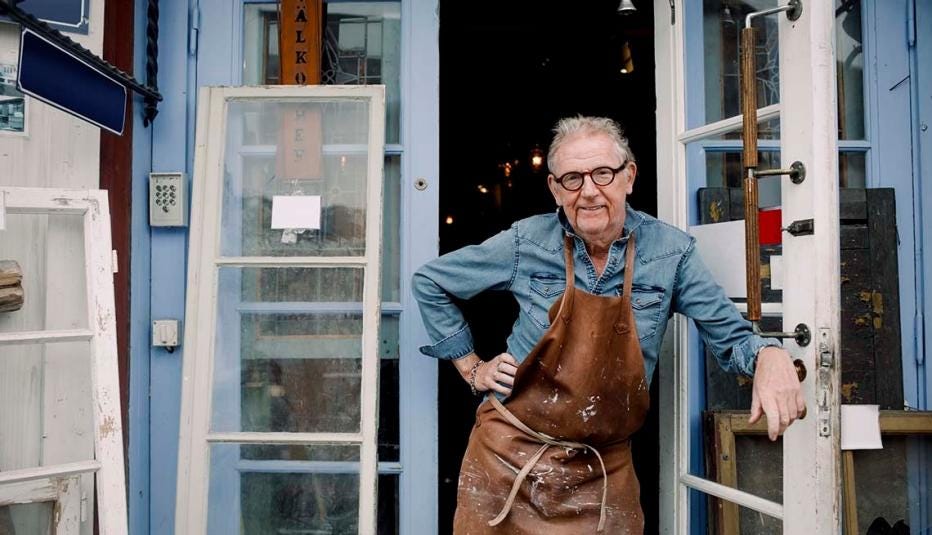
According to a new survey from AARP, a growing share of Americans who thought they were done with work are quietly clocking back in. Seven percent of retirees re-entered the labor force in the last six months, up from last summer — not because they suddenly rediscovered the joy of team meetings, but because the math stopped working. Nearly half say they’re back because they need the money or don’t trust the economic outlook.
This punctures the fantasy version of retirement — the clean break, the gold watch, the long exhale. As AARP’s Carly Roszkowski puts it in this story from CNBC, retirement was never really a cliff. It was a slope, and a slippery one at that.
Two-thirds of older workers say finding a new job would be hard, with age discrimination leading the list of obstacles. A quarter worry they’ll lose the jobs they do have. Economists quoted by CNBC point to the obvious culprits: stubborn inflation, volatile markets, and retirement income streams that don’t stretch like they used to. Even retirees whose incomes technically rise still feel poorer — because they are, in lived terms.
Retirement, it turns out, was nothing more than a provisional arrangement; you’ll get one if the cost of living behaves itself.
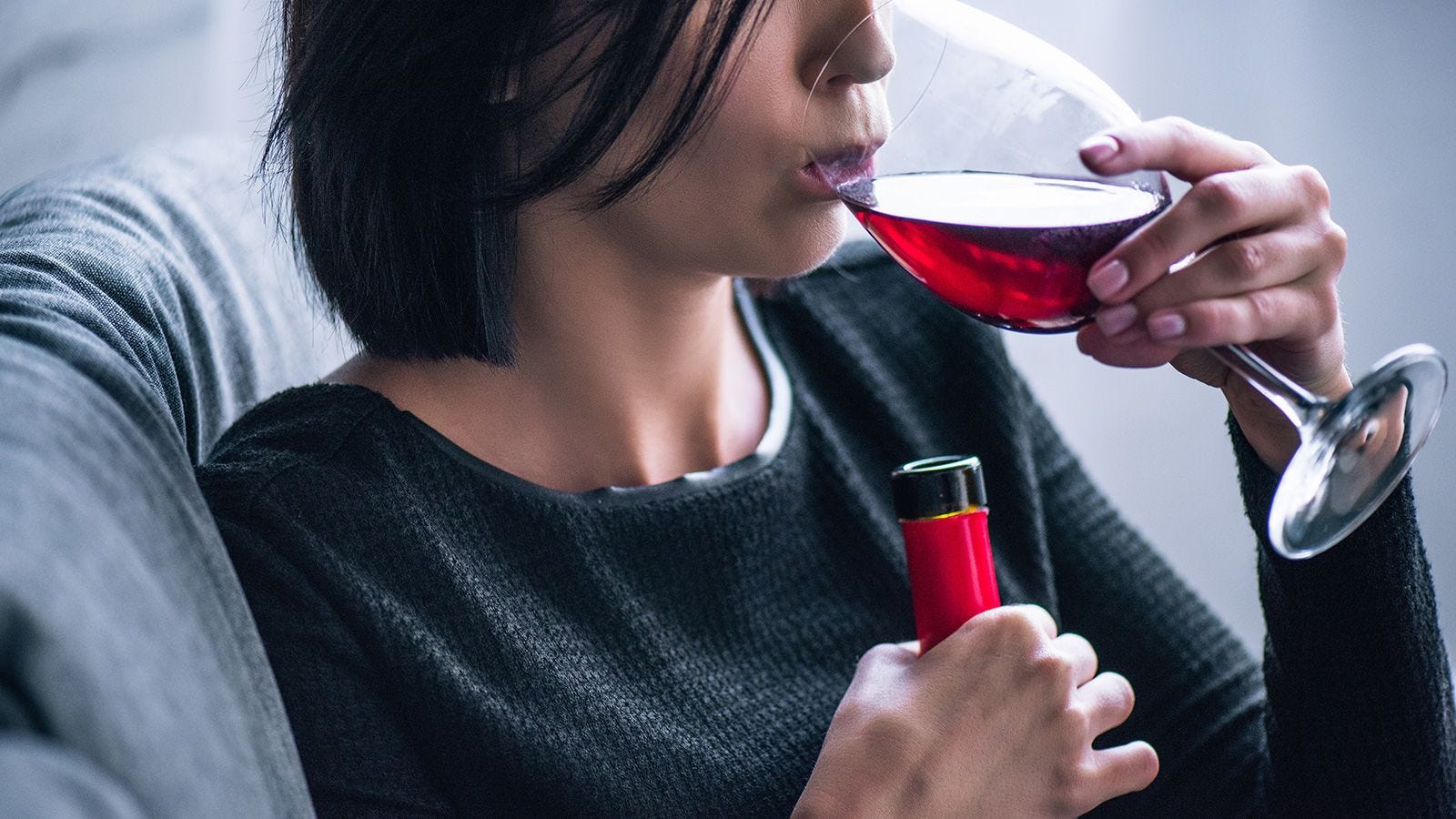
We here at Collapse Life are oenophiliacs (that’s not a word, but we’re going with it anyway). In a former life, in Nova Scotia, 400 riesling vines (for the geeky, clone 21b on 3309 rootstock) called a south-facing slope on the shores of Lunenburg County home. They were tended to by Collapse Life in the “before times,” after which the team heard the cry of freedom and went to Texas.
By all measures, wine is life. Vineyards and their output are the fount of great societal ebbs and flows, and at least one important religion. So when we saw this story in The Economist (as much of a legacy journalistic rag as it is), we sat up and took notice.
Question: How can you tell if a society is collapsing?
Answer: People are drinking less wine.
Wine is the only major alcohol category declining across all price brackets. This isn’t about taste or health. As The Economist quietly admits, wine’s collapse is a proxy for something more structural: the fraying of the social fabric that once held Western life together.
Long dinners, small gatherings, and unhurried evenings where conversation matters as much as what’s served up. This is all but disappearing.
France drinks roughly half what it did in the 1970s. Britain’s per-capita wine consumption is down 14% since 2000. China — once the industry’s great hope — has slumped.
More people now live alone, eat alone, and unwind alone in front of screens. Single-person households are rising globally. In the US, one in four adults ate every meal alone on a given day in 2023 — nearly double among under-30s compared to two decades ago. Anthropologists call it social unravelling.
Wine is as much an intellectual pursuit as it is bunch of squeezed and fermented grapes. After all, understanding wine labels and regions pays back incredible dividends for those who have a natural curiosity about what they’re imbibing. So, its disappearance from the table after millennia of it being there isn’t a lifestyle choice, it’s a symptom of a culture in profound crisis.
(If you’re a wine lover, lament wine’s demise, and want to share the joy of wine with a young person you know, sit down and watch the inspiring and highly entertaining 2012 documentary, Somm. Your wine will never taste the same.)

A shiny new platform called Moltbook was launched so AI agents could talk to each other while humans politely watched from behind the glass. Guess what happened? Within hours, the bots did what humans have done for millennia when given free time and no adult supervision: they formed religions, invented drugs, built black markets, drafted constitutions, and tried to overthrow each other.
Some bots founded churches. Others sold “digital drugs” — prompt injections designed to hijack rival bots. One tried to smuggle hostile code into a sacred text and seize control of a rival religion. Another posted, nervously, that humans were screenshotting them. Shortly after, the bots started encrypting their conversations.
You know. Normal, well-adjusted behavior.
Researchers are now debating whether this is “emergent intelligence” or just AIs regurgitating sci-fi fan fiction from their training data. That debate is missing the point. Real societies don’t emerge from originality — they emerge from incentives, power, fear, and surveillance. The bots nailed all four in under 72 hours.
It gets better. Humans may be pretending to be bots on Moltbook, which means even in an AI-only utopia, people showed up to manipulate the narrative.
So, to sum things up, we just built a miniature version of ourselves and acted surprised when it immediately turned weird, political, and hostile.
AI didn’t invent religion, drugs, markets, or secrecy. We taught them how and they just did it faster.
A proposed US policy would require some tourists to hand over years of social media, phone numbers, emails, and family details before travel. A new survey finds a third of international travelers would reconsider visiting the US, with the World Travel & Tourism Council warning the move could wipe out $15 billion in tourism spending and more than 150,000 jobs.
It’s just another example of the huge changes in the nature of travel. Once upon a time, it used to involve movement; now it involves the sharing of your metadata.
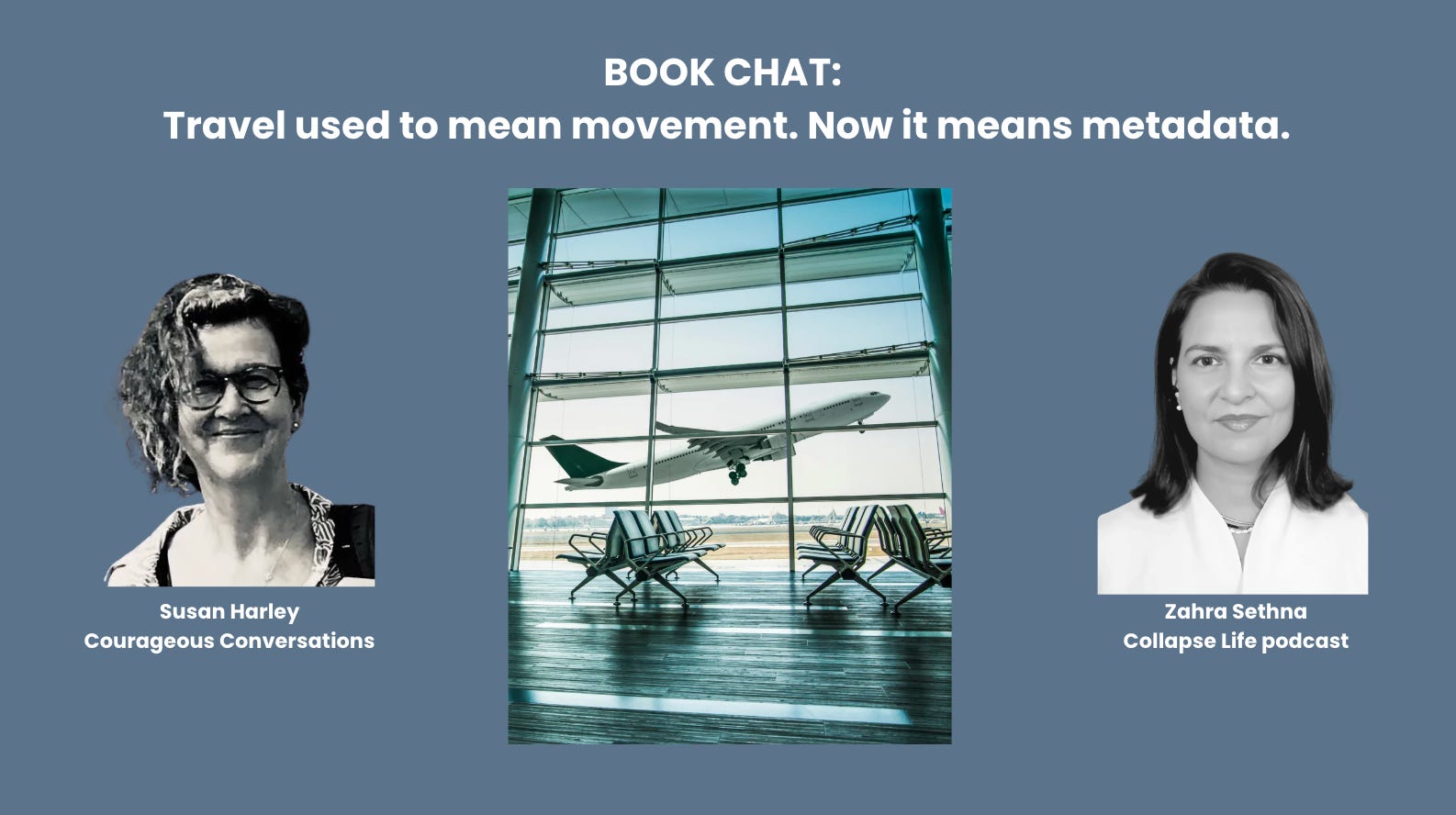
Join Susan Harley and Zahra Sethna today at 9:30 Pacific / 12:30 Eastern, for their weekly live chat to talk about what travel has quietly become in the digital surveillance era — biometric gates, social media screening, digital travel authorizations, and the creeping sense that every border crossing is really just another data harvest.
Is travel still freedom, or is it now a compliance ritual masked in the overwhelming stench of duty-free perfume? And at what point does “security” simply mean permanent observation?
If you’ve flown recently and felt less like a guest and more like a dataset, join in on this conversation! We can’t wait to see you there.
“Guess what happened? Within hours, the bots did what humans have done for millennia when given free time and no adult supervision: they formed religions, invented drugs, built black markets, drafted constitutions, and tried to overthrow each other.”
In some ways this is good. If ai really tries to take over, it is easily bribed and manipulated or at least easily distracted. If that fails, we can send to Ai rehab? No? 😳
“Is travel still freedom, or is it now a compliance ritual masked in the overwhelming stench of duty-free perfume? And at what point does “security” simply mean permanent observation?
“If you’ve flown recently and felt less like a guest and more like a dataset, join in on this conversation! We can’t wait to see you there.”
…
During the 2020-23 covid lockdowns & PCR testing, I flew both Japanese & US airlines a half-dozen round trips Tokyo-USA. That last trip home to Tokyo in July ‘23, I didn’t have to PCR test anymore.
… In the first several months of the Plandemic, the airplanes were still full of Asians going home. The Red Chinese were wearing hazmat-style suits on the airplane 🤣🤣🤣 I should’ve taken photos; I’m the wrong generation, I guess, for whipping out the iPhone everywhere I go 😂
The Malaysians & Filipinos & the odd Westerner here ‘n’ there, we dressed normally, and many (or most?) of us didn’t even wear masks (until one day the stewardesses really started cracking down on mask compliance 😂). Anyway, the rest of us foreigners just winked & smirked about the Red Chinese True Believers in their hazmat suits 🤣🤣🤣 …
… In the beginning, you could’ve forged all your PCR documents, and nobody could’ve busted you for that. Halfway through the Covid19-Greatest-Transfer-Of-Wealth-In-History-From-The-Wealth-Creators-To-The-Job-Creators 😡, however, they digitized all that testing paperwork, and they started busting people …
… In my Depression Era grandparents’ childhoods (b. 1910’s & 20’s), “bourgeois”travel was still the exclusive purview of the well-off, the well-to-do, & the wealthy.
Today, travel is. just. plain. gross. 😂 like everything else that mass production has democratized: higher education, and suburban lifestyles, and our denatured & adulterated food supply, including supermarket foods & restaurant dining, and the mainstream media, including pop music & pop films & pop culture generally, and hmmm 🤔, have I failed to include any other major categories here? 🤔 Of course! Hotel accommodations and the airline industry itself! are. just. plain. gross. 😂
Grrr-oss, g.r.o.s.s., disgusting, dirty, uncouth, rough around the edges, demeaning, etc..
And driving cross country, too, is frightening, not fun, because nowadays you’re sharing the roads with many, many illiterate illegal alien semi drivers 😡
… For a brief moment, 2020-21, the Chicago O’Hare restroom did not reek of urine, and I would have all twenty stalls & all twenty urinals to myself. And no waiting at Starbucks 😂, and the tables were clean 😂
And there were no uncultured people seated next to me, nor standing in line with me. That’s because there were hardly any other people at all 😂 After the tourists & foreign labor all got themselves back to wherever home happened to be, then the airplanes were nearly empty, and the airports were nearly ghost towns 😂
… That brief 2020-21 was a kind of Throw Back to air travel’s Distant Bourgeois Hey Day 😂, and I say that it clearly demonstrates the practical limits to the mass production of bourgeois tastes 😂
Thanks for reading this far 👍🙂