

Notes from the edge of civilization: July 12, 2026
The Summer of Ludd; Venezuela's hyperinflation; drones with frickin’ tasers attached to their heads.

Their grandparents had the Summer of Love. In 2026, young people disillusioned with the digital world answered with the ‘Summer of Ludd.’
Two weeks ago, New York City’s East Village became a gathering place for a new generation of Luddites. Events included self-defense workshops, tea parties, journaling with scraps and found materials, and our personal favorite: Google in Real Life, where people gathered to ask and answer each other’s questions. Another hands-on session introduced participants to shortwave radios, FM transmitters and walkie-talkies.

Participants also revisited the original Luddites, the skilled textile workers who rebelled in early 19th-century England against factory owners using new machines to deskill their work, drive down wages, and concentrate their economic power.
Two centuries later, their argument feels familiar. Earlier this year, Gallup found that roughly one-third of young people said AI made them angry, while 42 percent said it made them anxious. Excitement about AI had fallen to just 22 percent.
Young people have certainly not rejected technology outright — about half still use generative AI at least weekly. But many are increasingly angry about what technology has become: intrusive, compulsory, addictive, and designed to displace human judgment.
Gen X had the iconic printer beatdown scene in Office Space: three frustrated workers dragging a piece of office equipment into a field and smashing it to pieces.

Maybe the ‘Summer of Ludd’ is Gen Z’s response. A bit more constructive than smashing machines… but maybe, just maybe, while late 60s feminists burned bras, this generation will act on the impulse to burn their phones.

When Venezuela’s government stopped publishing credible economic statistics in 2016, Bloomberg began tracking the price of a café con leche at a bakery in eastern Caracas. The result is a decade’s worth of data that shows what monetary collapse looks like in real time.
Today, the price of a simple cup of coffee has gone parabolic. The years immediately following 2016 appear almost flat, but not because things were economically stable. It’s because the latest price increases are so extreme they visually crush everything that came before them. After a sharp rise in 2025, the line went nearly vertical in 2026.

This month, the tracked price climbed above 2,000 bolívars, up from around 300 a year earlier — an increase of roughly 563 percent in just 12 months.
The blunt simplicity of Bloomberg’s index is why it’s so striking. Governments frequently revise their methodologies, suppress statistics, lop six zeroes off currencies, and declare fresh beginnings. All the while, the people buying breakfast still know their money is dying.
America is nowhere near Venezuela’s monetary collapse — at least not yet. But the growing suspicion that official inflation figures bear little resemblance to real life is becoming palpable.
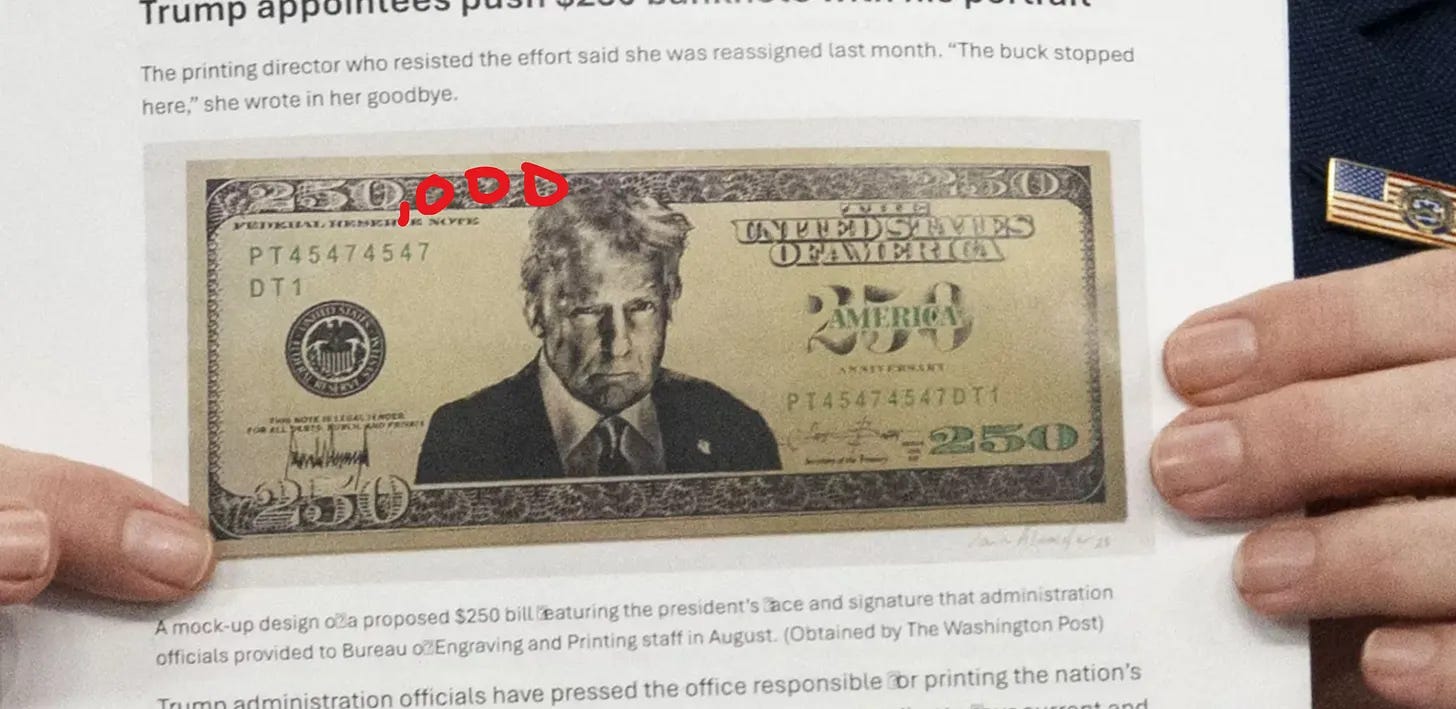
Questions remain, though. What does the breaking point look like? Is the same hockey stick fate waiting silently in the wings for the right moment to pounce in America? If the Pandora’s box that was opened in Hormuz doesn’t get straightened out quickly, that breaking point may come sooner rather than later. Hello Zimbabwe!

Poor Dr. Evil. All he wanted was sharks with frickin’ laser beams attached to their heads. Instead, because of all the bureaucratic red tape, he got ill-tempered sea bass. We bet he’d be pretty excited about what the technology industry is cooking up now.
The CEO of a company called Axon, Rick Smith, says his team is actively researching drones capable of physically stopping suspects using tasers. We already have drones that can provide real-time surveillance. The next obvious step in is to let them “put an effect on somebody” — corporate language for remotely incapacitating a human being. For ‘public safety’, of course.
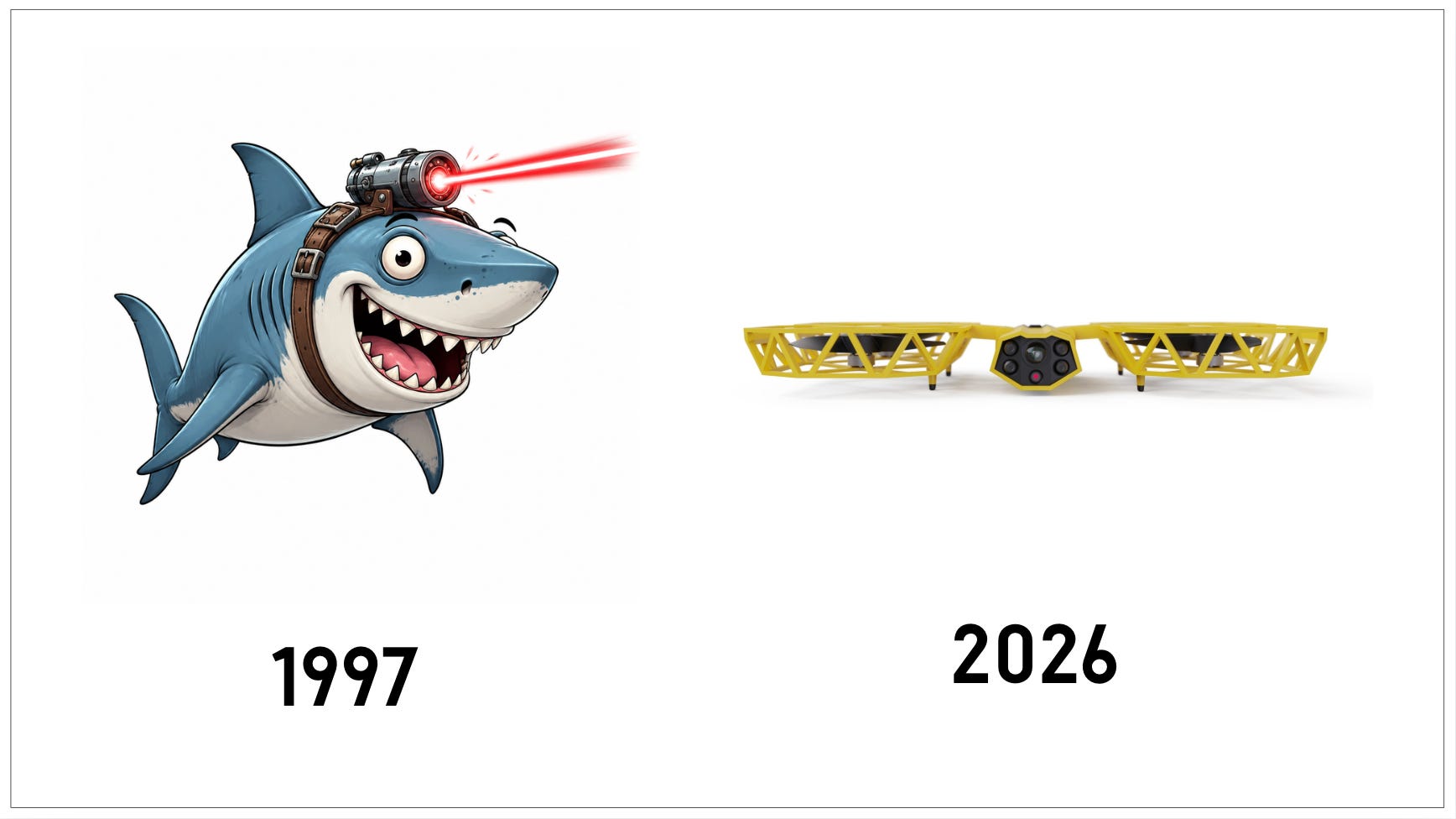
The dystopian future just got one step closer.
Axon insists… cough, cough… it will never build intentionally lethal drones. Its stated mission is to replace situations that might otherwise end in death with less-lethal alternatives. That sounds reasonable, doesn’t it? But we’re less interested in whether a taser is preferable to a bullet and more interested in what happens when force becomes this cheap, scalable, and psychologically detached from the person who deploys it.
A police officer standing several feet from a suspect must make a visible decision and accept at least some immediate risk. A drone operator could eventually stun someone from a command center miles away — a gamer’s wet dream. Or maybe the ‘operator’ is AI… in which case, there is zero emotion, zero ethics, zero morals and zero accountability.
Maybe Axon genuinely intends to keep humans firmly in control and lethal force out of the equation. But history suggests that once institutions possess the ability to remotely immobilize people, the argument will quickly shift from whether it should be used to how often.
The future, apparently, is a flying robot watching you from above and congratulating itself for not killing you.
My gawd. Highly disturbing little report you got there but sounds completely plausible to these ears. Great job. Thinking of counter moves already, lol.