

Notes from the edge of civilization: August 9, 2026
Introducing the Collapse Life Signal Map; send in the goats; happy Venezuela; Uncle Sam's grub flub 'meats' morale meagerness.
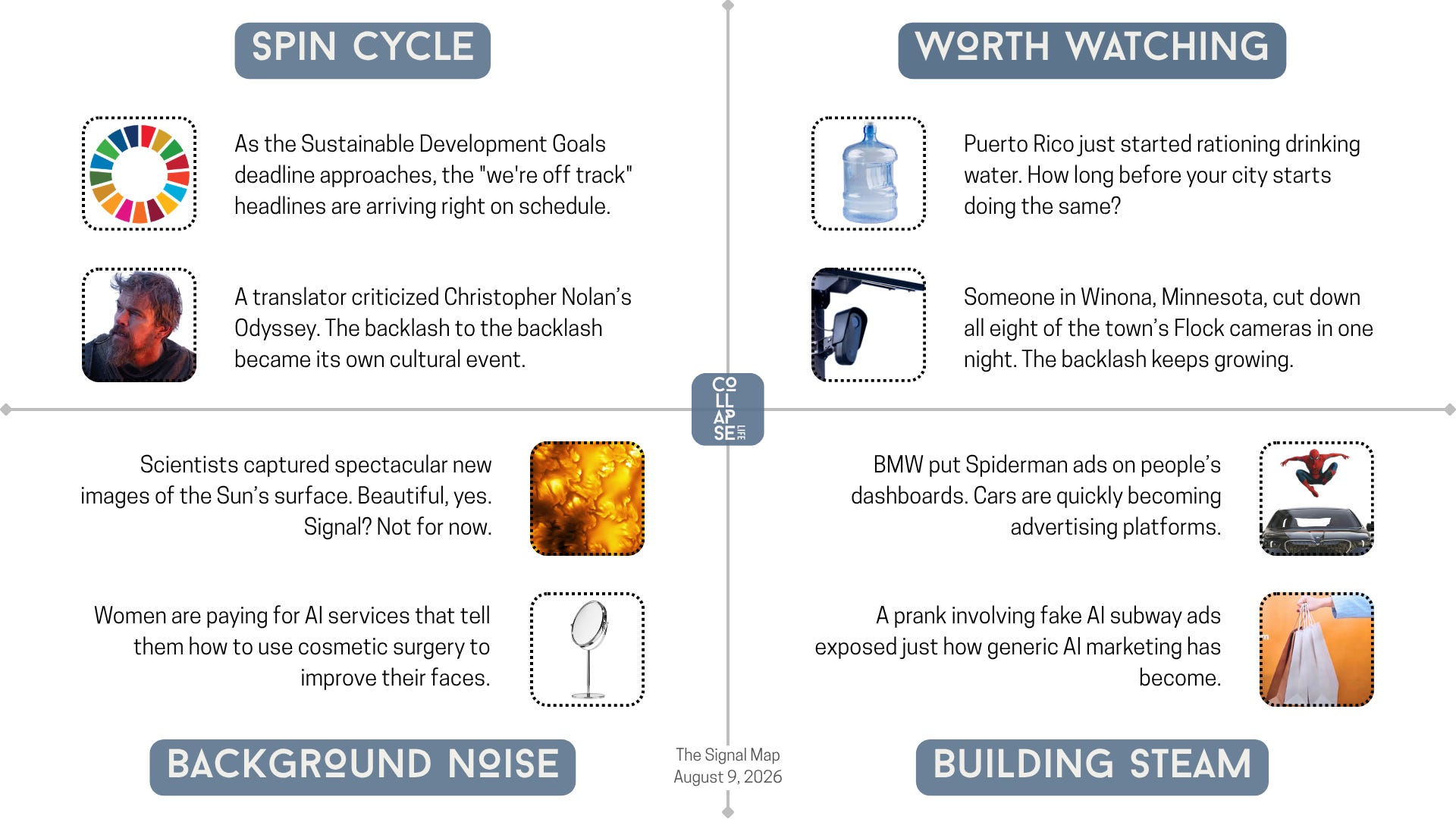
At Collapse Life, we aim to separate signal from noise. Today we’re introducing a new tool to help with that. We call it The Signal Map.
It's our attempt to plot out a handful of stories each week along two simple axes: signal → noise (the horizontal axis) and early → accelerating (the vertical axis). Doing so lets us think beyond the headlines and ask: what does this story really tell us?
The upper right quadrant holds stories to pay attention to now, while the lower right are emerging signals that could become bigger over time. Top left you’ll find accelerating noise: stories that seem to dominate the headlines without materially changing the long-term picture. Finally, the lower left is for interesting curiosities and distractions that may be worth knowing about but are not likely to matter much in future.
We probably won’t always get the placement right, but that’s part of the exercise. And frankly, it’s your chance to weigh in with comments on what you think should be on the map and what you’d move. We’d love to hear from you on this new feature, and help with its evolution into the future.
The Signal Map isn’t meant to be definitive or predictive. It’s a bit of fun, and a reminder to take a step back from the firehose of information and think about which stories actually deserve our attention, versus the ones that only appear to.
Read the stories behind this week’s map:
Puerto Rico begins water rationing → Associated Press
Flock cameras cut down in Winona → WQOW
BMW dashboard ads → Autoweek
Fake AI subway ads → Business Insider
UN SDG progress report → Impact Alpha | Nature | Healthcare Digital
Highest-resolution solar images → BBC
AI facial analysis services → The Guardian
Here are some other stories we’ve been watching:

As if Boston Dynamics’ robot dog wasn’t unsettling enough, a California startup has unveiled “Threehalves,” a seven-foot-tall, goat-headed, four-legged robot designed to carry chainsaws, haul equipment, and operate in wildfire zones too dangerous for humans. The company says the remote controlled beast is really meant to protect people by sending a robot into hazardous conditions instead. They say the black goat head is just a safety feature that prevents the robot from fitting through standard doorways and can act as a physical stop in confined spaces.
Sure looks like Baphomet to us.
The Financial Times estimates that Venezuela has generated more than $13 billion in oil revenue since the US captured Nicolás Maduro in January and took control of the country’s oil exports. But Washington has said remarkably little about where Venezuela’s money has gone.
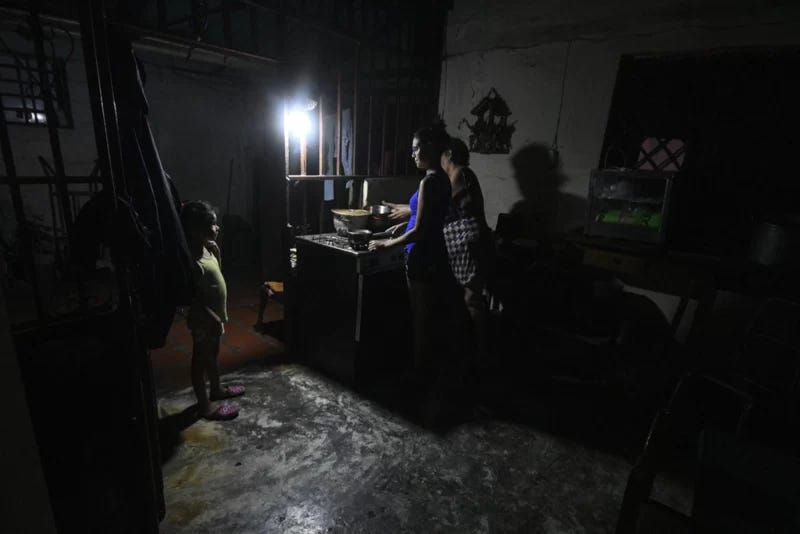
President Trump told Fox News this week that Venezuela is a very “happy” country again — except for the recent “earthquake, I guess you’d call it.” And the billions in oil revenue nobody can properly account for. And the angry protesters taking to the streets to challenge daily power cuts that last four to five hours in Caracas.
But apart from the devastating earthquake, shattered infrastructure, missing money, and intermittent electricity, Venezuela is a country filled with shiny, happy people!
Ah, happiness — coming soon to America, too.
Despite all the talk of ceasefires and deals, the Pentagon insists the US is ready for a long confrontation with Iran. Families of the sailors aboard the USS Abraham Lincoln seem less sure.
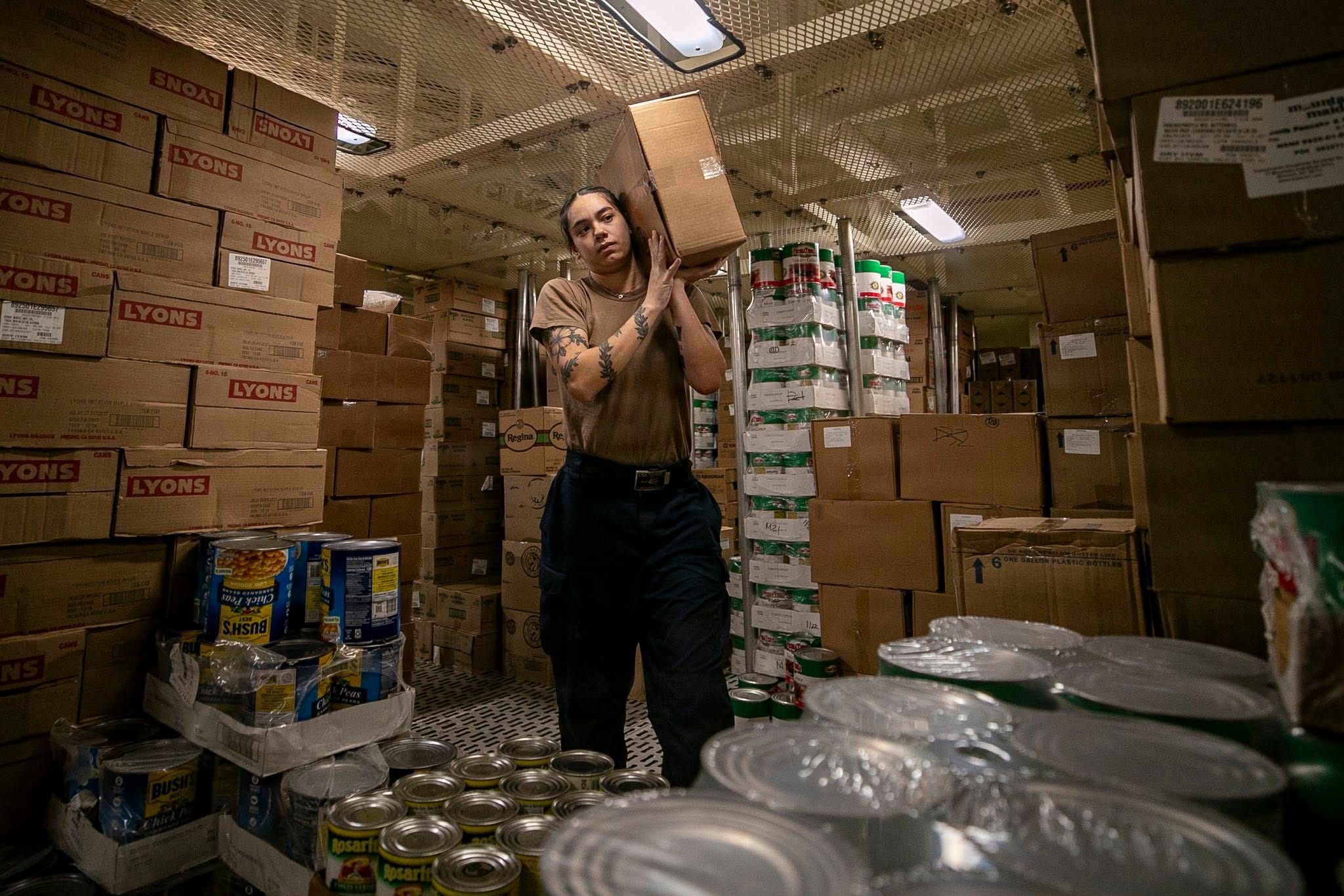
Reports from the carrier describe shrinking meal portions, shortages of basic supplies, failing sanitation, and collapsing morale after months of repeated deployment extensions. Family members confronted Navy leadership this week, talking not only of exhaustion and uncertainty, but of sailors struggling to get enough to eat.
For months, military analysts have been warning that the US doesn’t have enough missile stockpiles and industrial capacity for a prolonged conflict. Now another shortage has entered the conversation: food.
Ultimately, this story isn't really about food, or sanitary napkins, or crew morale. It's the convergence of all these reports, emerging from the same ship, validated by families back home, that sends the signal worthy of attention. Systems under strain rarely fail all at once, but instead show themselves through small failures that compound… this is what becomes harder to explain away or, frankly, ignore.
COMING UP…

Save the date: On Wednesday, August 19, Collapse Life and Overcome Babylon will host a joint livestream on strategic relocation based on his new book.
Zahra Sethna and Abraham Ojeda will discuss what to look for in a safer, more resilient place to live — and how to think seriously about relocating before circumstances make the decision for you. Come join the discussion and bring your questions and comments! Link to livestream coming soon.