

Nicaragua says no to Monroe
As Daniel Ortega abandons the pretense of electoral choice, China gives his regime new confidence to defy Washington and the moribund Monroe Doctrine.
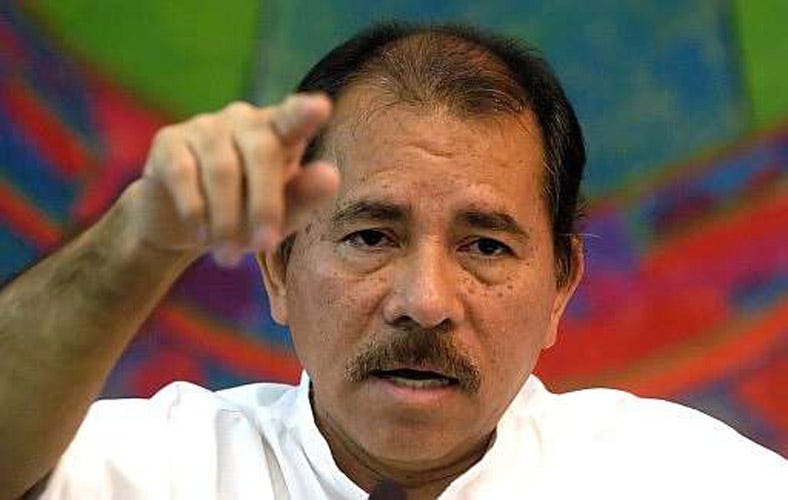
Nicaragua’s president, Daniel Ortega, has spent the last two months away from public view. Amid reports of declining health, the 80-year-old has made only sporadic appearances in 2026, including one in April where he described US President Donald Trump as “mentally deranged.”
His return on Sunday, July 19, at a rally commemorating the 47th anniversary of the Sandinista revolution was notable, therefore, not only because he appeared publicly, but because of the message he delivered.
“There won’t be any more elections here for [opponents supported by the USA] to try to seize the government and seize power,” Ortega declared. “The days when parties backed by the Yankees and the Somocistas would return to power are over — never again.”
This wasn’t exactly a ‘mic drop’ moment — Nicaragua didn’t have a particularly healthy electoral system to begin with. The last elections were held in 2021 and were widely disputed, after opponents and business leaders were detained and dissent was criminalized.
In 2025, Ortega — who has ruled continuously since returning to power in 2007—further consolidated his position through constitutional reforms that named his wife, Rosario Murillo, “co-president.” He also extended presidential terms to six years and placed the judiciary and legislature under even greater executive control. Together, the couple now controls virtually every part of the state, including the armed forces and the courts.
What stands out from Ortega’s speech on Sunday is how he is apparently abandoning the need to preserve any fiction or fantasy around the role of elections in the outcome of a nation. He hasn’t gone into any details on how elections could be called off indefinitely, but ultimately the mechanism doesn’t matter much. What matters is the message the government sends to its people when it decides even the performance of public consent is unnecessary.
But the Nicaraguan people weren’t the only intended audience for Ortega’s speech. It appears he was also speaking directly to Washington, delivering the unmistakable message that Nicaragua’s political future would no longer be negotiated through institutions recognized or influenced by the United States.
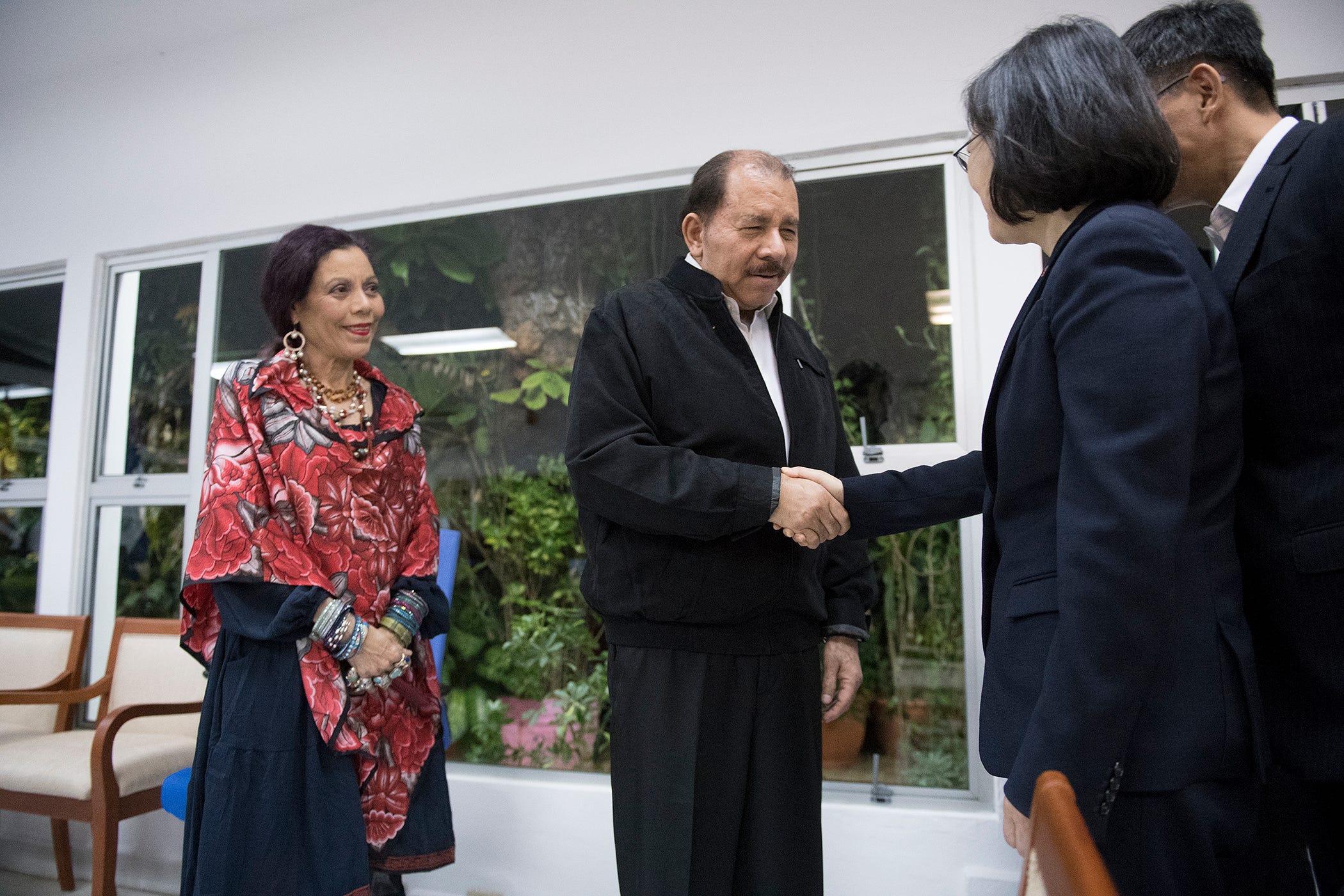
The timing of that message is significant. In recent years, Nicaragua has been rapidly expanding its relationship with China. Ortega broke diplomatic relations with Taiwan and restored ties with Beijing in December 2021, giving China another foothold in a part of the world traditionally regarded as Washington’s sphere of influence. Two years later, Xi Jinping and Ortega elevated the relationship to a “strategic partnership,” while a bilateral free-trade agreement took effect on January 1, 2024.
The relationship has since become more than symbolic. According to an investigation published by El País just last week, the Ortega government has granted 84 mining concessions to 22 Chinese-owned companies, concessions that now cover approximately 10 percent of Nicaragua’s territory. The deals include land claimed by Indigenous and Afro-descendant communities and have reportedly been issued without any meaningful community consultation.
With China as an alternate source of investment, trade, infrastructure, and international legitimacy, Ortega has the confidence that previous leaders may not have had, giving him an ally to turn to when Washington applies pressure.
That certainly doesn’t mean Nicaragua no longer needs America. The US is still Nicaragua’s main trading partner and primary source of remittances, with bilateral goods trade totaling an estimated $7.4 billion in 2025. The International Monetary Fund has warned that changes in US tariffs and migration policy could materially affect Nicaragua’s economy.
So, Ortega isn’t exactly declaring independence from the US.
In light of the fact that America has spent years imposing sanctions, condemning Nicaragua’s repression, and demanding the restoration of democratic rule, Ortega appears to believe those demands can be ignored — and that China gives him enough economic and diplomatic leverage to absorb the consequences.
The fact that Ortega no longer believes Washington is willing, or strategically able, to use enough of its power to threaten his rule may be a small but conspicuous marker of the changing world order. A government in America’s former sphere of influence has closed the electoral path, rejected Washington’s authority, and placed bets on a future in which the United States is no longer the only power that matters. Given what we are watching unfold in the Persian Gulf, that’s definitely a signal worth noting.
This second wave colonialism, where petty dictators are supported by outside interests in these undeveloped countries to extract resources doesn't work. It doesn't matter if we are talking about China, Russia, or the US.
This 250 year experiment in self government that the US has been running is the best thing that we have in the entire world and it is still lacking. Humans seem to be unable to wield power at scale. Even if an occasional leader does well, they have a limited lifespan. Maybe in the long term, our only hope is to install AI as a benevolent dictator. It can't do much worse.