

Medicine’s legitimacy crisis
The pandemic fractured public trust. Now, the same institutions are building biomedical technologies that require even more of it.

For most of the 20th century, medicine held a near monopoly on public trust. Hospitals, doctors, and public health agencies were the institutions people confidently turned to when something went wrong.
That trust took a massive hit during the pandemic, marking a low point for the medical establishment. In a matter of months, medicine shifted from a field defined by clinical judgment and scientific debate to one dominated by mandates, narrative control, messaging campaigns, and hyper-intolerance for dissent. For many Americans, that experience left a lingering impression that medicine was now a bought-and-paid-for institution, there to manage public behavior.
Today, just as trust in medicine is at a low, we are also entering a period of extraordinary technological ambition. Across universities and research institutions, scientists are developing new pharmaceutical delivery systems that can be eaten, sipped, or inhaled rather than injected, or that can slowly release vaccine components into the body over the course of weeks.
Some might argue that, from a scientific perspective, these innovations make sense. Many vaccines require multiple doses because the immune system responds best to repeated exposure. In practice, however, large numbers of people never return for their booster shots, so long-acting delivery systems like hydrogels could replicate those boosters automatically.
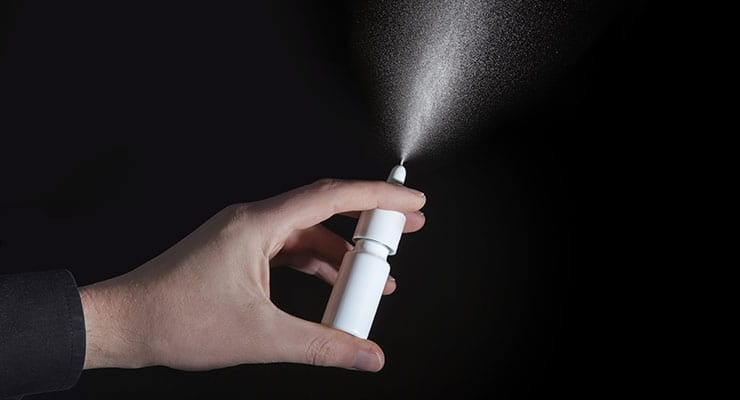
Aerosolized vaccines follow a similar logic. Respiratory viruses enter the body through the nose and lungs, and they say inhaled vaccines may generate stronger immune responses in those tissues. This tech could also simplify mass vaccination campaigns by eliminating needles and reducing logistical barriers.
The real question, however, is: why are institutions that have just spent several years eroding public trust now designing interventions that are harder for ordinary people to see, understand, or control? Is that not the perfect way to destroy trust?
‘You don’t want to be injected with vaccines? No problem, we’ll just slip them into your drink.’ A kind of medically-endorsed rufie, as it were.
Catherine Austin Fitts recently suggested, in an interview with Michael Yon, that the goal is to introduce CBDCs as the ultimate tool for financial control by implanting a chip under our skin, or worse:
“I believe instead of using chips under the skin, now they think nanoparticles can… you know, whether it’s injected or sprayed, you know, that they can use that. But whatever the infrastructure is, what you’re talking about is literally creating an infrastructure, an internet of bodies, that can be used for surveillance, coercion, and programmable money.”
Is this crackpot thinking? Maybe. But given there is no trust left in the institutions set up to promote and protect our health, it may be worth considering. Trust can’t be engineered in a laboratory, polymerized like a hydrogel, or aerosolized into the air. It grows slowly, through relationships, humility, truth, and honest practices.
Still, there is some reason for optimism.
A growing number of people are taking their health into their own hands. This is borne out by the news that more people are turning to direct primary care, or exploring alternative medicine. This is good news — taking individual responsibility for our own health is massively beneficial.
The question, despite the positive individual efforts at better health, is whether the psychopaths working to implement mass vaccination programs through integrating them into our food, the air, or other (let’s say) ‘frictionless’ means, are also engineering indiscriminate coverage. That is the ultimate betrayal of trust.
But then, if COVID proved anything, it’s that maybe trust is overrated.
Some day in the future, humans will look back at the medical systems use of drugs as archaic as the bleeding and leaches of the past.
Fractured public trust? Obliterated is a more fitting description.
Paediatrics & Child Health, the official journal of the Canadian Paediatric Society, has now admitted that 138 of the case reports published over the past 25 years are complete fiction. The stated purpose of the published reports? "Medical education".
The Covid fiasco so exposed the corruption of the medical/public health system that it could no longer be ignored. But, it seems, shame & accountability can be ignored. Paediatrics & Child Health will add correction notices to all 138 reports, "to clarify that the cases are fictional", but will not retract them.
Next, they're going to steal our lunch money...oh, wait!