

First they came for the thermostats
The war on air conditioning is about whether ordinary people can still expect comfort, safety, and abundance.


Long before we put machines in windows or boxes humming behind our houses, people worked to solve the same age-old problem: how do you survive the heat?
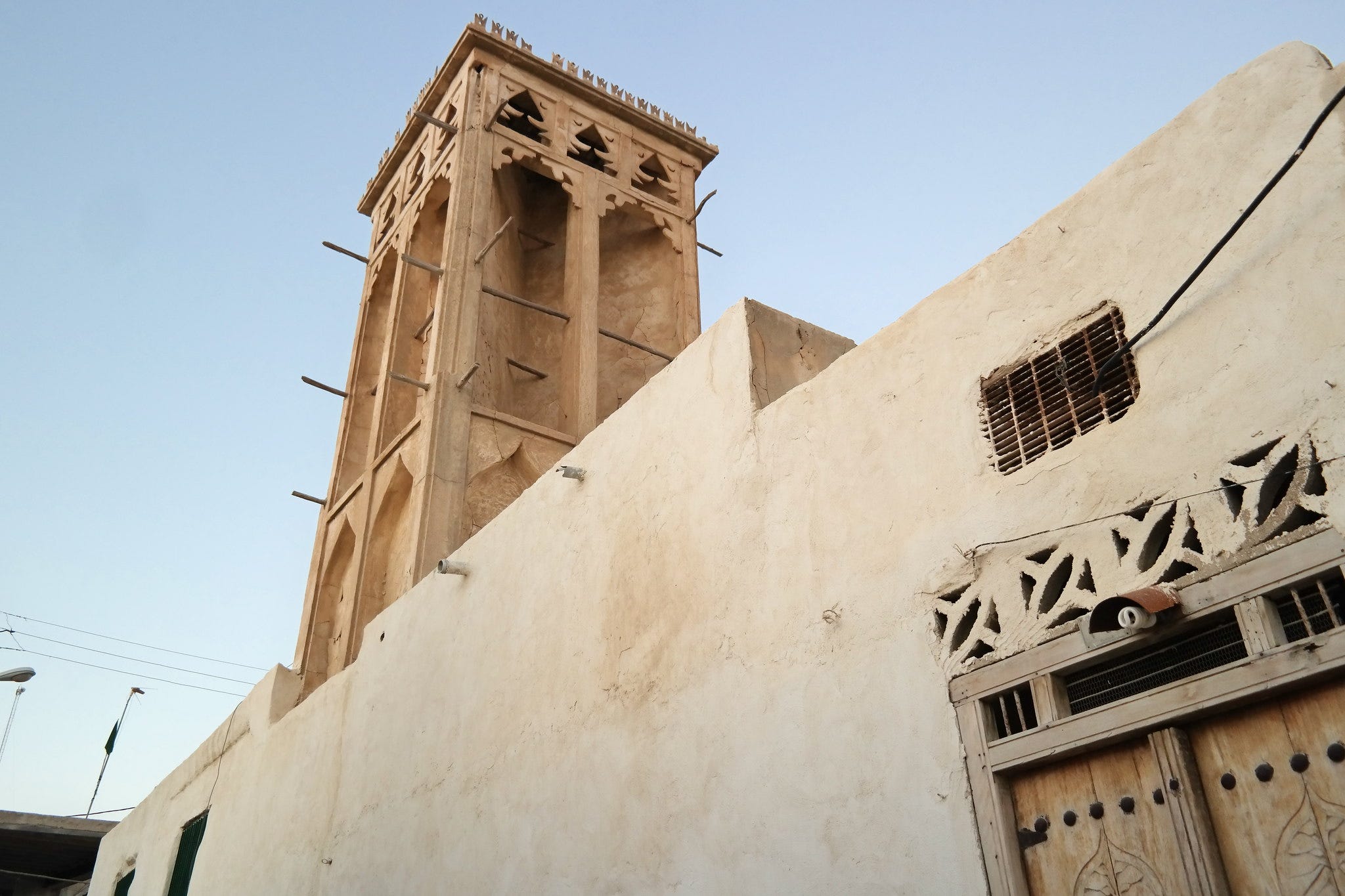
In Iran’s desert cities, the answer came in the way of badgirs ( pronounced ‘bahd-gears’) — windcatchers — tall, chimney-like towers designed to pull moving air down over a water pool to create natural cooling in ancient homes and courtyards.
In Yazd, one of the great desert cities of Iran, the skyline is still punctuated by these towers, along with domes, minarets, shaded alleys, and covered passageways built to protect people from the sun. UNESCO describes them as one of the defining features of the historic city’s skyline. Many are still used and they actually work incredibly well.
The badgir was a form of passive air conditioning technology — a way of using wind, shade, pressure, evaporation, and architecture to make life possible in hot, dry places.
That’s the part the modern climate alarmists never quite understand: human beings have always needed ways to stay cool.
We built courtyards, planted shade trees, dug channels, slept on rooftops, and designed verandas, porches, high ceilings, shutters, and ceiling fans. Eventually we came up with compressors and refrigerants, not because we became soft and unable to cope, but because the relentless pursuit of technology and science enabled progress.
Lee Kuan Yew, Singapore’s first prime minister, understood this well. In a 2009 interview in which he was asked about the secret of Singapore’s success, he explained that air conditioning was one of the signal inventions of history.
“It changed the nature of civilization by making development possible in the tropics,” he said. “Without air conditioning you can work only in the cool early-morning hours or at dusk. The first thing I did upon becoming prime minister was to install air conditioners in buildings where the civil service worked. This was key to public efficiency.”
Compare this quote, from a man who oversaw the miraculous transformation of mosquito-infested swampland into arguably the most powerful financial center in the world, to the current moral panic over cooling in many countries in the West.
In Britain, homeowners are being ordered to remove air conditioning units from private properties under climate and planning rules, even in sweltering temperatures. In parts of London, councils are applying a so-called “cooling hierarchy,” where active cooling (such as A/C) is treated as a last resort, only to be considered after passive measures like shading, fans, open windows, and ventilation have supposedly been exhausted.
In one Camden case, a resident was reportedly told to remove air conditioning units and rely on open windows and balcony doors instead. Security concerns about leaving windows open on the first floor were dismissed. In another case, local government inspectors noted that a homeowner had an “absence of ceiling fans,” even though local rules did not make them mandatory; the A/C unit was ordered to be removed. In many cases of what can only be described as overreach, the issue with air-con was not about noise, ugliness, or danger. The problem was that the need for “active cooling” had not been sufficiently justified.
Think about that — the way you choose to cool your own home now has to be justified. To whom? Local councils, government inspectors, thought police... the ludicrosity knows no bounds.
The Camden case is especially revealing because, according to the backstory circulating from a Reddit post — that was, tellingly, memory-holed à la 1984 — this did not begin with some abstract debate about climate policy. It began with something much more human.
A man bought an ex-council home, installed air conditioning, and then his neighbors took notice during a heatwave. They were tenants, renting from the local council. But they saw that his home could be cooled, while theirs could not. So they asked the obvious question: why don’t we have that too?
This was not envy, it was recognition. One apartment had found a practical answer to a pressing problem, and the surrounding apartments wanted access to the same relief.
A healthy society would look at that and ask: how do we help more people stay cool?
A declining society asks: how do we formulate a justification to make one person remove his air conditioner?
This is the psychology of managed decline in a nutshell.
And ultimately, that’s why this story matters. It is not just about one air conditioner. It is about a system that no longer knows how to deliver abundance, so it settles for enforced equality of discomfort.
It’s the bureaucratic mind in its purest form.
In Ghent, Belgium, the municipal website reportedly discouraged residents from using air conditioners during the recent heatwave, telling them that the best air conditioner is a tree.
(A tree? Is it possible that overconsumption of moules-frites and Chimay has created cognitive decline among Belgians?)
Active cooling is essential when heat rises to dangerous levels, especially for the elderly, the sick, infants, people in dense housing, people on upper floors, people in unsafe neighborhoods, and people whose buildings were never designed for the temperatures they now face.
Even the World Economic Forum understands this, even if they couch it in sickly globalist language. In a 2019 story on its website, cooling access was referred to as “a climate justice and equality issue,” acknowledging that access to cooling can no longer be treated as a luxury, especially for vulnerable people. In some cases it is a matter of survival.
So which is it? A climate justice issue, or a selfish indulgence? Reading between the lines is critical: poor people in hot countries do not have enough cooling, and middle-class people in rich countries have too much.
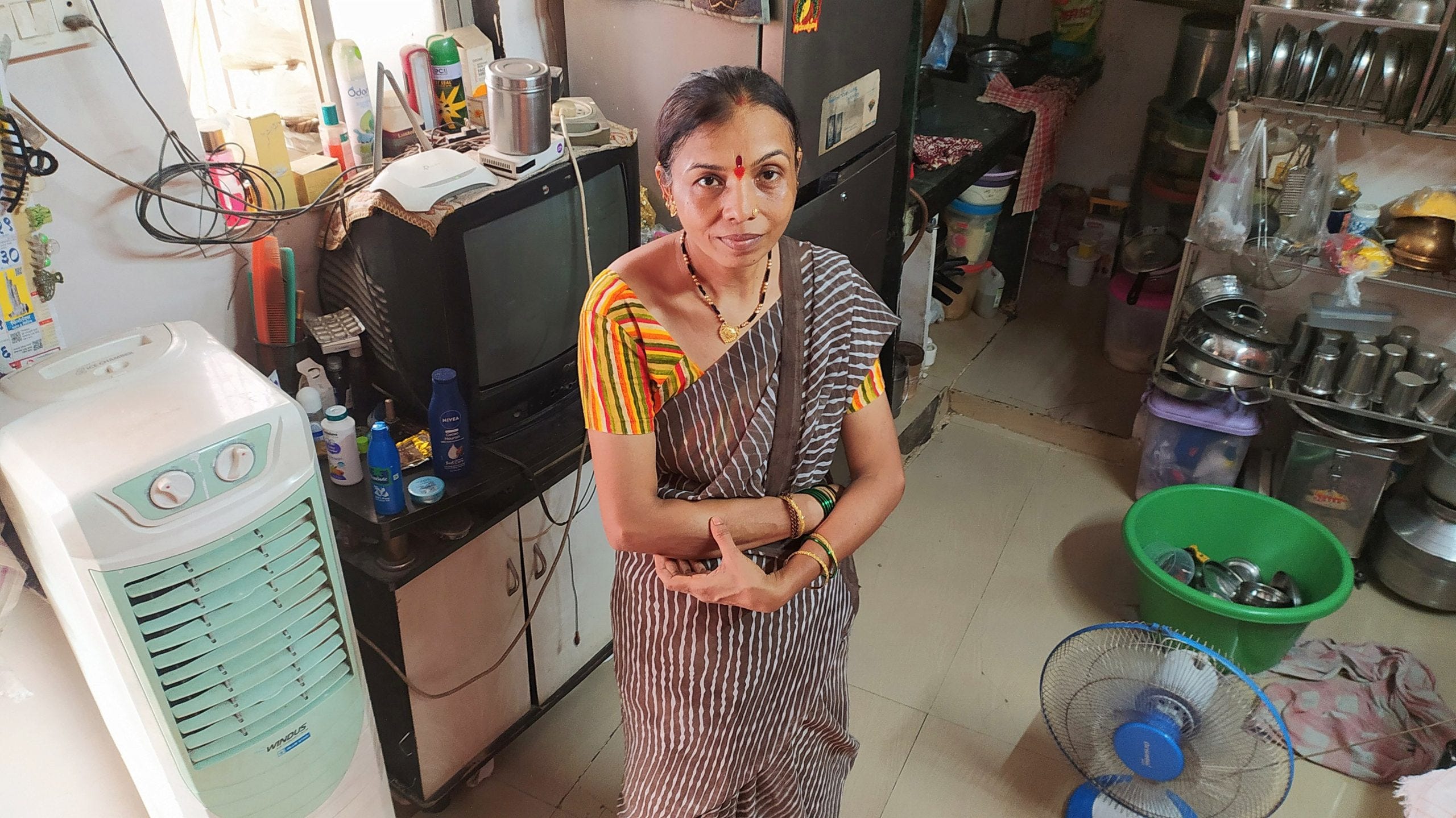
In Mumbai, low-income families living in dense, poorly ventilated tenements are spending money they don’t have on air coolers, exhaust fans, ceiling fans, and air conditioners because the heat inside their homes is unbearable. In one 10-by-12-foot home, a domestic worker named Swati Yeshi, who earns just over $60 a month (6,000 rupees), bought a $100 cooler on installments because, in her words, she could not live without it.
“You can’t live without a cooler,” she said. “We needed it badly.”
The ancient Persians understood something our modern bureaucrats seem to have forgotten: the point of architecture, technology, and infrastructure is to make human life possible under difficult conditions. The badgir wasn’t a sin against nature, it was an intelligent response to nature.
Five thousand years later, air conditioning is the same impulse, only in modern form. And you gotta admit, that’s pretty cool.
Everyone looks at me crazy when I bought a direct solar powered AC window unit. It was expensive, but i know my family has a backup while in building our passive cooling home.
> the point of architecture, technology, and infrastructure is to make human life possible under difficult conditions.
The architecture angle is very telling. Architecture used to be the technology, and buildings were designed to resist overheating in summers (think of the large covered porches and cross-ventilation designs in houses in the U.S. South). Modern building abandoned almost all of those older techniques, and now building are built to retain and absorb heat; air conditioning is taken for granted.
Wanting to decrease air conditioning will require a return to the type of architecture that resists, rather than generates and traps, heat.
I write this as someone who doesn't have air conditioning, but who does live in a small, first-floor apartment with a window in the front and a window in the back and an open space from one to the other for cross ventilation. The building also has a large from porch that is covered, blocking direct sun rays from hitting the exterior walls. I use long-forgotten techniques to make my home tolerable in the summers (high temperatures are forecast to reach 100 degrees F in a couple of days), but that opportunity is available to me because of the architectural features of this old building.