

Communities are rejecting the data center bargain
Lower-income communities are resisting data centers at nearly five times the rate of wealthy ones — and the resistance appears to be working.
Data centers have become a visible example of a major divide in America right now; on the one hand, all the “prosperity” and “healthy economy” politicians keep banging on about. On the other, the actual economy in which regular Joes and Janes participate.
So, what do data centers have to do with it?
The projects are sold to constituents as economic development, innovation, and investment. After state and local governments offer billions in tax breaks and other incentives to attract the facilities, they promise the investment will pay off in jobs and money flowing into the local economy.
“Data Centers are tremendous WINS for the States and Communities that are lucky enough to get them,” President Trump wrote in an oddly capitalized Truth Social post last week castigating New York governor Kathy Hochul for her recent decision to put a moratorium on data center construction.
“They are big, strong, bold, and Money Machines for the State in which they are built,” the President continued. “Both the Taxes and the Jobs amount to LIQUID GOLD!”

The people in the communities where hundreds of acres are being occupied by data centers are increasingly seeing through this façade and arriving at a different conclusion: we’re on the losing end of this bargain.
Across the country, people are objecting to possible increases in their utility costs, industrial noise and pollution, light pollution, maximum penitentiary-like security, and relatively few permanent jobs that remain after the infrastructure has been built.
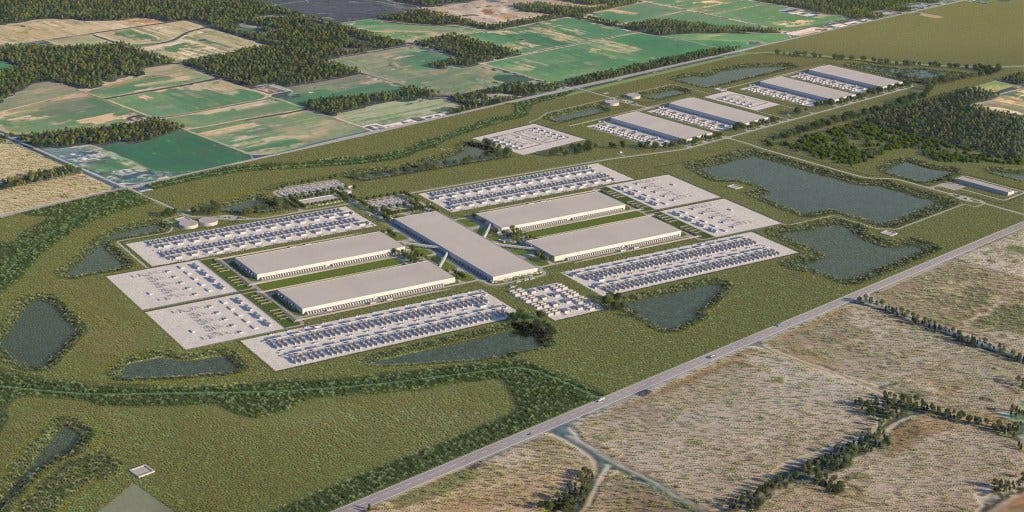
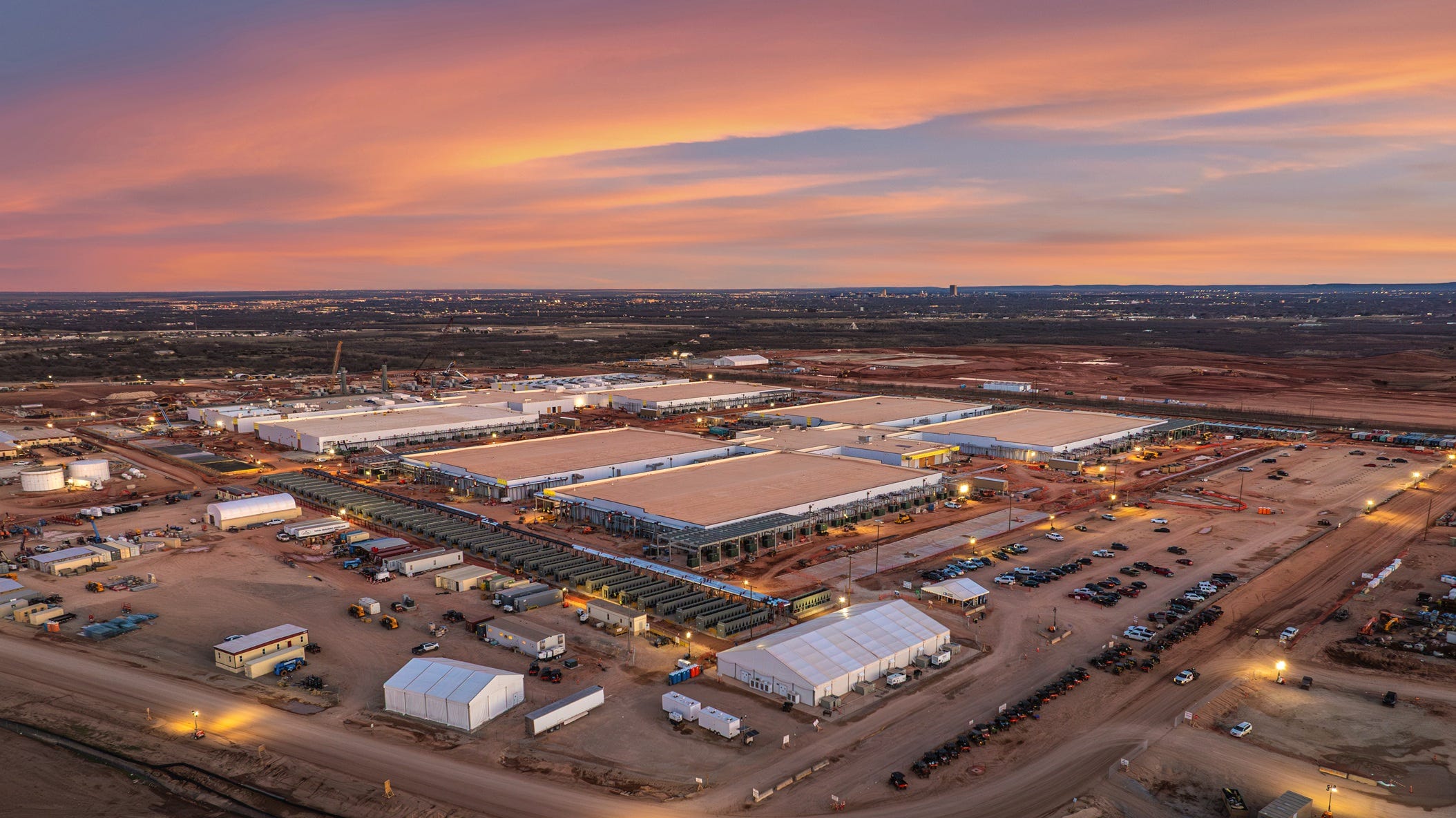
A 2,250-acre Meta data center in Louisiana required more than 5,000 workers during construction but is expected to end up creating just 500 permanent jobs when it opens. In Abilene, Texas, a data center the size of Central Park required a peak construction crew of 4,000 workers, but the developer is contractually obligated to maintain a staff of only 57 people once construction is complete, though the actual workforce may swell to around 100 people.
Louisiana Governor Jeff Landry says 500 jobs is better than no jobs. “I’ll take it,” he told CNBC last year. “I don’t know where the people are who complain about 500 jobs, but I’ll take them in Louisiana. We will take every job we can get.“
One would think the localities chosen to host these data centers would welcome the economic development, but new research shows that the communities fighting back are more often than not working class and lower-income places where people are questioning why their electricity, water, land, and public finances should be promised to some of the richest companies in the world.
Data scientist Geoff Holtzman recently examined data on more than 1,400 operating and proposed data centers and matched their locations with census-tract information on household income, education and homeownership.
His most striking finding was that data centers in the lowest-income quarter of the communities studied encountered organized opposition 19 percent of the time, while in the wealthiest quarter, the rate was just 3.8 percent.
“The highest rate of resistance comes from neighborhoods with a median income of between $8,000 and $72,000,” Holtzman noted to Brian Merchant, author of Blood in the Machine on Substack. “The lowest rate of resistance is in neighborhoods where the average household makes between $133k and $250k per year.”
In other words, lower-income neighborhoods resisted data center development at nearly five times the rate of wealthier ones. NIMBY — not in my backyard — is alive and well in these places.
That finding complicates the familiar claim that opposition to new development is primarily driven by affluent homeowners protecting their property values.
Even more interesting, resistance appears to be having an effect.
Among recently proposed data centers, Holtzman found that 28.2 percent of projects encountering community pushback were cancelled or suspended. Only 5.2 percent of projects without documented resistance met the same fate.
Holtzman calculated that the odds of cancellation were approximately six times higher when communities fought the project. Higher cancellation rates in lower-income areas could be statistically explained by the greater frequency of resistance there, rather than by income itself.
While the analysis demonstrates correlation but cannot prove that opposition alone caused each project to fail, its central conclusion is supported by a much broader change in public opinion.
A Heatmap survey in May 2026 found that 71 percent of respondents would oppose a data center near their home, including 55 percent who would strongly oppose it. Opposition reached 80 percent among adults under age 35 and extended across political parties and geographical regions.

A separate Gallup poll reached almost the same overall result. Respondents most frequently cited excessive water and electricity use, pollution, higher utility bills, and other effects on local quality of life. Gallup found no significant difference in overall opposition by income, suggesting that lower-income communities may not necessarily dislike data centers more than wealthier ones, they just may organize more frequently when projects are actually placed near them.
The easy conclusion here is that people don’t like artificial intelligence. But the more nuanced reasoning is that the conflict is centered around who receives the benefits of economic development and who absorbs its costs.
The AI industry wants communities to believe that data centers are essential infrastructure: the mills, factories, and railroads of a new industrial age. But factories historically employed a majority of the local community and produced tangible goods. Modern data centers can consume the electricity of a small city while employing only a handful of people after they are built. In other words, as opposed to a reciprocal relationship, data centers are parasitic.
The emerging revolt shows that communities are beginning to recognize this calculus. The fact that so many communities are finding their voice at the same time, and using it to show that the machinery of borrowed prosperity can still be stopped by the people expected to pay for it, is a rare silver lining in these otherwise bleak times. Perhaps it may lead more people to recognize that the future being built for us, by people who see us as ‘data livestock’, doesn’t have to be inevitable.