

Checking out: When nothing feels real, honesty becomes optional
All those self-checkout kiosks are a breeding ground for fraud; it's what happens when we push aside humanity and give permission to 'help' ourselves.

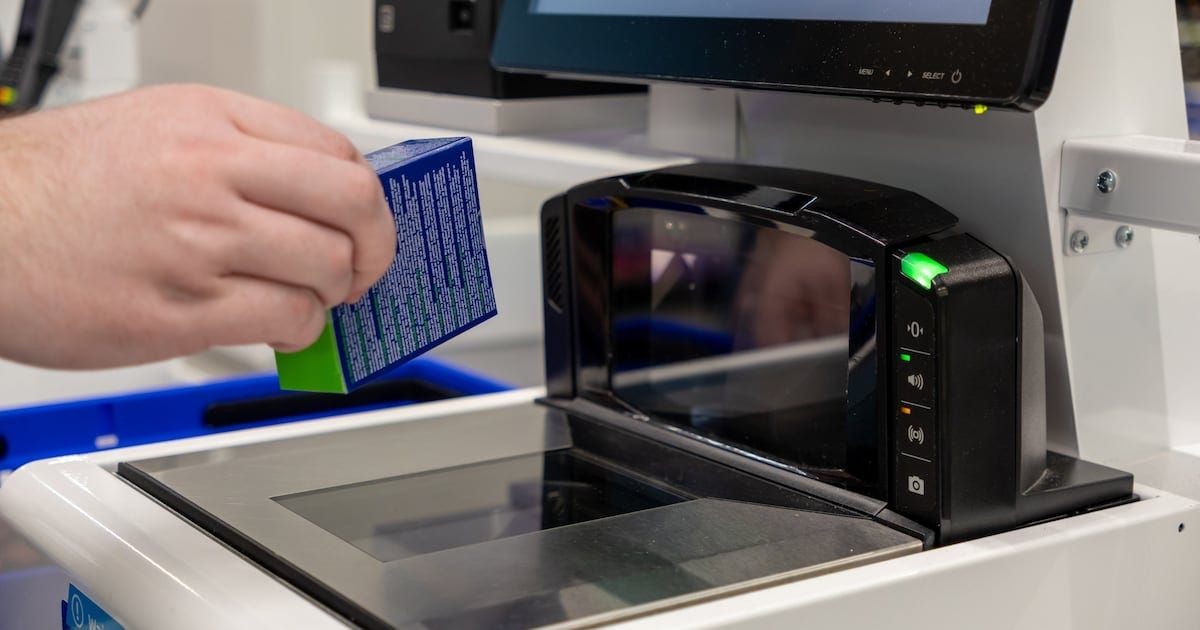
Retailers first introduced self-checkout to save money.
The logic was basic: fewer cashiers would equal faster throughput and higher margins. Consumers embraced it for their own reasons — speed, ease, the ability to move through the world with as little friction or human interaction as possible.
Turns out, however, turning customers into cashiers probably wasn’t the smartest idea. Losses are mounting and fraud is rampant.
In a recent LendingTree survey, 27% of self-checkout users admitted they had purposefully taken an item without scanning it, and that number almost certainly understates the reality. A Business Insider investigation documented shoppers skipping scans, abusing return policies, and treating merchant protections as a kind of personal rebate — often justifying the behavior by pointing out the size of the corporation or invoking economic inequality.
This is where the story sharpens.
In a world increasingly dominated by ideological narrative, often purposefully skewed leftward, a vast majority of people (especially young people) have come to believe capitalism and the free market economy are predatory, that corporations are exploitative, that no one deserves to be as rich as Elon Musk or Jeff Bezos. What was once a pithy slogan, “Eat the rich,” has now become a pervasive worldview.
So when people steal — not out of desperation, but casually, opportunistically, parasitically — they don’t feel like criminals, they feel like Robin Hood. And, they tell themselves their small effort is a simple act of balancing the scales.
Even though nearly half of respondents in the LendingTree survey said high prices motivated their behavior, a close look at the chart below reveals it’s actually Americans earning more than $100,000 per year who are more than twice as likely to admit they had deliberately skipped scans compared with lower-income shoppers.

What’s going on? Is it comfort in the thought that there will be little repercussion? Moral permission based on the sorry state of the world?
Ultimately, it’s a complex confluence of economics and psychology. Corporations are easy to dehumanize — after all, they’re faceless entities whose sole purpose is to enrich shareholders. Right? So it’s all a wash — a write off, as it were.
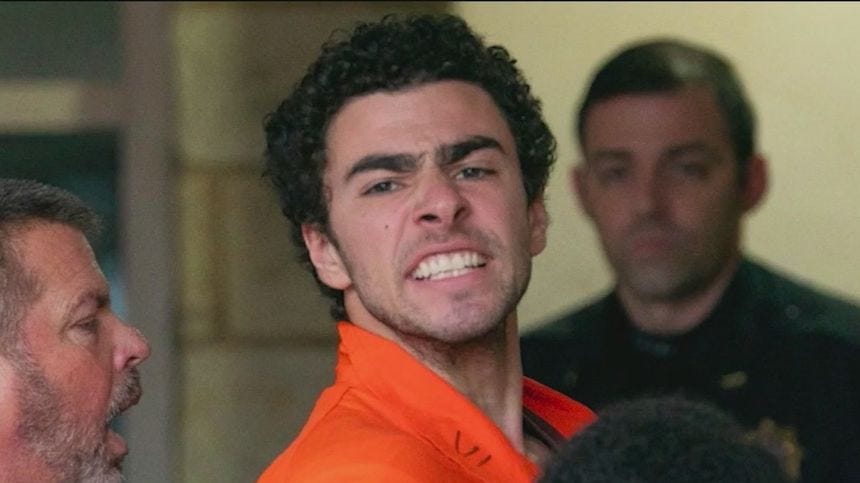
But a self-imposed moral high ground and the accompanying permission to “balance the scales” is, in fact, a slippery slope to vigilante justice. Once the moral line between exchange and extraction dissolves, it becomes remarkably easy to justify criminal behavior in the name of “fairness” or “justice.” The people who celebrated Luigi Mangione as a crusader for healthcare reform, so-called ‘Mangionistas,’ didn’t see his action as wonton violence so much as a necessary rebalancing.
Whether it’s the self-justified skipped-scan-at-the-grocery kiosk, or the old tuck-the-label-in-the-sleeve and wear the Prada dress out for the night, all of it points to a society in demise. One running on the fumes of loose credit, easy return policies, and a moral compass that no longer provides proper orientation.
In fact, the disconnect from reality is so blatant now that one small business owner told Business Insider about a refund request for children’s clothing that was obviously worn and stained with food. The customer, unashamed at the state of the return, had learned from experience that returns to big corporations are consequence-free; so why wouldn’t the same sense of entitlement apply to a small operation? In response, the business owner felt compelled to put her name and face on every customer communication — an effort to help subtly connect the customer with an understanding of the implications of transposing assumptions, and the consequences on a small business versus a behemoth corporate entity.
Is it too late to go back to the good old days, when a cashier at the grocery store knew you, asked how the kids were, and wished you a Merry Christmas?
Today, with distance between us as neighbors and community members, and the collapse of trust, “recording in progress” cameras have replaced cashiers, and a fake “Have a nice day” ends every transaction. Everyone becomes a suspect because no one is worthy of trust.
This is what social collapse looks like. Thankfully, it is still relatively polite — a steady but quiet retreat from shared obligation. The self-checkout kiosk didn’t create this condition, but it definitely exposed it.
Not surprising. The other day at our local Costco I noticed they had taken out self checkouts. I'm all for the human cashier experience coming back.
A predictable consequence, as well as eliminating entry level jobs for teenagers that existed when I was coming of age. Demands for higher "living wages" for unskilled workers that were never meant to be a career path has ruined so much for the last generation or two of kids who need to develop some skills, experience and work ethic. No wonder they are mostly still helpless and clueless when they get out of college.