

The uneven terrain of America's housing market
Inheritance transfers, contract cancellations, and billionaire migration reveal a housing system splitting along class lines.
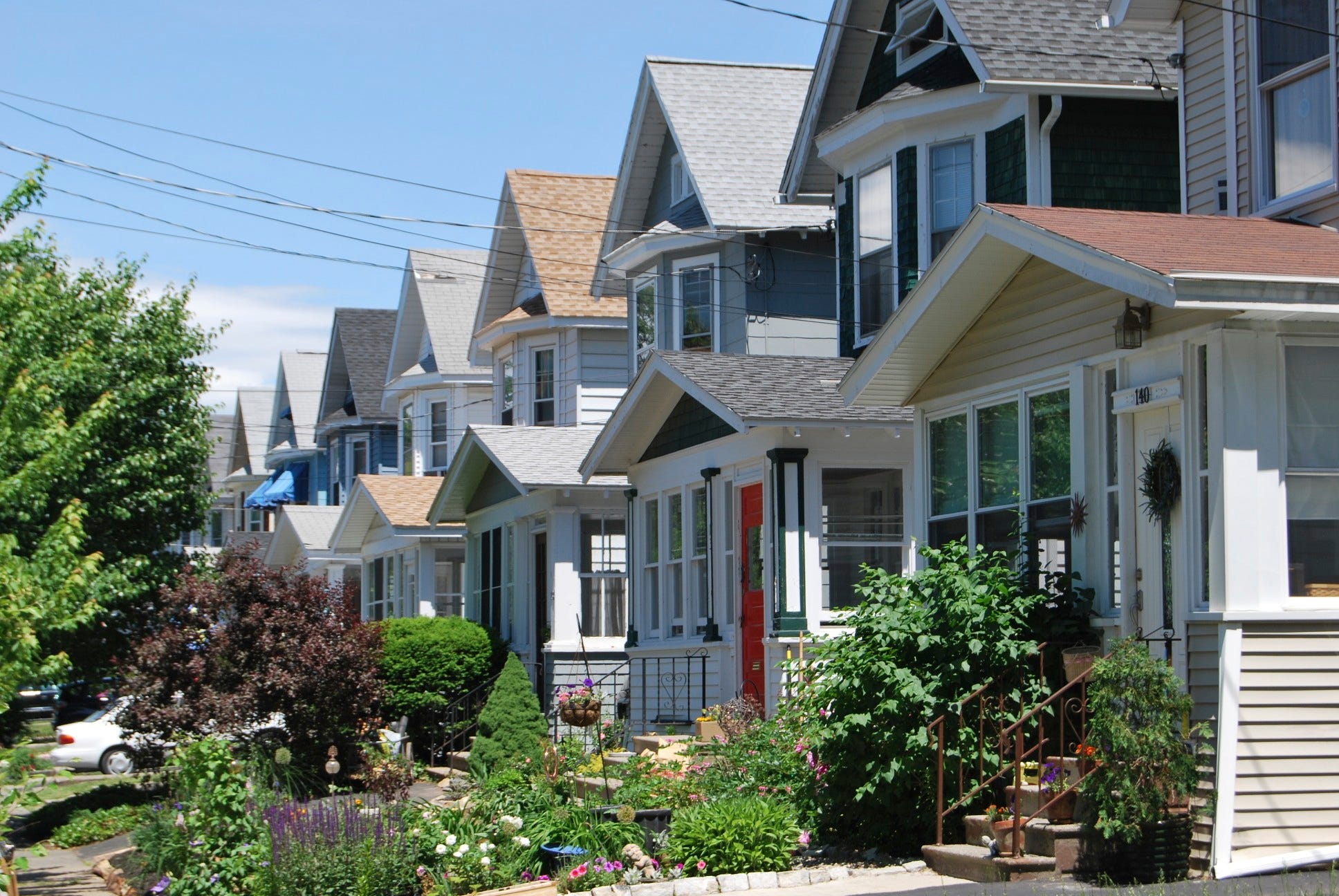
As many loyal Collapse Life readers know, we’ve been watching the real estate market closely the past few years, in part because we sold one home, and then bought another in a different part of Texas. In the year that ensued between those two events, what we saw as we explored the housing market seemed extraordinary, even incomprehensible at times — prices completely disconnected from reality, and emotions rather than reason leading decisions. We wondered how much longer the market could continue under these delusional conditions.
A handful of recent articles suggest we may not be heading toward a traditional housing crash so much as a structural split. Homes are changing hands through inheritance rather than purchase, boomers are aging in place, buyers are canceling contracts at record rates, and the ultra-wealthy are reshaping select cities through nine-figure acquisitions. The result is a market that not only feels, but is becoming, increasingly inaccessible to the middle.
First off, The Wall Street Journal reports that in California last year, 18% of all property transfers were made through inheritance. In other words, nearly 1 in 5 homes changed hands because a homeowner passed the home on to heirs.
For example:
Darred Greenside, along with his brother and cousin, inherited a three-bedroom San Francisco home that his aunt and uncle purchased in 1964 for $41,000. Greenside and his brother bought out their cousin’s share of the house, and Greenside moved from Seattle to live in the home.
At more than $18,000 a year, Greenside’s property-tax bill is far higher than the $1,100 his aunt paid annually. But because he has no mortgage payment, Greenside is still saving money compared with paying rent for a smaller apartment in the city, he said.
Housing was once the primary driver behind the formation of the middle class. Now, we have a society where shelter is determined either by generational lottery or extreme wealth. That doesn’t bode well.
When a home starts to feel like a hologram — technically visible but materially unreachable — something subtle shifts. If you cannot realistically plant roots, why should you invest emotionally in the place where you live? Why sit through zoning consultations and school board meetings? Why put repairs or improvements into something that will always belong to another? A society without belief in a pathway to stability will necessarily drift aimlessly. The future will stop feeling like something that can be built, and will instead feel like something that is temporarily occupied.
Many members of the ‘baby boom’ generation bought large family homes decades ago — and now, even with empty nests, most are staying put. With their mortgages paid off and property values soaring, they’re sitting on significant housing wealth in a market defined by tight inventory, high interest rates, and unaffordable prices for younger buyers.
While some might prefer to downsize, they are discouraged by the same elevated costs facing everyone else. Many are also working longer, planning active retirements, and see no urgency to relocate.
The result is a generational imbalance: roughly 28% of US homes with three or more bedrooms are owned by adults aged 60-78 living alone or with just one other adult, while millennials with children own only 14% of those larger homes. According to Fannie Mae, most Americans over 60 don’t plan to move at all.
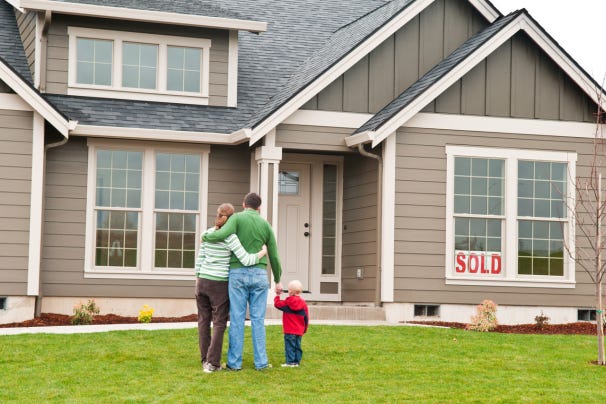
Even when deals appear to be brokered, homebuyers are increasingly “ghosting” sellers. In January this year, nearly 40,000 home sale contracts — about 14% of all pending deals — were canceled, marking the highest January cancellation rate in almost a decade, and up 13% from a year earlier, according to Redfin.
This spike reflects a shift in the balance of power. Many major metropolitan areas are now buyers’ markets, with more homes for sale than active buyers. That gives house hunters room to negotiate, or walk away entirely. But high mortgage rates and economic uncertainty are fueling hesitation, especially among first-time buyers who have stretched their savings to make a down payment. Even though prices have cooled from record highs during the pandemic, the median home price today has climbed to about $423,000, up from roughly $300,000 a decade ago.
Because large metros often signal broader housing trends, the growing wave of canceled contracts could point to slowing demand, rising inventory, and potential downward pressure on prices nationwide — an early warning sign of a more cautious housing market ahead.
At the very top of the housing market, it’s a different universe. In Manhattan, luxury sales reached new heights in February, with sales topping $1.3 billion. And while average buyers are backing out of contracts in other parts of the country, South Florida brokers report a surge of billionaires snapping up nine-figure waterfront estates. Agents who once catered to doctors and business owners in the $5-8 million range are now fielding Zoom calls from tech founders and finance titans looking to spend $50 million to $180 million — sometimes on empty lots.
The trigger appears to be California’s proposed Billionaire Tax Act, which would impose a one-time 5% tax on residents worth over $1 billion. Even though the measure hasn’t secured a ballot spot, the mere possibility has accelerated relocations. High-profile names like Larry Page, Sergey Brin, and Mark Zuckerberg are populating Miami’s ultra-exclusive enclaves such as Indian Creek and Star Island. Zuckerberg and his wife, Priscilla Chan, reportedly paid $170 million for a Miami mansion in a deal that closed yesterday.
Florida’s appeal is straightforward: zero state income tax, light regulation, and a political climate seen as friendlier to wealth. Billionaire transplants are also investing in infrastructure, from elite schools to financial services, aiming to turn Miami’s “embryonic” tech and finance scene into something more permanent.
So as the national housing market cools, the ultra-wealthy are relocating, and reshaping entire cities in the process. In an essay for The Wall Street Journal, author Richard Florida asked: “what is a city when its wealthiest leave?” In the past, he writes, wealthy people generated tax revenue, loyalty, civic investment, and philanthropy.
“When people stayed,” he says, “they fixed what was broken because they had no alternative.” Now, he says cities are being pushed into a race to the bottom, as high earners move to tax havens. “The burden of funding schools, transit, parks and public safety shifts to those who remain. Established cities and rising stars alike are caught in this trap.”

His solution is to impose taxes on things that can’t relocate: “land and property, consumption and entertainment, visitors and tourism, commuters and employment.”
So what might this mean for the future of cities? Those who can will flee to lower tax jurisdictions, while those who can’t will get choked out of the market and will only be able to aspire to homeownership if they have a parent or grandparent who can bequeath them one.
The signs — canceled contracts, aging homeowners, inheritance transfers, billionaires buying islands — are flashing a big warning. They point to something larger afoot: a K-shaped market that splits along class lines, with the middle quickly evaporating. That’s an inherently unstable structure.
There are a lot of cascading failures that are making homes unaffordable.
The biggest one is that the younger people don't have money. (Duh!) But a large part of why they can't afford homes comes from their personal choices. Taking out student loans that they can't afford to pay off for degrees that are often not even closely related to their careers (or actually necessary). Buying thousands of dollars worth of goods and services that are eating into their paychecks such as overpriced cars, cell phones, computers, big screen televisions. Tons of subscription services. Eating out instead of preparing their own food. They don't have enough money left at the end of the month to survive, let alone save for a downpayment.
Then the housing supply has been twisted by a combination of things. Lots of people are using housing as an income and investment rather than a home is a major part. The media points to the boogey man of the institutional investors but that is a relatively small part of the problem. Management costs, repairs, and rising taxes makes for pretty thin margins for existing homes. It is anything but passive income. It is a lot of work. The bigger part is individuals grabbing them up and making "upgrades" to them to turn a quick profit make it nearly impossible to buy a "starter home" that young people would normally take on. For new construction, it takes very little additional construction cost to build a 4000 sq.ft. house than it does a 2000 sq.ft. house. Slap on some luxury finishes such as granite countertops and suddenly you are looking at $400,000 homes on the same lots that would have been half that price with lesser homes. Why would a builder even think about building something affordable? It doesn't generate nearly the profit.
The rental market has the same pressures. If you are going to build rental properties, there is no incentive to build $1000/month apartments when you can pay a tiny bit more to build $2500/month apartments on the same property.
That doesn't even touch on the issues created by what passes as city planning. They are in the business of generating tax revenue. More expensive homes that pay higher taxes will get the greenlight and anything else will just fight an endless gauntlet of resistance.
That's also how Commies/Socialists foment their revolutions. They destroy the middle class so everyone is either poor or rich. There's always way more poor and they form the cannon fodder for the subsequent bloody revolution.