

AI is sucking up power. Some states see your assets as a backup supply for the grid.
Homes are being redesigned to power an industry many communities are actively working to abolish. But then, so is much of your stuff... your car, your thermostat, no longer "yours."

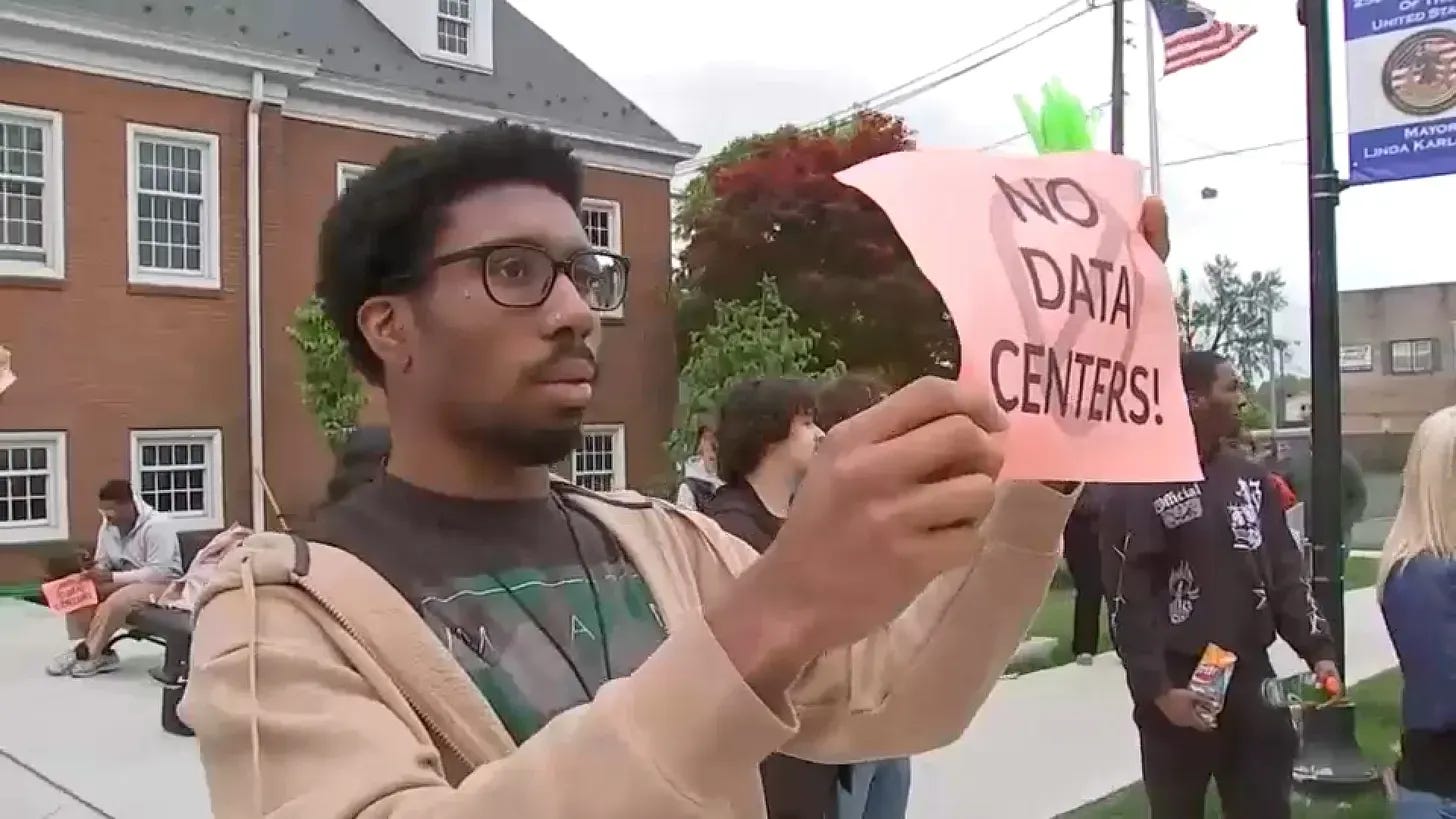
The backlash against data centers is growing with each passing day.
A new analysis finds that more than 500 towns and counties across the country have blocked, banned, or paused new data center developments, and lawmakers in at least 15 states are actively considering restrictions or moratoriums.
New Jersey is one of the states pushing back. More than 25 towns across the state have banned data centers, and at least a dozen more are considering it. Two towns are even facing lawsuits for withdrawing zoning permission.
Citizens are concerned that data centers consume so much power they could collapse the electrical grid, drive up residential utility rates, or both. Their fears are coming to fruition.
In New Jersey, electricity costs have increased more than 18% this year. The average bill was about $300 a month in July, the highest in the country according to the climate news site Heatmap.
The state’s governor, Mikie Sherrill, ran on getting those costs under control. On her first day in office, she declared a state of emergency over the state’s energy situation. Last month, she signed legislation that would hold “utility companies and large data centers accountable through stronger oversight and smarter incentives that will drive down costs and strengthen our grid.”
That’s some slick, politician talk, making it sound like a win for residents: data centers have to pay their own way. However, that’s only a surface level understanding. What New Jersey has done is something far more complicated and, frankly, a bit more devilish.
In a nutshell, the state is making Big Tech pay households to consume less electricity, so that Big Tech can consume more electricity. It’s a ponzi scheme for the grid.
The new law is called the Data Center Fair Share Act. Households will be able to replace their energy-hogging appliances with heat pumps, solar panels, or home backup batteries and the data centers will pay for the swap. As these upgraded households drop the burden on the electrical grid, the utility gives the data center priority positioning in the “interconnection queue.” Essentially, that means the data center gets permission to plug in and use that newly freed-up capacity immediately.
So, while more and more people are saying they don’t want data centers in their communities, and municipalities are steadily pushing back, states like New Jersey are using the moment to accomplish two competing political goals:
They’re trying to tell voters they’re being protected from Big Tech while telling Big Tech: ‘Don’t worry. You can have all the electricity you need.’
There’s something else going on here, summed up perfectly in a quote from Ari Matusiak, co-founder of a nonprofit called Rewiring America and a member of Governor Sherrill’s transition team. Matusiak recently told the climate news site Canary Media that New Jersey’s new law sets a national precedent.
“[It’s] a blueprint for how policymakers can start to think about households as energy infrastructure,” he said.
And there it is: the incentive isn’t just a nice giveaway to the hardworking little guy. The little guy’s house now produces, stores, and feeds electricity in ways that are ultimately useful to the grid.
Once the technocrats have subsidized the battery, connected the charger, installed the smart thermostat, and aggregated them to be controlled remotely, they’ve also changed the nature of the household. It’s not just the little guy’s castle anymore… it’s a node in an energy infrastructure network.
Collapse Life wrote about this underhanded effort back in late 2023 — the push to get people into electric vehicles was more about decentralizing the power grid than any attempt at saving Gaia:
Model 3s have been stealthily equipped with vehicle-to-grid technology for several years now, even though the grid infrastructure is not quite in place yet. But if that technology is being underhandedly added unbeknownst to all but the geekiest Musk-eteers, what else is being put into place and planned for the transition to electric vehicles? And if it’s such a good thing, why aren’t we all discussing it openly and transparently?
When policymakers and corporations start treating individual assets as cheaper alternatives to building out a conventional grid, it creates an enormous financial incentive to connect and coordinate millions more household devices. Think of is as nouveau collectivization for the digital age, something the Soviets could only dream of.
But wait, there’s more. Turns out nouveau collectivization has a cool, Silcon Valley-esque name: the Virtual Power Plant (VPP).
Under a separate but closely related plan to build a statewide VPP, New Jersey’s Board of Public Utilities (BPU) has proposed that incentives for freebies like smart thermostats, electric vehicle chargers, and home battery systems come with enrollment in the VPP as a condition of receiving the ‘incentive.’
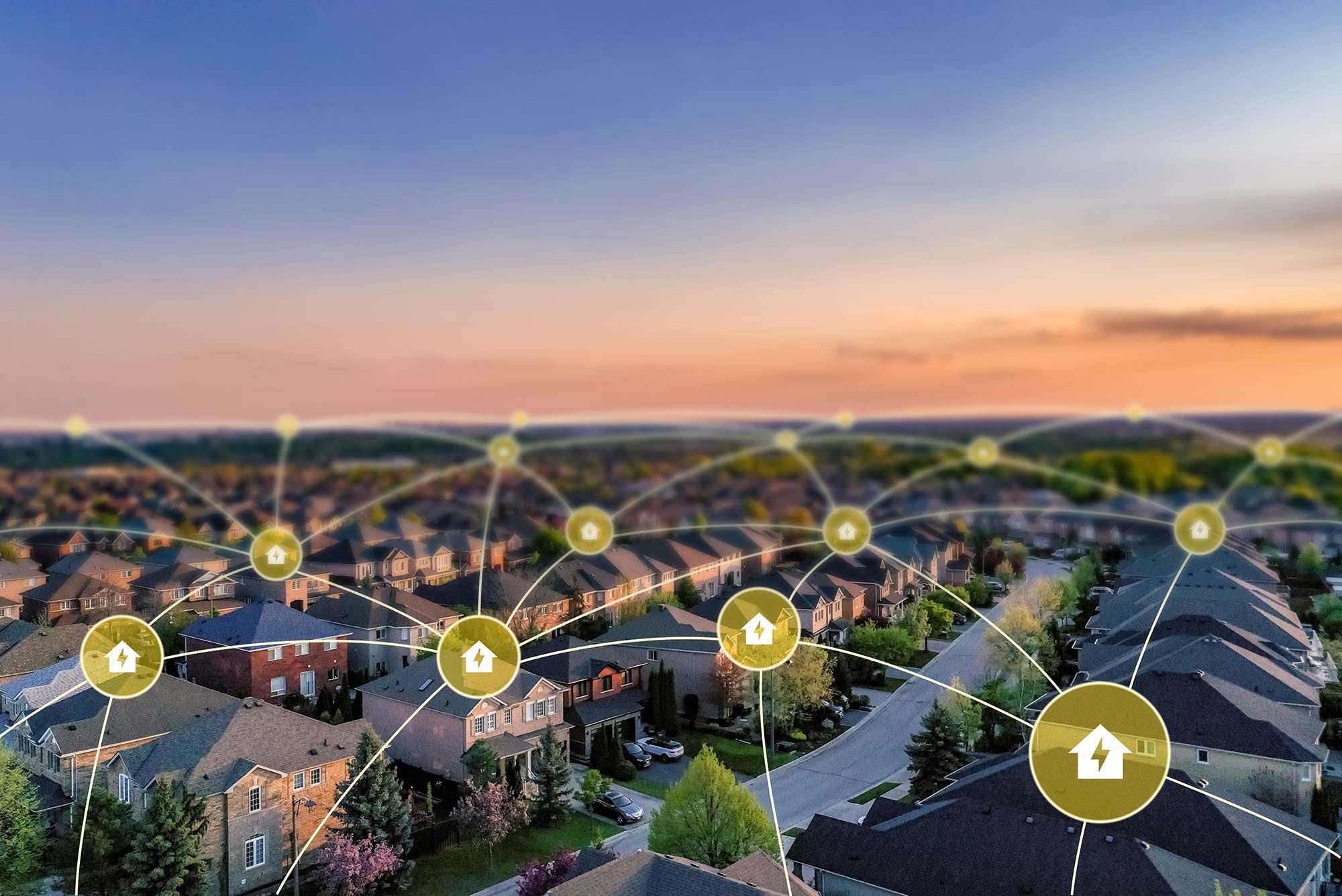
The simple definition of a VPP is this: groups of thousands of individually owned devices — like batteries, electric vehicles, thermostats, water heaters, and solar systems — are linked together and operated as one large grid resource. The homeowner still owns the equipment, but once they’re enrolled in the program the equipment is connected, measurable, and capable of responding to remote instructions from the grid, allowing utilities to dial back power or use the stored energy in its VPP when the grid becomes unstable. In other words, you own the hardware, but the energy… that’s all theirs. The upfront cost for some of that ‘incentivized’ hardware? A minimum VPP enrollment period of seven years… at least, that’s what’s being discussed.
“Every New Jersey family deserves an electric grid that works smarter and costs less,” said Ben Hertz-Shargel, President of NJBPU at a recent meeting. “Virtual power plants give us an opportunity to take technology already sitting in our driveways, homes, and businesses and to leverage them as low-cost resources.”
New Jersey has already required recipients of certain electric vehicle incentives to install networked, Wi-Fi-enabled chargers capable of managed charging and data collection. BPU says the data gathered through those programs can now serve as a “ready resource” for creating virtual power plants.
So the progression looks something like this:
Subsidize the device. Connect the device. Enroll the device. Aggregate the device. Control the device.
None of this means the state can simply walk into your house and seize your thermostat. Participation remains “voluntary,” but when the subsidy for a $10,000 or $15,000 piece of equipment is conditional on agreeing to connect it to the system, it feels subtly coercive. Customers enrolled in a VPP can reportedly opt out on a case-by-case basis, but doing that too frequently could reduce their incentive.
Oh! There’s one more thing. Pretty wicked, if you ask us.
New Jersey is building out this permanent architecture under a state of emergency. The governor’s executive order on her first day in office explicitly identified skyrocketing demand from data centers as a major cause of the energy emergency. Then, invoking New Jersey’s Civilian Defense and Disaster Control Act, she ordered the BPU to begin developing a VPP within 180 days.
There is no sunset date explicit in the executive order.
What emerged from that emergency directive last month wasn’t a temporary program designed to disappear when electricity prices settle down. BPU’s proposal includes an interim VPP beginning in 2027, followed by what it calls a long-term VPP framework, beginning in 2029.
Think about that sequence for a moment.
Data centers are projecting extraordinary electricity demand over the next decade → the state declares an emergency → the emergency gives agencies a mandate to move faster and begin building a system that coordinates privately-owned equipment inside people’s homes → that system is explicitly intended to remain in place indefinitely. In other words, eventually you will own nothing and be happy.
That brings us back to where this story started.
Across the country, towns are actively fighting data centers. But at the state level, the response is not whether this extraordinary new demand is right or wrong. It’s ‘let’s figure out how to accommodate it without making voters feel like they’re the ones paying the price.’
And in case you think this is only happening in New Jersey, think again. The Clean Energy States Alliance reports that the number of VPPs in the US has grown from a handful of pilots a decade ago to dozens of programs with thousands of participating ratepayers.
Approximately half the states now give battery owners the opportunity to enroll in a VPP. Georgia’s program would involve a 10-year contract tied to the premises, so it would convey to future customers in the same location even if the home is sold.

Slice it any way you like, but the outcome is the same: ordinary people, trying to make life a little easier, a little more affordable, are induced to trade autonomy for convenience. On the surface, the bargain looks harmless… who doesn’t like newer, cheaper, smarter, faster, cleaner, more connected?
The realization of what’s on the other side is where things start to get dark (pardon the pun). Deeper dependence on a system in which corporate and government power are becoming increasingly difficult to distinguish means the little guy thinks he’s building a better life. In reality, he’s building the cage of his own captivity. New Jersey appears to be leading the charge.